Pool Cage Screens Pulling Loose: What to Look For
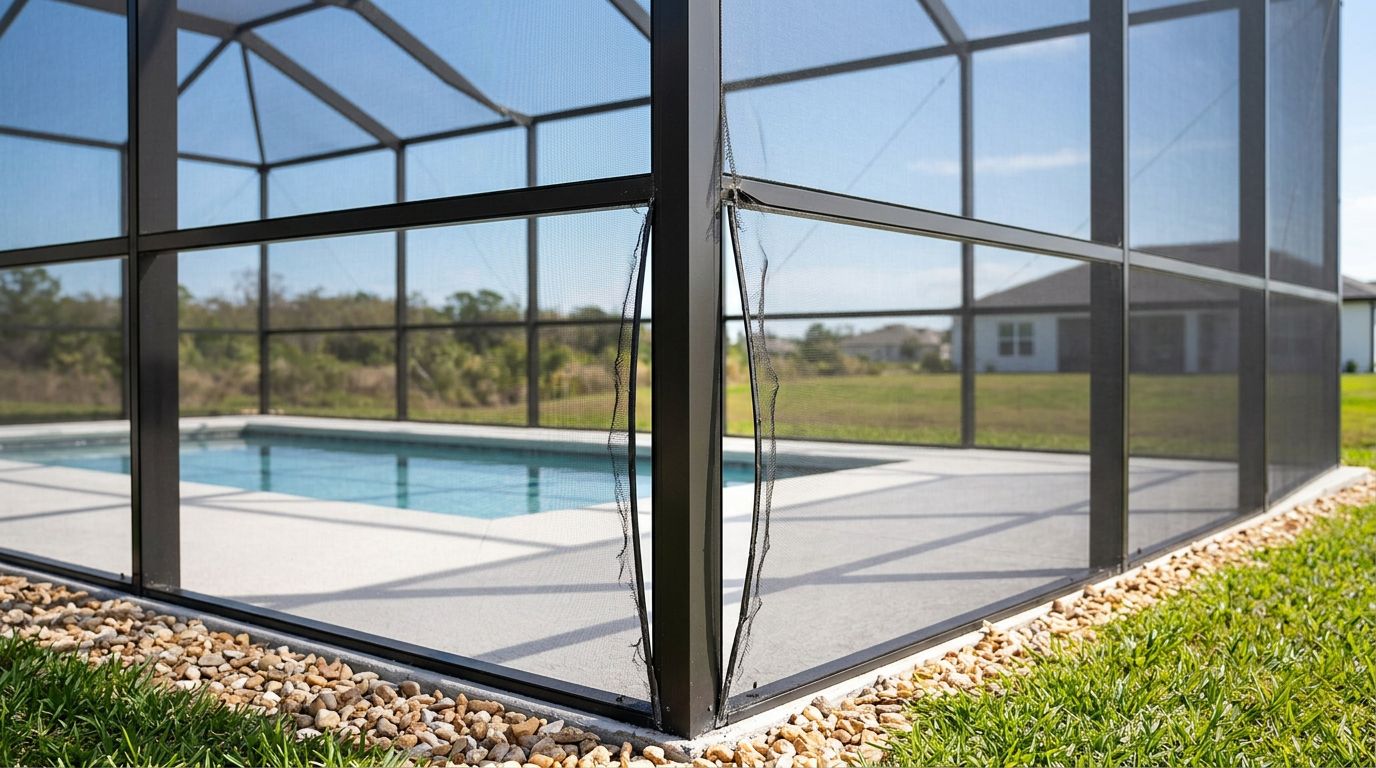
A screen panel can look fine across its center while a gap opens along the frame. When pool cage screens pull loose, the most useful first step is to distinguish an edge separation from a tear in the mesh.
That distinction helps you describe the problem without guessing at its cause. It also matters when deciding whether one panel needs attention or the enclosure deserves a broader assessment.
Start with the visible condition, then consider the pattern across the surrounding panels.
What a Loose Screen Panel Looks Like
A loose panel doesn't always hang in a large, obvious flap. Sometimes the first visible sign is a narrow opening along one side or a corner that no longer meets the frame.
From the pool deck, look at where the screen ends. The important detail is whether the mesh has separated at its border, torn within the panel, or shown both conditions.
Separation Along the Border
With an edge separation, the opening follows part of the panel's perimeter. The remaining screen may still appear continuous, although its shape can look uneven.
Describe the location precisely: the upper corner, the bottom edge, or the side beside a door. Also note whether the opening occupies a short section or extends along most of that border.
Those details give a clearer picture than saying the screen is "broken." They distinguish a localized opening from a panel that has separated across several edges.
A Tear Within the Mesh
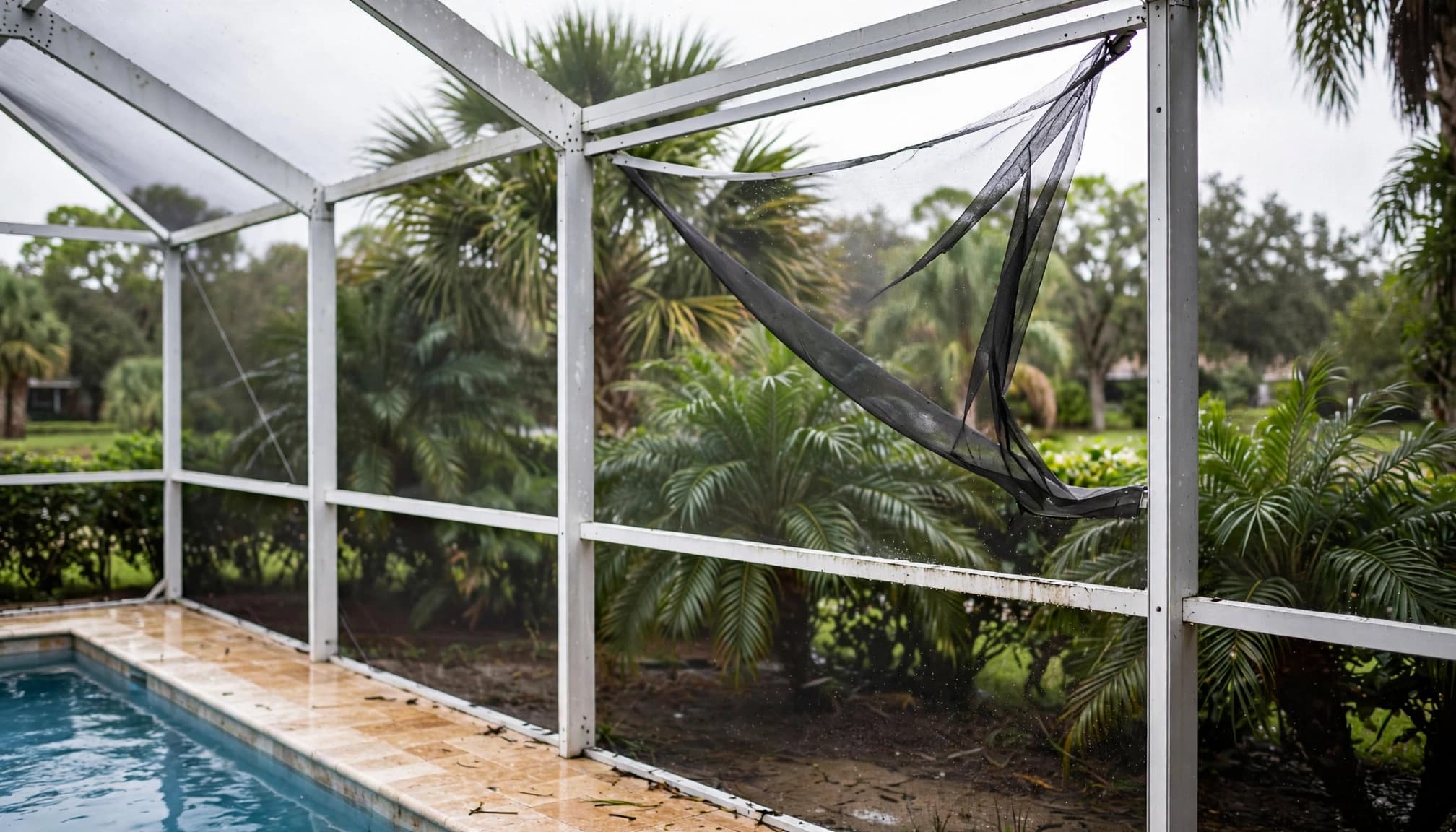
A tear appears within the screen fabric rather than only along its boundary. You may see a split, a hole, or an irregular opening with mesh still attached around it.
However, a panel can have a tear and a detached border at the same time. Record both conditions instead of assuming that one description covers the entire problem.
If the screen hangs loosely, its position may obscure the original edge. A photograph taken from a safe spot can preserve what you can see without handling the panel.
What the Spline Channel Tells You
The spline channel is the groove around the frame where the screen's border is retained. Spline is the strip that holds the screen edge within that groove.
Those terms describe different parts of the same connection. The mesh is the screen fabric, the spline is the retaining strip, and the channel is part of the frame.
When discussing a loose panel, identifying which part is visibly out of place makes the conversation more useful. An exposed strip beside the border is a different observation from torn mesh with the border still in position.
Still, a distant view may not show every part clearly. Dark mesh, shadows, and overhead angles can make separate components look like one line.
A gap identifies the location of a failure. It doesn't, by itself, establish why that connection failed.
You don't need to identify every component before arranging an assessment. A clear description of the opening and its location is enough to communicate the visible problem.
Avoid treating a panel that still looks smooth as proof that its entire border remains attached. The condition at the edge deserves separate attention from the appearance of the center.
Read the Pattern Across the Enclosure
The number and location of affected panels help define the scope of the problem. Keep your observations tied to what is visible rather than assuming that matching appearances share one explanation.
A single loose corner, several detached borders, and widespread torn mesh are different conditions. Each deserves a description that captures its extent.
When One Panel Is Affected
If one panel looks different from its neighbors, note its position within the enclosure. A wall panel beside the pool, a panel next to a door, and an overhead panel present different access considerations.
Also describe the surrounding panels. Saying that the adjacent borders appear intact helps distinguish a localized concern from an enclosure-wide pattern.
This doesn't establish that every nearby panel is sound. It simply records that the visible problem is concentrated in one location rather than spread across the areas you can see.
When Several Panels Show Gaps
With multiple loose panels, location becomes especially useful. Note whether they sit beside one another, occupy the same wall, or appear in separate areas.
Keep tears and edge separations distinct in that description. "Three panels have openings" leaves out whether those openings occur within the mesh or along the frame.
A wider photograph can show their relationship. Meanwhile, closer photographs can document individual borders without losing the overall context.
If overhead areas aren't clearly visible from the ground, leave them for a professional assessment. Don't climb onto the enclosure to complete the picture.
Why Timing Alone Doesn't Explain the Problem
Homeowners often notice a loose screen after a storm, during pool cleaning, or when preparing an outdoor space for visitors. That timing belongs in the history of the problem, but it doesn't establish the underlying explanation.
There is a difference between when an opening appeared and when someone first saw it. A border in an overhead panel may escape notice until the light changes or the screen hangs differently.
Use concrete dates when you have them. "The gap was visible on Monday morning" is more accurate than assigning a cause based on the last event you remember.
Previous work also belongs in that history. If the same panel has received attention before, describe which panel it was and when the loose edge reappeared.
Age is useful background, too, when it is known. However, an enclosure's age doesn't describe the current condition of every panel.
Similarly, a newly noticed opening doesn't establish that the problem started that day. Keep the sequence factual: what you saw, where you saw it, and whether it changed.
This approach gives the person assessing the enclosure a usable history. It also prevents a recent event from overshadowing other visible conditions that deserve attention.
What to Record Before an Assessment
Useful documentation doesn't require climbing, pulling on the screen, or exposing the channel. Ground-level observations can provide a clear starting point.
Photograph the enclosure broadly enough to identify the affected area. Then take a closer view from a safe position, keeping the detached edge and adjacent frame in the same image.
A photo of loose mesh alone can be hard to place. Including a door, corner, or other recognizable feature helps connect the detail to its location.
Keep your description brief and concrete:
- Identify the panel's location, including whether it is on a wall or overhead.
- Describe the visible condition as an edge opening, a mesh tear, or both.
- Note whether this is the first occurrence or a problem in a previously addressed panel.
Also mention visible concerns beyond the screen itself. A frame that appears out of alignment or a door that no longer closes normally belongs in the assessment request.
These observations don't establish a structural diagnosis. However, they identify conditions that shouldn't disappear from the conversation because the loose screen is more obvious.
For safety, stay off enclosure roofs and avoid working above the pool. If any part of the frame appears unstable, keep people away from that area and seek a professional assessment.
When a Panel Review or Broader Rescreening Makes Sense
A loose border raises two separate decisions: how much of the enclosure needs attention, and whether the concern extends beyond the screen.
The visible extent helps organize those decisions. However, panel count alone shouldn't determine the final scope.
A Localized Problem
An isolated opening can justify an assessment focused on that panel and its surrounding frame. That keeps the immediate concern clearly defined.
If the panel has loosened before, include that history. A recurring problem deserves attention beyond recording that the edge is loose again.
The same applies when a nearby door or frame shows a visible change. Those observations widen the assessment even if only one screen panel has an opening.
For an overhead panel, professional attention is appropriate because of access and fall hazards. The apparent size of the gap doesn't make reaching it safer.
Widespread Screen Concerns
Broader rescreening becomes a reasonable service to discuss when many panels need attention. The assessment should distinguish the condition of the screens from the condition of the enclosure framing.
Replacing screens and addressing an enclosure concern are different scopes of work. A proposal should make that distinction clear rather than treating every visible defect as part of one undefined "screen repair."
At Back Bay Screens, we offer rescreening services for pools, lanais, patios, sunrooms, and other outdoor spaces. That allows the conversation to cover the affected area without assuming that one loose panel means the entire enclosure needs replacement.
The useful outcome is a scope tied to the actual condition, whether that involves a limited area or a broader project.
Choose an Estimate That Defines the Work
When you contact a screen enclosure company, a useful estimate should describe the area receiving attention. "Repair screens" provides little context when some panels have torn mesh and others have detached borders.
Look for a clear distinction between screening work and any separate concerns involving the frame, doors, or hardware. That distinction matters because a homeowner can otherwise interpret a screening estimate as an assessment of the entire structure.
The project description should also identify whether the proposed work covers selected panels or a complete rescreen. Those are different commitments, even when the first conversation begins with one visible gap.
An estimate has more value when its scope matches the problem you reported. Photos, locations, and a factual history help keep that conversation focused.
We offer free, no-obligation estimates in Cape Coral and Southwest Florida, including Fort Myers, Estero, and Bonita Springs. A loose panel, repeated separation, or several damaged areas can each provide a starting point for discussing the appropriate scope.
You don't need to arrive with a diagnosis. What matters is communicating the visible condition clearly and separating the immediate screen concern from any broader enclosure concerns.
Start With the Edge, Then Consider the Whole Enclosure
A panel that looks smooth across its center can still have an opening at its border. Separating the symptom from the explanation helps keep the assessment focused.
Describe the location, distinguish detached edges from torn mesh, and include any history of recurrence. When access is unsafe or the frame also appears affected, professional assessment is appropriate.
The goal is a clearly defined response to the condition you have, rather than a decision based on the gap alone.