
Cape Coral Pool Enclosure Permits: What Homeowners Need

Cape Coral Pool Enclosure Permits: What Homeowners Need

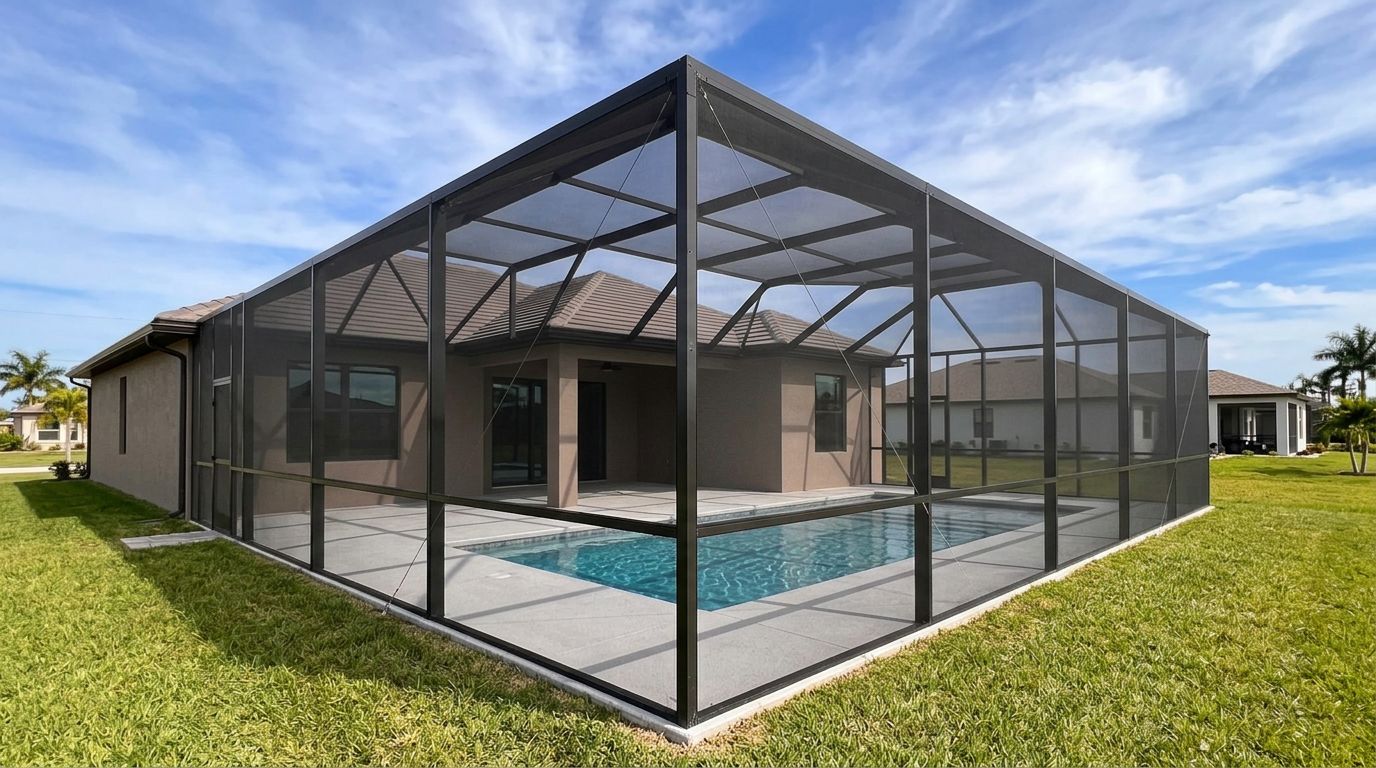
A new residential pool screen enclosure in Cape Coral requires a building permit. Knowing which application and supporting documents apply can help you plan the project without mistaking a pool-specific form for a requirement on every enclosure.

The City's permit packet outlines the main paperwork, while the property and project scope can affect the right application path. Here's what the City confirms, and what homeowners should clarify before construction begins.

Does a new pool enclosure need a permit?

Yes. The City of Cape Coral requires a building permit for a new residential pool screen enclosure. The City provides an enclosure application and residential guidelines, and homeowners or their contractors submit building-permit applications through EnerGov Citizen Self-Service, also called CSS.

The permit covers a new enclosure

A screen cage built around a residential pool falls within the City's screen-enclosure permitting materials. The permit process includes plan review and required approvals before the permit is issued. Once work begins, the issued permit and the full City-reviewed plan set, including revisions, must remain available at the job site for inspectors.

Pool construction can affect the application path

Cape Coral lists a prepaid application guideline for an enclosure or fence when a pool is under construction. The City's CSS guidance says the related enclosure-screen or fence permit can use the prepaid workflow, with no additional fees added because those fees were paid under the pool permit. This path is tied to the pool-permit process, rather than being a general rule for all enclosure projects.

What's in Cape Coral's screen-enclosure permit packet?

The City's Screen Enclosure packet lists five documents. The right forms depend on the project, so the packet should be read alongside the separate residential guideline for a new enclosure.

Application and residential guidance

The listed Application - Enclosure/Fence is the main application form. The packet also includes a Burrowing Owl/Gopher Tortoise Affidavit and Guideline - Residential , which includes guidance for a pan roof.

Separately, the City's document center lists a Screen Enclosure (New) Guideline - Residential . It appears in the broader enclosure materials, not as one of the five items in the Screen Enclosure packet list.

Project-specific forms

The packet includes a Notice of Commencement , revised August 18, 2025. The City identifies it for projects with a value or cost of $2,500 or more .

The fifth document, Prepaid Application Guidelines , applies to a fence or enclosure associated with a pool under construction. Its presence in the packet doesn't mean every screen enclosure qualifies for prepaid processing.

How do applications, plans and inspections work?

Cape Coral uses EnerGov CSS for digital building-permit applications and plan-set submissions. Applicants can also use the portal to track permit status, pay fees and schedule inspections.

Issuance follows approval

The City states that it processes a permit for issuance the next business day after reviews are approved and any remaining fees are paid. That timing applies to permit issuance after approval, not to the duration of plan review. The City's process includes required reviews before that point.

Keep approved plans at the property

After issuance, keep a copy of the permit and the full plan set reviewed by the City at the job site. Include any revisions so inspectors can refer to the current approved documents during inspections. This is a stated job-site requirement, not just a convenience for the project team.

Which building code applies to a Cape Coral enclosure?

As of October 2026, the applicable statewide code is the 8th Edition (2023) Florida Building Code , effective December 31, 2023. The 9th Edition (2026) is scheduled to take effect on December 31, 2026. That upcoming change matters for projects planned near the transition date, so homeowners should ask the City which code edition applies to their permit.

Pool-barrier and wind provisions

Florida Building Commission materials reference pool-barrier requirements in Sections 424.2.17 and R4101.17.1 , and wind-load requirements in Section 1609.1.1 . These code references form part of the wider technical context for screen enclosures and pool safety.

The Commission's alternative-method materials also mention a 110-mph reference and a 75-mph panel-removal trigger. Those figures apply to that alternative method. They are not general Cape Coral design-wind requirements , and they don't establish approval of the method for a particular project.

What can depend on the property or project?

The City's documents distinguish a new residential enclosure from a fence or enclosure connected to a pool under construction. That means the project's scope and timing can affect which forms and workflow apply. The packet itself doesn't establish that every enclosure uses every listed document.

Before work begins, homeowners should verify current requirements with the City of Cape Coral. This is especially useful when a project is tied to new pool construction or falls near the scheduled Florida Building Code change. A contractor can help organize the enclosure plans, but the City determines the permitting requirements and approvals.

Key takeaways

  • A new residential pool screen enclosure requires a City building permit.
  • Cape Coral lists five documents in its Screen Enclosure packet, plus a separate guideline for new residential enclosures.
  • The prepaid workflow is specifically associated with an enclosure or fence for a pool under construction.
  • As of October 2026, the 8th Edition (2023) Florida Building Code applies; the 9th Edition is scheduled for December 31, 2026.
  • Keep the issued permit and full approved plan set at the job site.

Frequently asked questions

Does Cape Coral issue the permit the day after application?

The City says issuance is processed the next business day after reviews are approved and remaining fees are paid. It does not describe that as a plan-review deadline.

Does every enclosure qualify for prepaid processing?

No. The City identifies prepaid guidance for an enclosure or fence associated with a pool under construction. That condition should not be treated as a general rule for all projects.

Which Florida Building Code edition applies in October 2026?

The 8th Edition (2023) applies as of October 2026. The 9th Edition (2026) is scheduled to take effect on December 31, 2026.

Plan your Cape Coral enclosure project

For a new pool enclosure, start with the City's building-permit process and identify whether the project is connected to pool construction. Then keep the approved plans and permit available at the job site.

We build pool, lanai and patio enclosures in Cape Coral and offer free, no-obligation estimates. A clear project scope is the best starting point for planning the enclosure and its permit paperwork.

By Back Bay Screens • October 17, 2026
A lanai can work as an outdoor dining room and a place to unwind when the layout supports both uses without crowding either one. A successful lanai enclosure plan starts with how you want to use the space, then matches furniture, screening, shade, airflow, and lighting to thos...
By Back Bay Screens • October 16, 2026
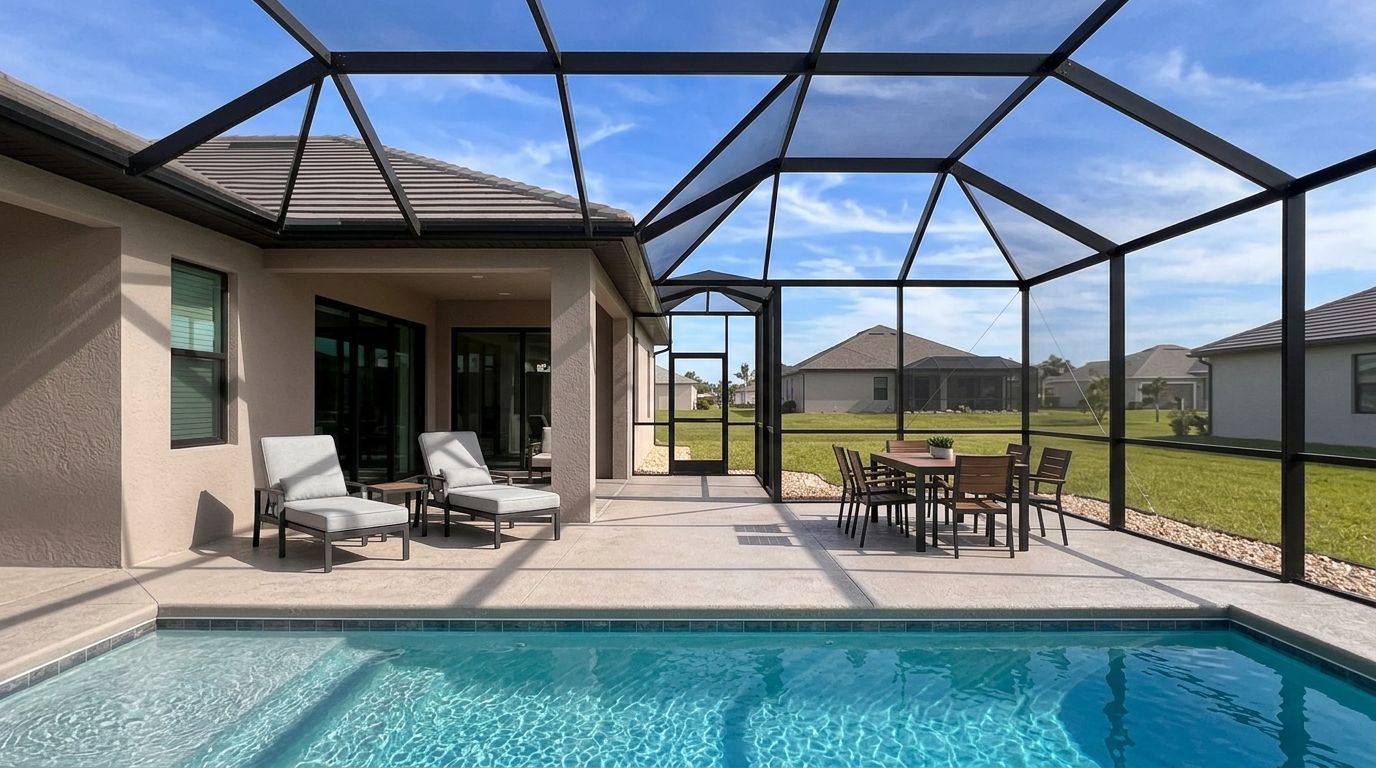
A practical pool enclosure design starts with the furniture you already own, not an empty deck on paper. Measuring each piece and mapping how you use it helps keep seating comfortable, paths clear, and doors accessible. Moving furniture may be possible, but it can change how y...
By Back Bay Screens • October 15, 2026
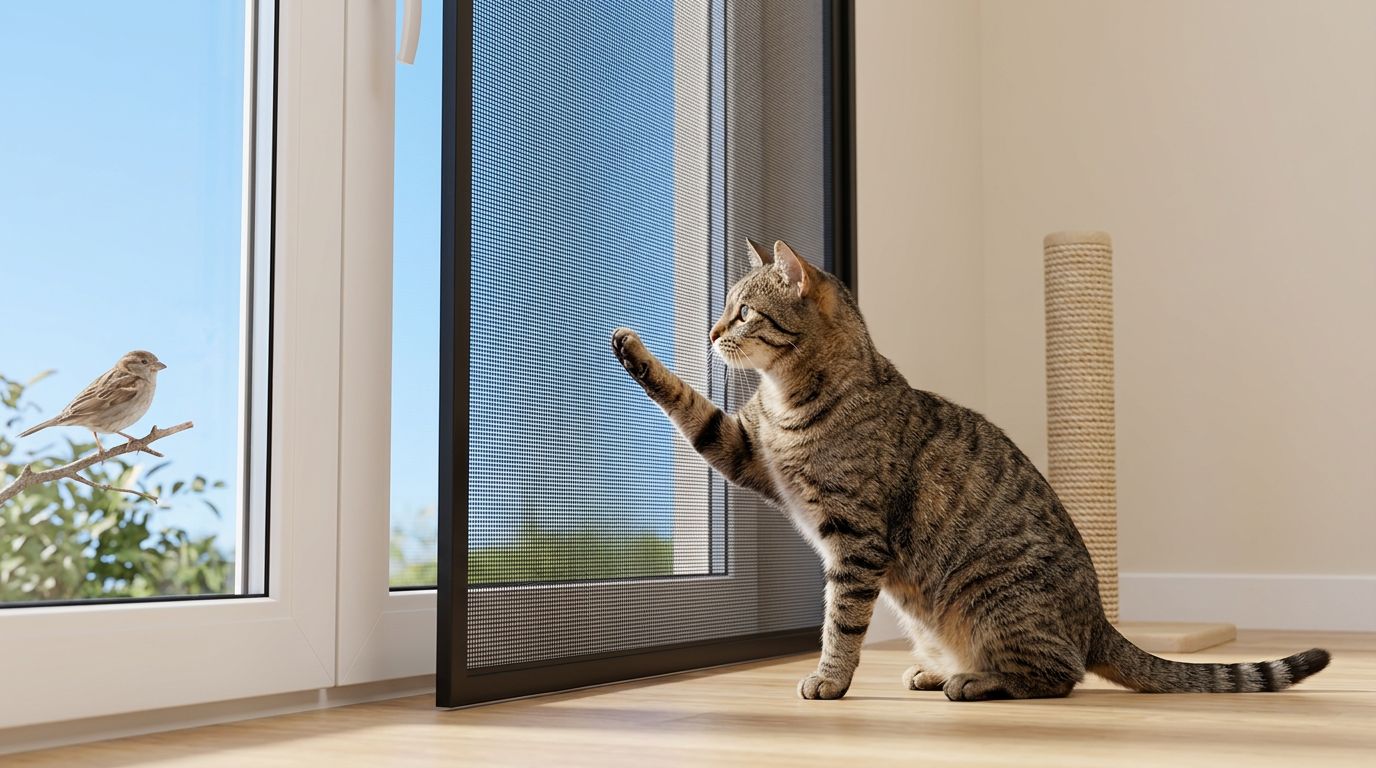
A pet can turn a screen panel into a scratching post when it sees a bird outside, rushes toward the door, or wants your attention. Pet-resistant screen panels may be worth considering, but material choice alone won't prevent every scratch. The most reliable approach combines s...
By Back Bay Screens • October 14, 2026
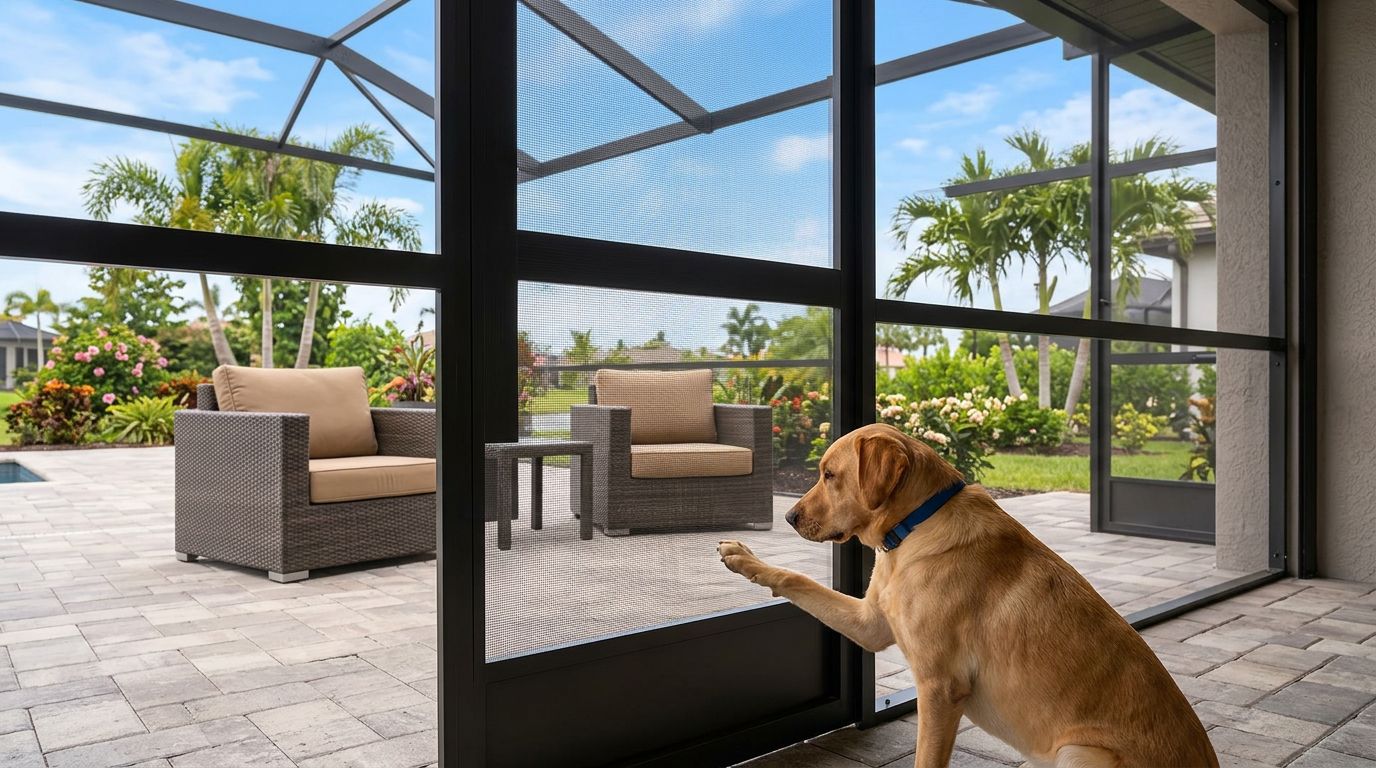
Pet-resistant screen mesh can give Bonita Springs homeowners a sturdier barrier where pets press or paw at a screen. It's tougher than standard mesh, but it isn't claw-proof, and its heavier construction can affect visibility, airflow, cost, and upkeep. The right choice depend...