How to Choose Pool Cage Screen Mesh for Clearer Backyard Views
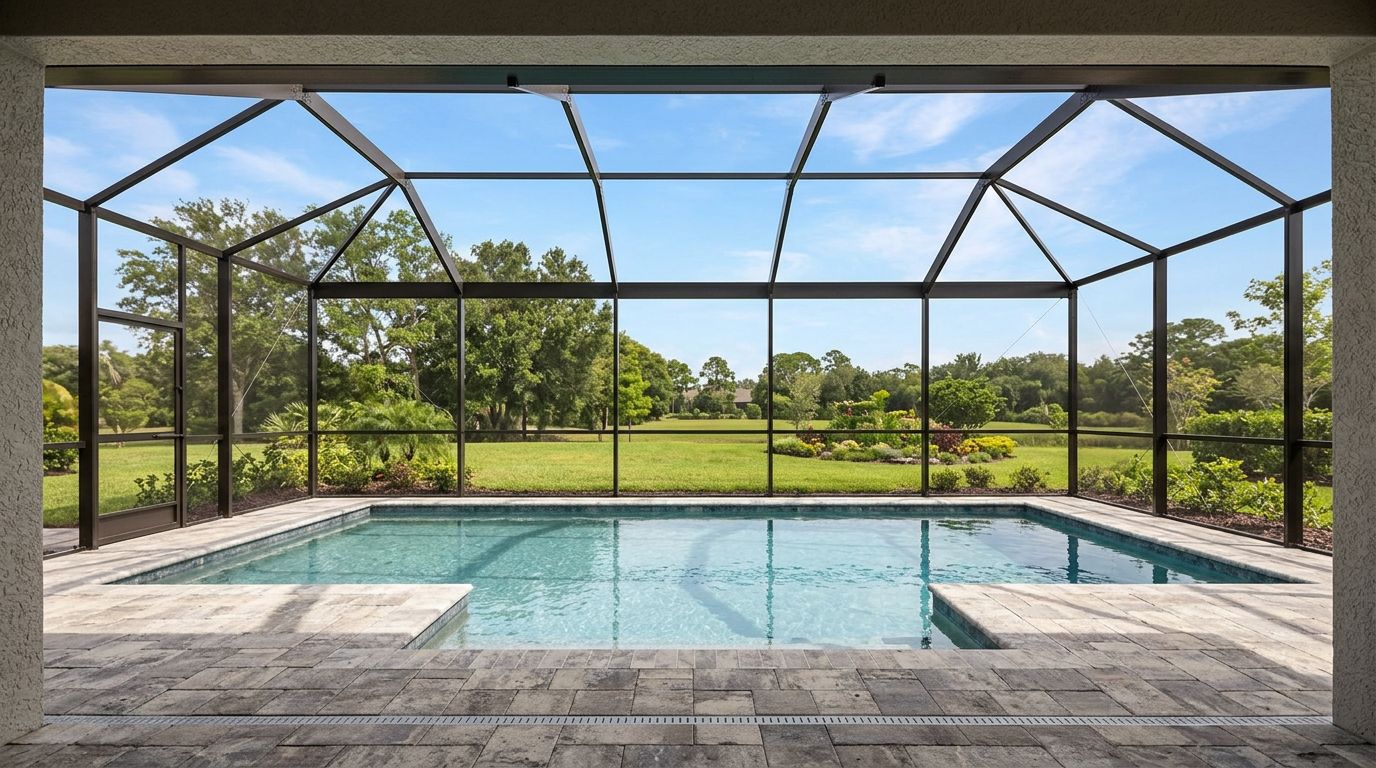
A pool cage screen mesh affects more than insects and enclosure upkeep: it changes how clearly you see the garden, water, and sky from your patio. The right choice depends on the view you want and how the screen looks in your actual backyard.
Product names alone can't show you how a mesh will look against your pool or landscaping. Compare samples in place, in different light, and from the seats and walkways you use most. Start by understanding what creates a clear sightline.
Key Takeaways
- View the mesh from inside the enclosure, not only up close or from outside.
- Compare samples against the pool, landscaping, and sky at different times of day.
- Consider the appearance of the entire enclosure, including its frame and panel layout.
- Tell your screen contractor which views matter most and where you spend time.
- Choose based on how the finished space looks to you, not on a product label alone.
How pool cage screen mesh affects sightlines
A screen is a layer between you and the backyard. Its weave, color, and placement affect how noticeable that layer feels. The same mesh can seem more prominent against a bright sky than against darker trees, so a close-up sample won't tell the whole story.
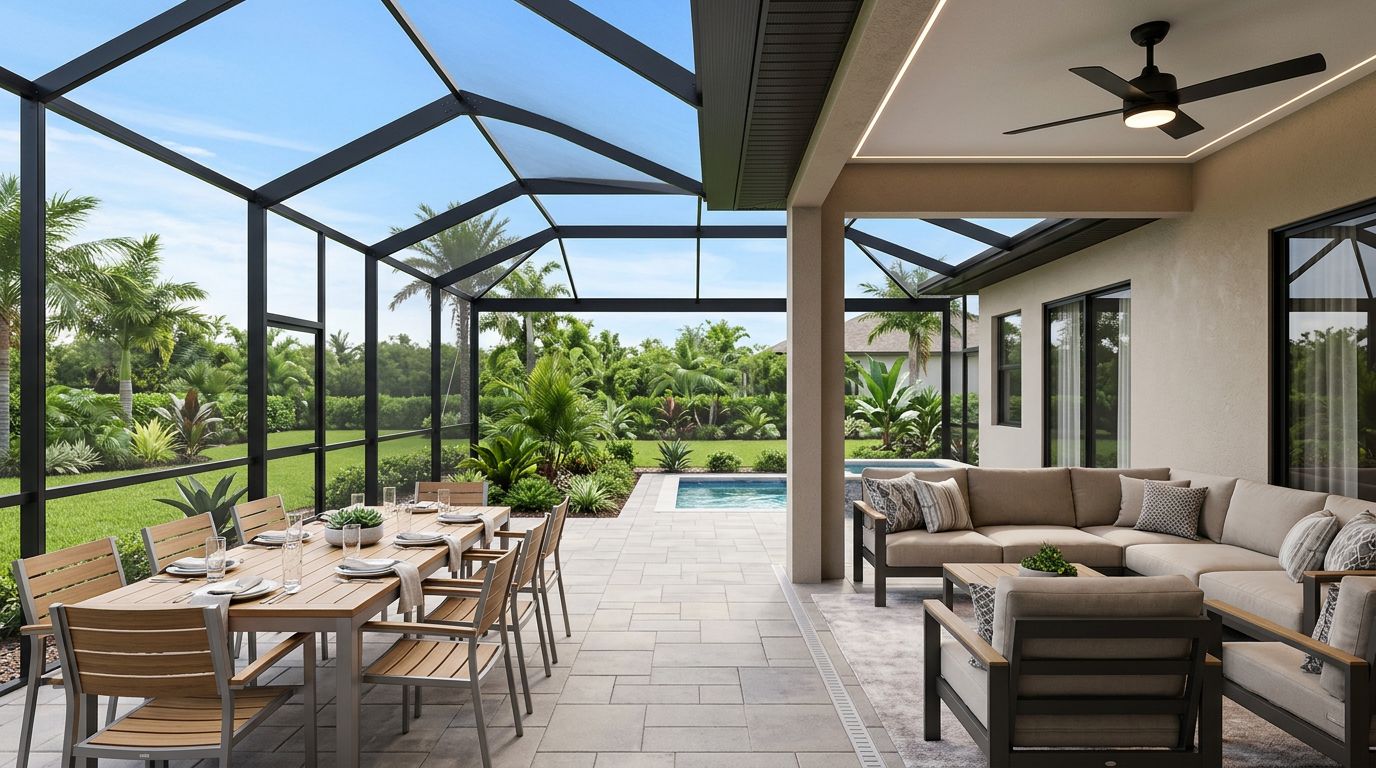
The viewing angle matters, too. A panel across the yard may be easy to overlook when you're seated near the pool, then catch your eye when you walk toward the house. For a useful comparison, consider the places where you'll spend time and the views you want to preserve.
Notice the whole view, not only the strands
Look through the sample toward a recognizable feature, such as a palm, a fence line, or the far edge of the pool. That gives your eye a clear point of reference. If you focus only on the strands, you may overestimate how much they'll interrupt the view.
Then step back and look at the full panel. Observe whether the mesh draws attention to itself or blends into the larger scene. Repeat the comparison from your usual seating area and from inside the home, if the enclosure is visible through windows.
Separate a clear view from an open feeling
"Clearer view" can mean different things. You may want to see distant trees distinctly, reduce the visual prominence of the screen, or keep the enclosure from feeling closed in. Those goals overlap, but they aren't identical.
Decide which one matters most before comparing options. That gives you a more useful standard than choosing a mesh because a label sounds appealing.
Compare mesh options by looking through them
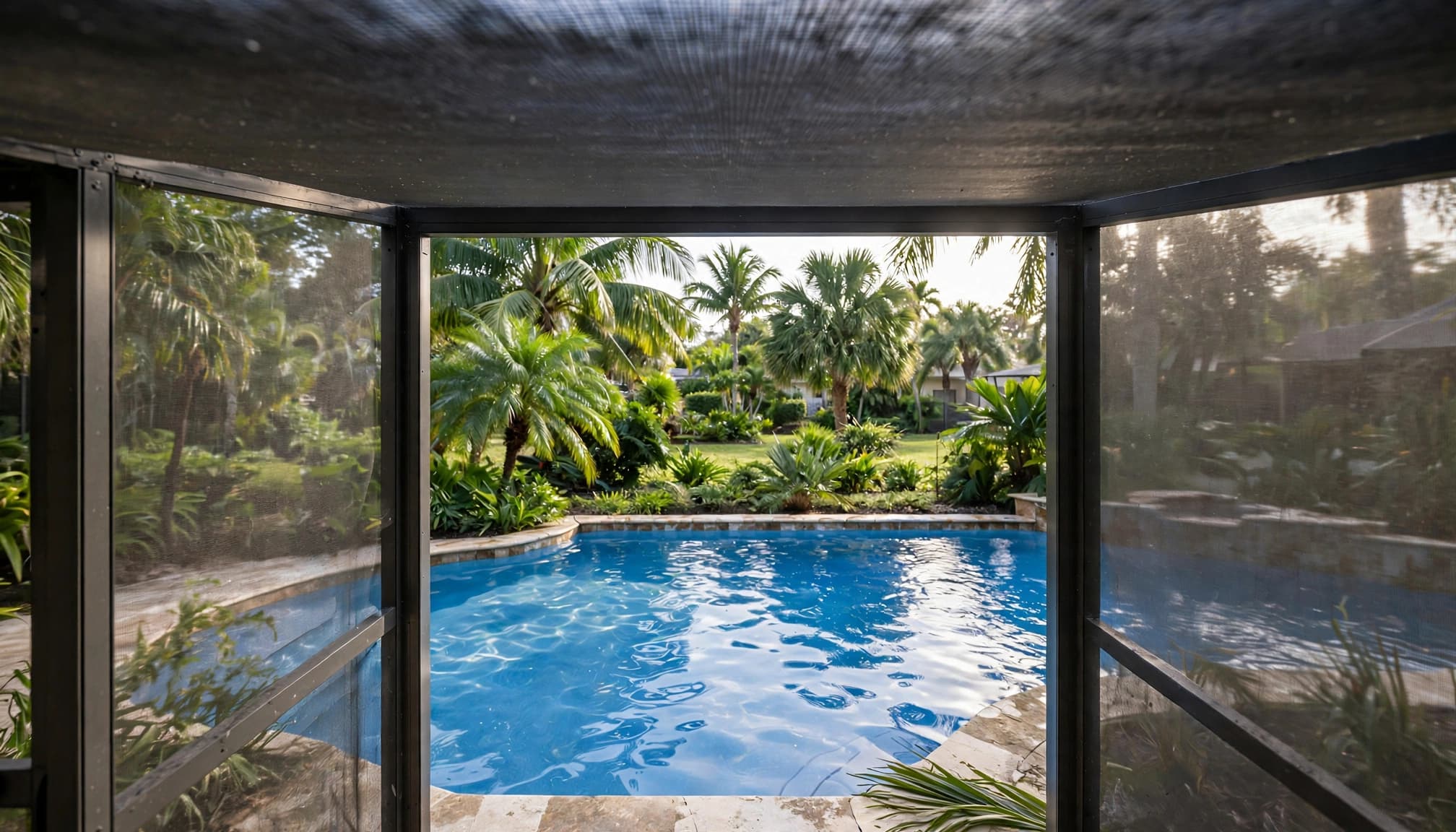
Product descriptions can help you identify an option, but they can't show how it will look at your home. Ask to compare actual samples. Set them against the same background and view each one from the same position.
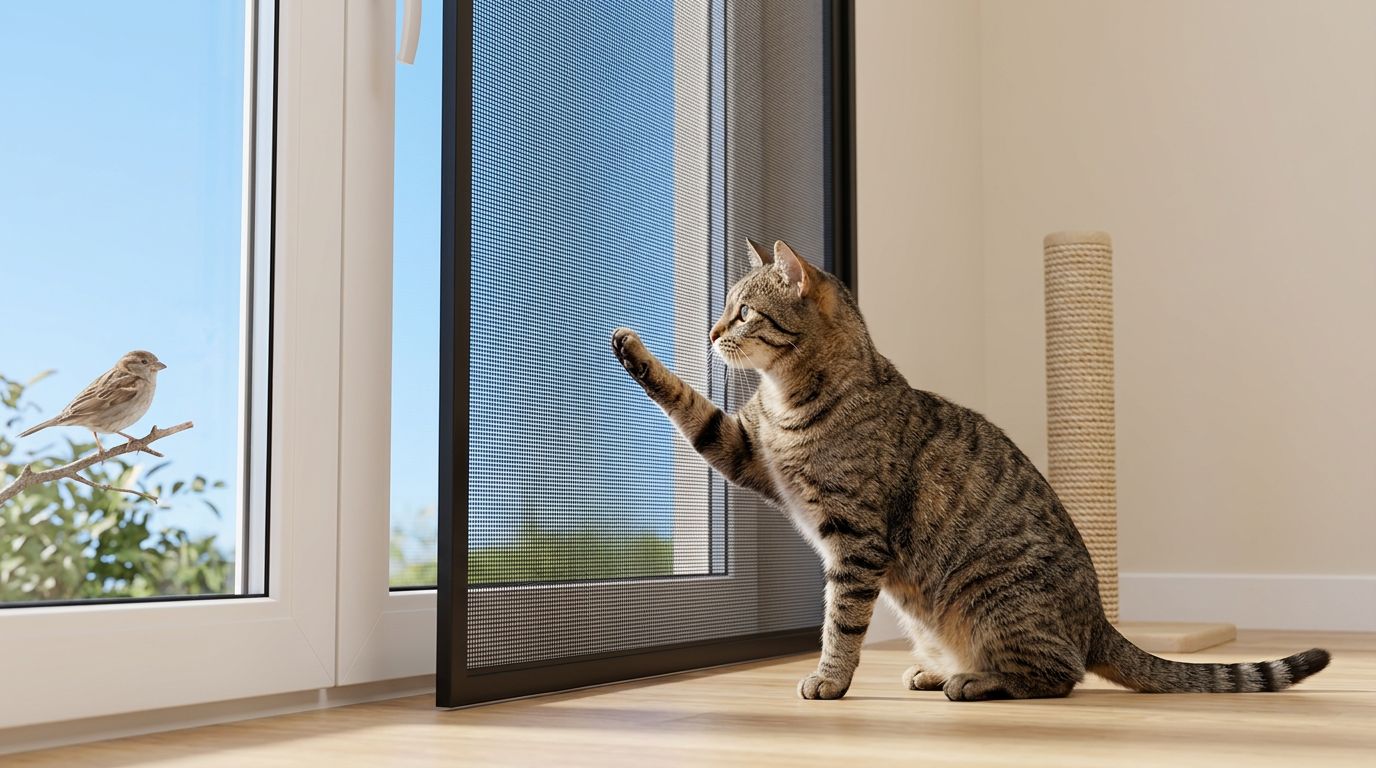
If you're comparing a familiar insect screen with a finer or view-focused option, keep the test consistent. Otherwise, changes in light, distance, and background can make one sample seem clearer even when the mesh itself isn't the reason.
Compare in the same conditions
Hold each sample in the same place, then look through it toward a fixed feature. Move it slightly if the light changes across the sample. Compare the screen with the area beside it, but avoid treating an uncovered opening as a direct comparison. A solid frame and an open gap create different visual conditions.
Also look through the sample from several distances. Up close, the weave may be obvious. At the distance where you normally sit, its visual effect may feel different.
Pay attention to color and contrast
The color of the screen affects how noticeable it looks against its background. A sample that seems subtle in front of a dark hedge may be more visible against bright sky or pale paving. This is why a single test location can give an incomplete impression.
Compare samples against more than one part of your yard. If your favorite view includes a bright horizon, use that as part of your assessment. If you mostly face trees or a garden, include those backgrounds as well.
Test samples where you'll use the enclosure
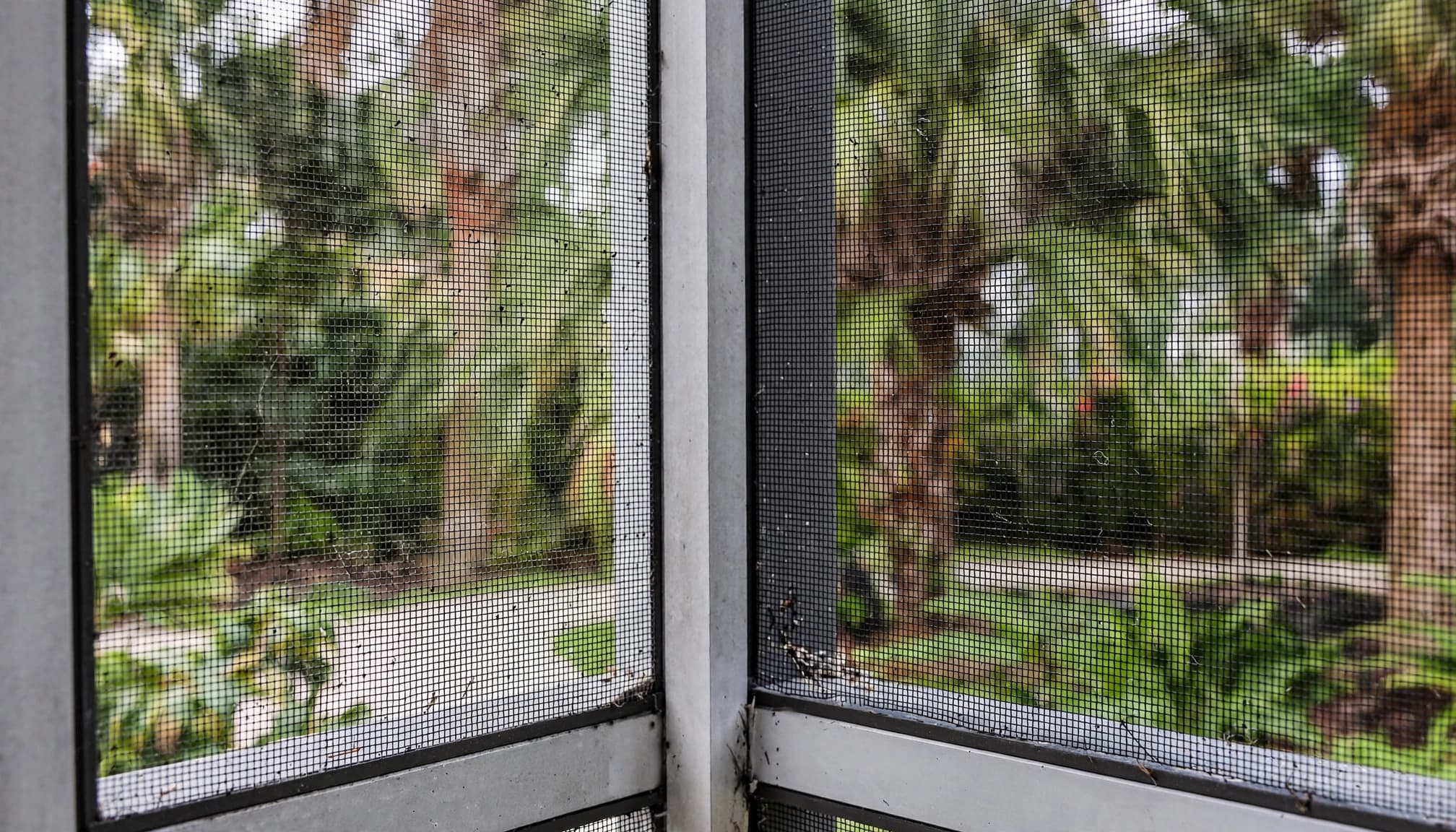
The best place to judge a screen is where the finished enclosure will stand. If you're rescreening, compare the sample against the existing frame and panels. For new construction, consider the proposed enclosure footprint and the views it will frame.
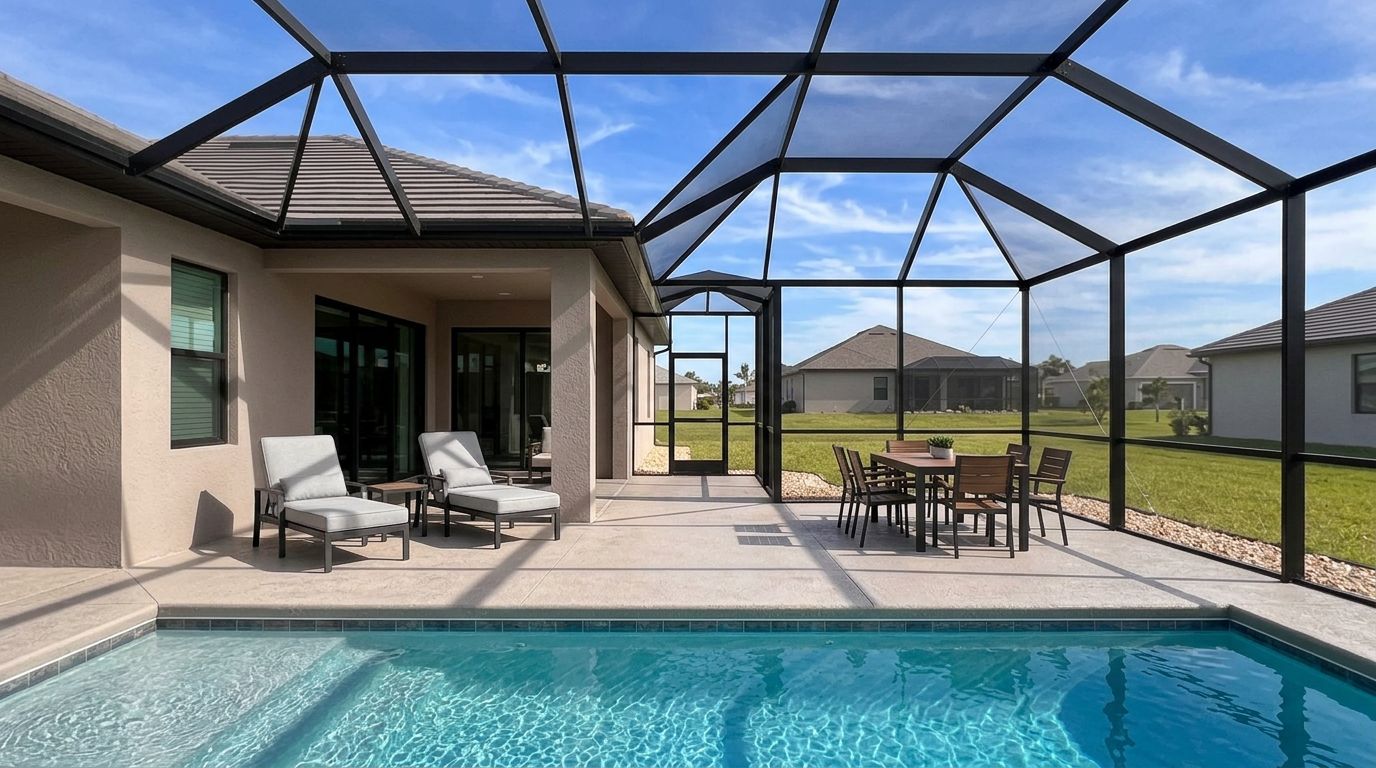
Check more than one angle. A pool enclosure has several panels, and the view can change as you move through the space. A sample that looks good beside a dining area may appear different from a chaise or a doorway.
Include daytime changes
Natural light shifts through the day. A sample viewed in morning shade may look different later when sunlight reaches the pool deck. If you can, compare it at the times you typically use the enclosure.
Watch how the screen reads against the sky, water, and nearby plants. Reflections on the pool can also draw your eye, so notice whether the mesh becomes more visible when you look toward the water.
View it from inside and outside
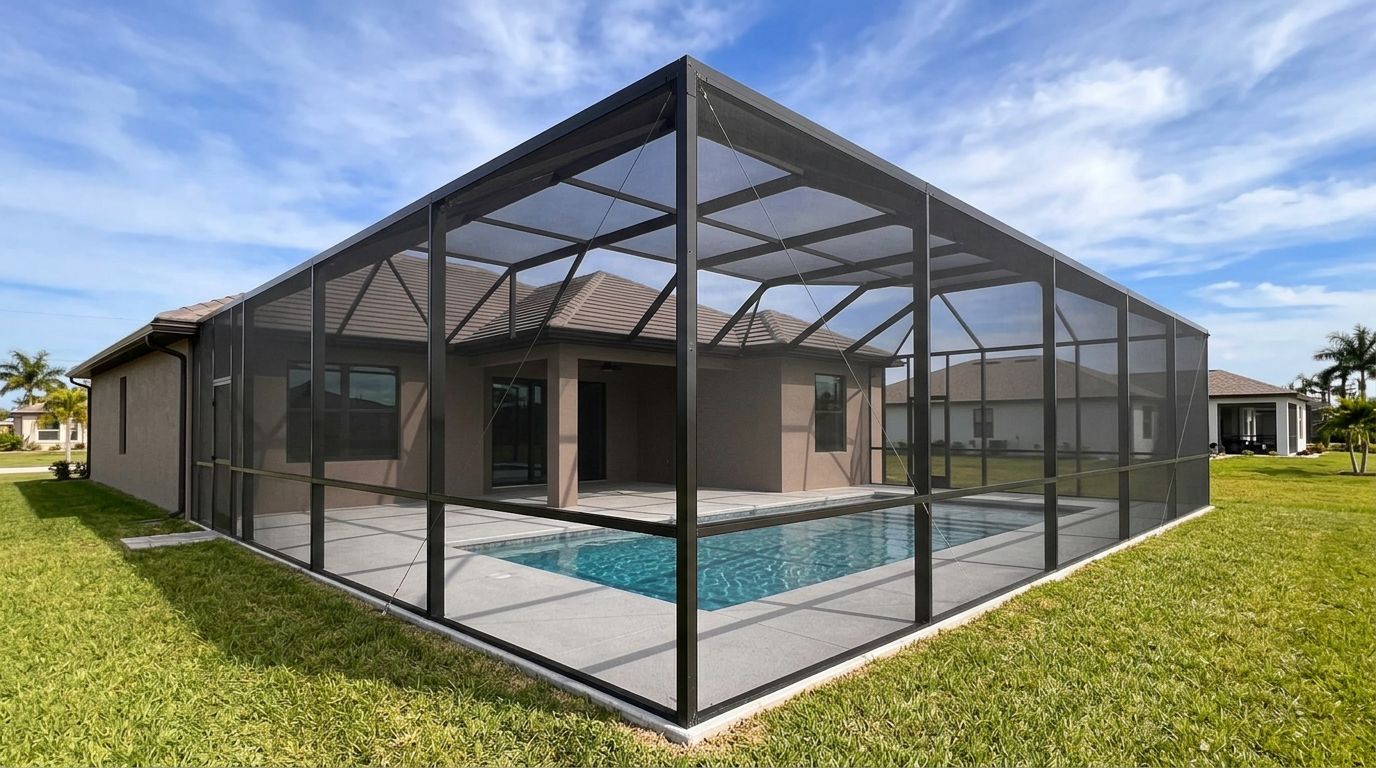
Most people judge the enclosure from inside, but the exterior matters too. From the yard, the screen contributes to the appearance of the home and the outline of the enclosure. From inside, it affects the view and the sense of separation from the garden.
Walk around the enclosure and look through multiple panels. That helps you assess the overall look rather than judging one small patch of mesh in isolation.
Match the choice to your priorities
A clearer view may be your main goal, but it's worth deciding what else matters in daily use. You might care about the enclosure's appearance from the street, the view from the kitchen, or how cohesive the screen looks across every panel.
Put your priorities in order. That makes it easier to compare options with a contractor and discuss tradeoffs without relying on broad labels.
Identify the views you want to protect
Choose the specific sightlines that matter most. These might include an open view beyond the pool, a garden feature, or the yard from a frequently used seating area. If only one part of the enclosure frames a valued view, that can guide the conversation about panel choices and consistency.
Consider how you use the space, too. A person who spends most of the day by the pool may care about a different angle than someone who mainly sees the enclosure from indoors. Describe the actual view, rather than asking only for "clear" screen.
Think about the entire enclosure
Mesh is one part of the view. The frame and the enclosure's panel layout also sit between you and the yard. A mesh choice can look attractive in a sample yet feel different when repeated across a larger area.
For that reason, discuss the finished appearance as a whole. Ask how the selected screen will look across the enclosure and whether it will match the surrounding panels. A consistent appearance can matter as much as the view through any single section.
Consider your yard, light, and surroundings
The same pool cage screen mesh won't look identical in every backyard. Nearby plants, outdoor furniture, rooflines, and the direction of the sun all affect what you see through it. Judge the screen in relation to the surroundings you already have.
If you're planning changes to the patio or landscaping, include those plans in the decision. A newly planted hedge or an added seating area can shift which views matter most.
Account for bright and shaded areas
Look for places where the screen meets a bright background, such as the open sky, and where it meets darker greenery. Those contrasts can make the strands stand out differently across one enclosure.
Also notice how much of the enclosure sits in shade during the hours you use it. A sample viewed in one lighting condition may not show how it will appear throughout the day. The aim is to assess the range of views you'll experience, not to find a single perfect angle.
Consider what may change outdoors
Landscaping grows, furniture moves, and outdoor spaces get updated. Think about whether your key sightline is likely to remain open. A screen choice should suit the yard you have while still working with practical changes you expect to make.
You don't need to predict every future project. Focus on planned changes that could alter your main view, such as moving a seating area or adding a privacy planting.
Discuss the choice with a screen enclosure company
A screen enclosure contractor can help you compare options in the context of your pool cage, rather than treating the mesh as a standalone product. Bring a clear description of your priorities and point out the views you want to keep.
For a new enclosure or a rescreen, talk through how the screen will look across the whole structure. At Back Bay Screens, we provide pool, lanai, and patio enclosure services, along with rescreening, in Southwest Florida.
Describe the view, not just the product label
Tell the contractor where you sit, which direction you face, and what you want to see. If possible, point out the specific view from a window or seating area. That gives the conversation a concrete reference.
You can also explain which backgrounds make the screen most noticeable to you. For example, mention whether the open sky, garden, or water is the view you care about most. A focused discussion makes it easier to compare samples against your priorities.
Ask to see the choice in context
A sample viewed against the actual surroundings is more useful than a description alone. Compare it where practical, then view the enclosure from the main places you use. Consider how the sample looks both up close and at a normal viewing distance.
A free, no-obligation estimate from Back Bay Screens gives Southwest Florida homeowners a chance to discuss enclosure or rescreening needs. The right conversation starts with the view you want to keep.
Frequently Asked Questions
Does a finer-looking mesh always give a clearer view?
The appearance of the weave is only one part of what you'll see. Background, lighting, viewing distance, and angle also affect how noticeable a screen feels. Compare samples in your yard and judge the view from your usual seating position.
Should I compare mesh samples indoors?
An indoor comparison can help you see the weave, but it won't show how the sample looks against your actual yard. Use an outdoor comparison when possible, with the sample facing the pool, landscaping, or sky that matters to you.
Can I use a different screen on one panel?
Different panels may create a change in appearance across the enclosure. If a particular view is your priority, discuss that area with the contractor and consider how the selected screen will look beside the rest of the structure.
What should I tell a contractor before choosing?
Describe the view you want to preserve, where you spend time, and which parts of the yard make the screen most noticeable. Those details give the contractor a practical starting point for comparing mesh options.
Choose for the view you'll enjoy every day
The clearest choice is the one that looks right from the places you use most. Compare real samples against your own pool, landscaping, and light, then weigh the appearance of the full enclosure alongside the view through it.
A screen should fit the way you live in your backyard. Let your preferred sightline guide the decision, and discuss that goal clearly with your enclosure company.