Screen Enclosure Frame Repair: Signs to Watch For
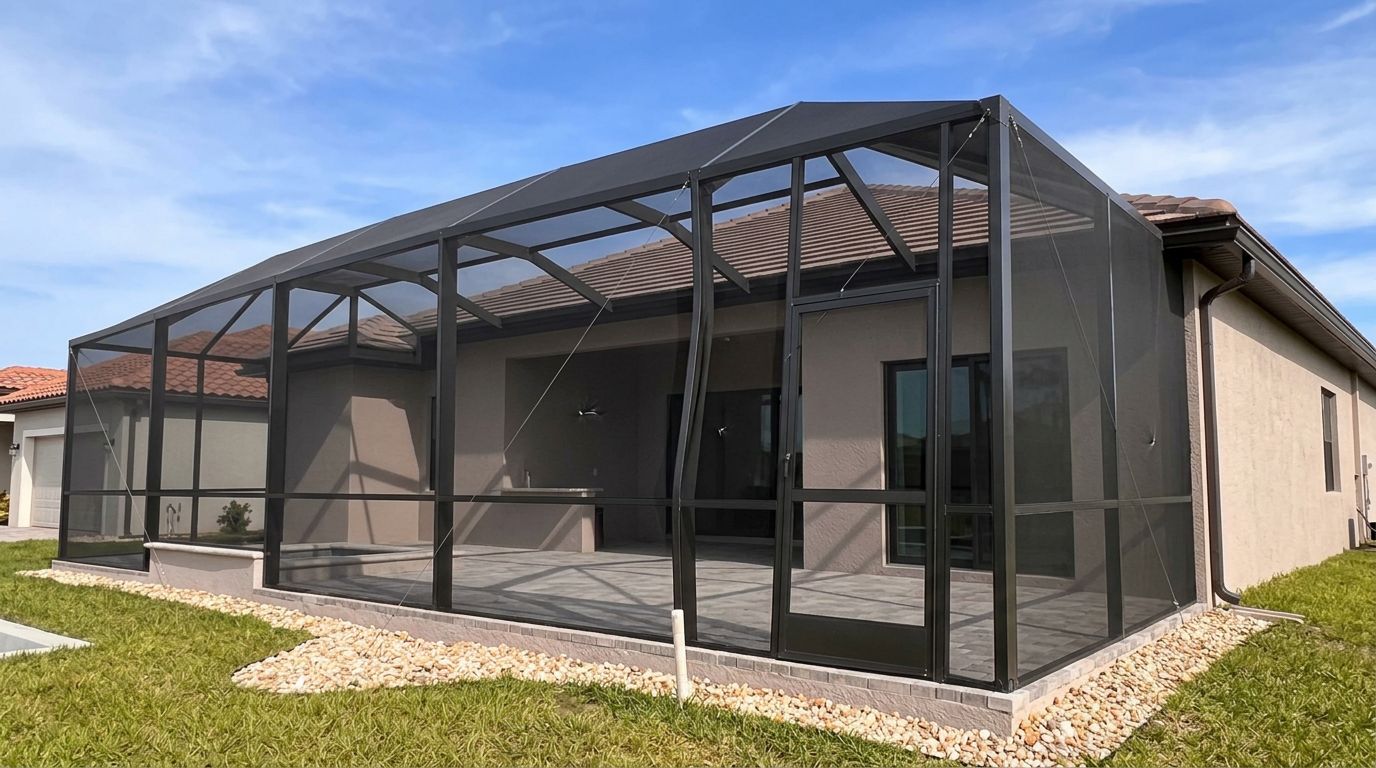
A screen panel can be replaced, but a damaged frame may affect the enclosure around it. To assess the frame, start by looking for changes in its shape, connections, and alignment rather than judging the screen alone.
Bent or loose framing, corrosion, cracks, separated joints, shifting posts, and doors that no longer line up can all be useful warning signs. You can inspect from the ground without climbing or leaning on the structure. If you see damage that affects a post, beam, or connection, arrange a professional assessment before treating it as a screen-only problem.
Look for changes in the frame's shape
Stand back far enough to see the enclosure's overall outline. Compare posts, beams, and roof sections on different sides, and look for a visible change in shape. A screen enclosure frame that appears bent or out of line deserves closer attention, although an appearance alone doesn't establish the cause or the repair needed.
Check for bowing or bending
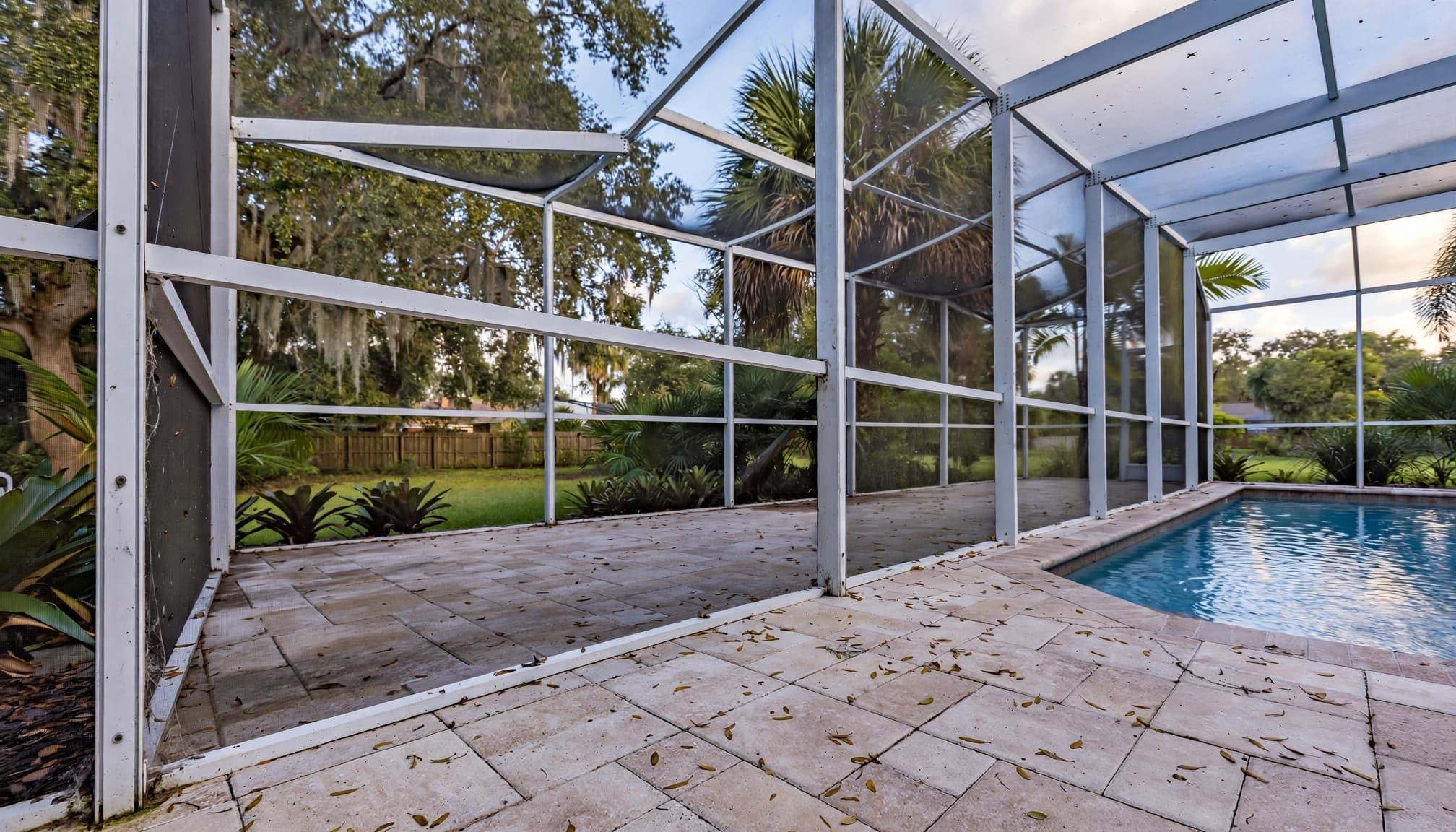
A straight frame member may look curved, kinked, or out of line compared with the parts beside it. Look at long spans and roof sections from more than one ground-level position. This can help you notice an uneven outline without touching or pushing the frame.
A screen panel can also sag or look loose without the surrounding aluminum being bent. Note whether the apparent change is in the mesh, the frame, or both. That distinction gives a repair professional a clearer description of what you observed.
Notice looseness without testing it
A frame that looks displaced at a connection may be loose, but don't shake it to find out. Avoid pressing against a post or beam, since that can put pressure on a structure you haven't assessed.
Instead, record which part appears out of position and whether the issue is near a corner, roof support, or wall connection. A ground-level photo can help document its appearance over time.
Identify corrosion and cracked metal
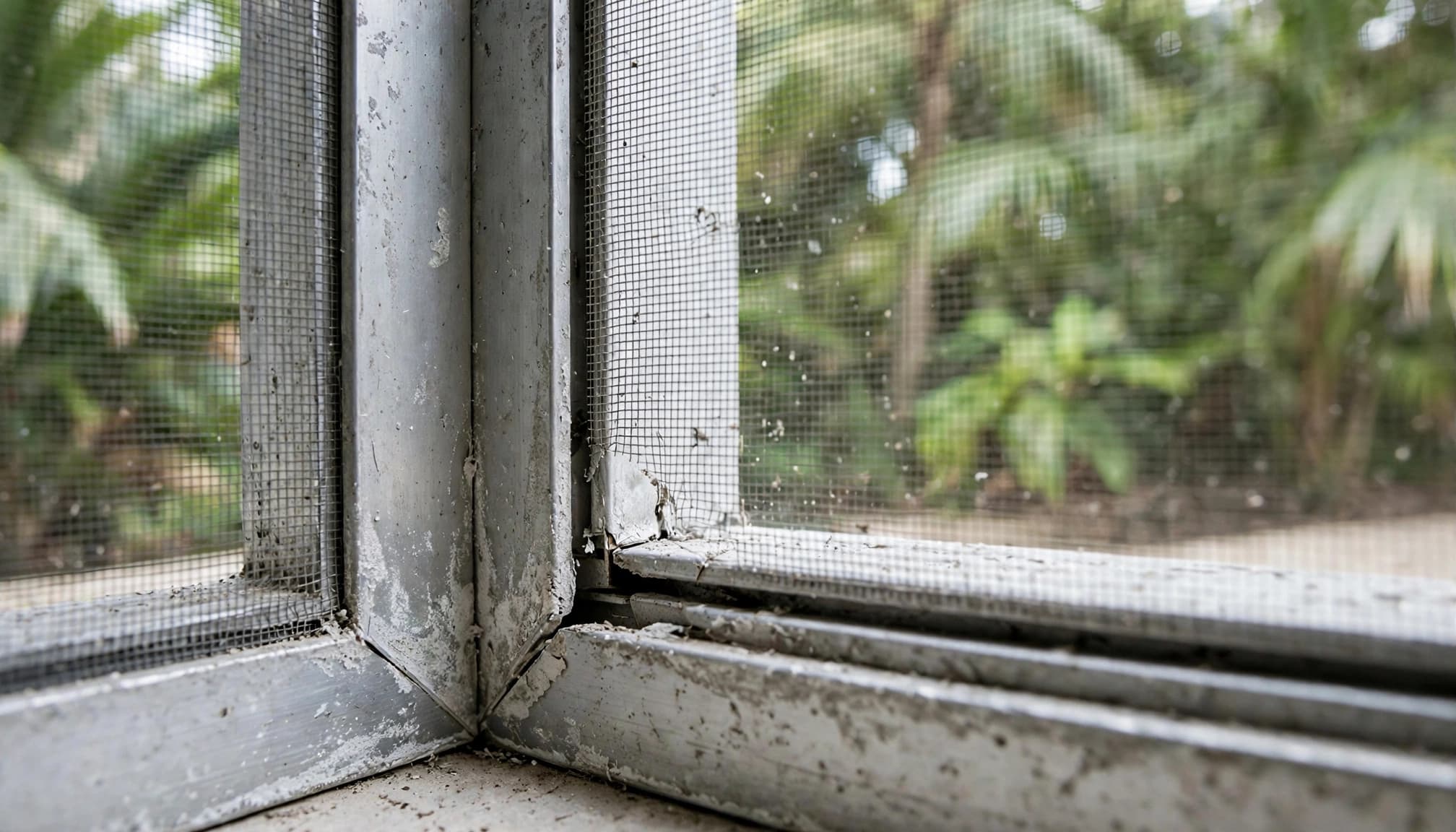
Aluminum framing can weather, and surface discoloration by itself doesn't tell you whether a part needs repair. Look for changes in the metal's surface, especially where a post or beam meets another component. A crack, flaking area, or visible loss of material deserves professional attention.
Distinguish discoloration from visible damage
Weather marks can be noticeable without showing a structural problem. From a safe position, look for rough or pitted-looking areas, peeling finish, or a break in the metal. Don't scrape, sand, or probe the surface to judge its condition.
If the metal looks cracked or compromised, treat that as more than a cosmetic concern. A qualified enclosure professional can assess the affected member and how it connects to nearby parts.
Pay attention to cracks near connections
A crack near a joint, corner, or support is especially important to describe accurately. Note its location and visible length from the ground. Don't try to close a gap, cover the damage, or remove a fastener before an assessment.
A photo taken from a safe position can show what you saw, but it can't confirm the frame's condition. A professional evaluation is appropriate when metal appears cracked or damaged.
Check joints and posts for movement
Connections bring separate sections of the enclosure together. Look at corners and visible meeting points for gaps, separation, or a change in alignment. Also pay attention to posts that appear to lean or shift in relation to the surrounding structure.
Look for separated joints
A gap where two frame members meet may be a sign that the connection has changed. Compare similar joints elsewhere, but don't assume every difference has the same cause. Take note of whether the gap is visible at one connection or at several.
Avoid trying to push the sections together or tighten the joint yourself. If the connection appears separated, a professional can assess whether the issue affects the frame and what work is appropriate.
Watch for shifting posts
Posts should appear consistent with the enclosure's general alignment. A post that looks tilted, displaced at its base, or out of line with adjacent supports warrants attention. Keep your inspection visual; don't lean on it, pull it, or use the screen for support.
When a post appears to have shifted, or you see damage where it meets another structure, request professional assessment. These observations concern the frame, not only the mesh, and should not be handled as a routine screen-panel issue.
Notice when doors and panels stop aligning
A door that drags, sticks, or no longer meets its frame evenly can be a useful clue. So can a panel that appears to pull away at an edge. These symptoms don't identify the cause on their own, but they help show where the enclosure's alignment may have changed.
Observe door fit and operation
Open and close the door only if it moves normally and you can do so without forcing it. Notice whether the latch meets its strike, the door rubs at one side, or the gap around it looks uneven. Stop if the door binds or needs force.
A door can have a hardware issue without a structural frame problem. However, if the door's fit changes alongside a visibly bent post, separated joint, or shifted frame member, mention both observations when arranging an assessment.
Separate mesh problems from frame problems
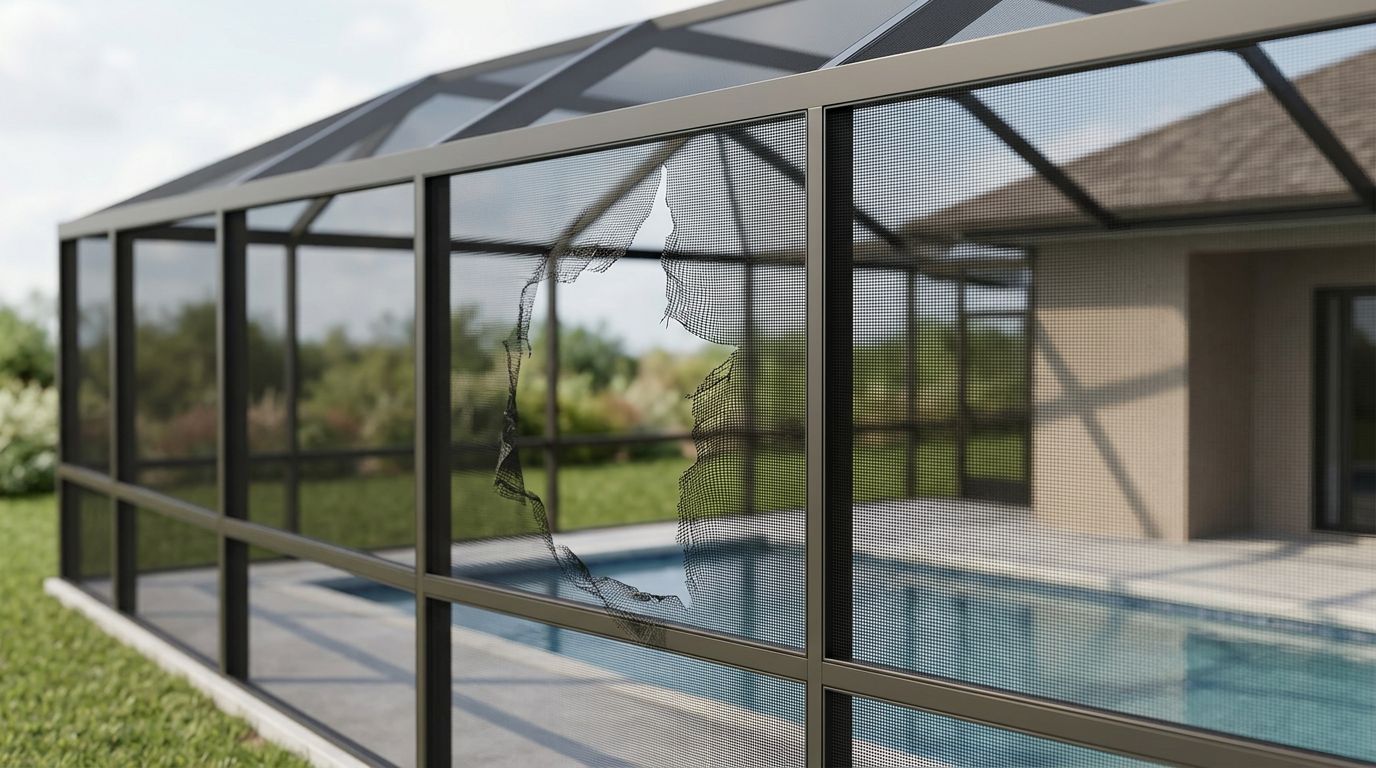
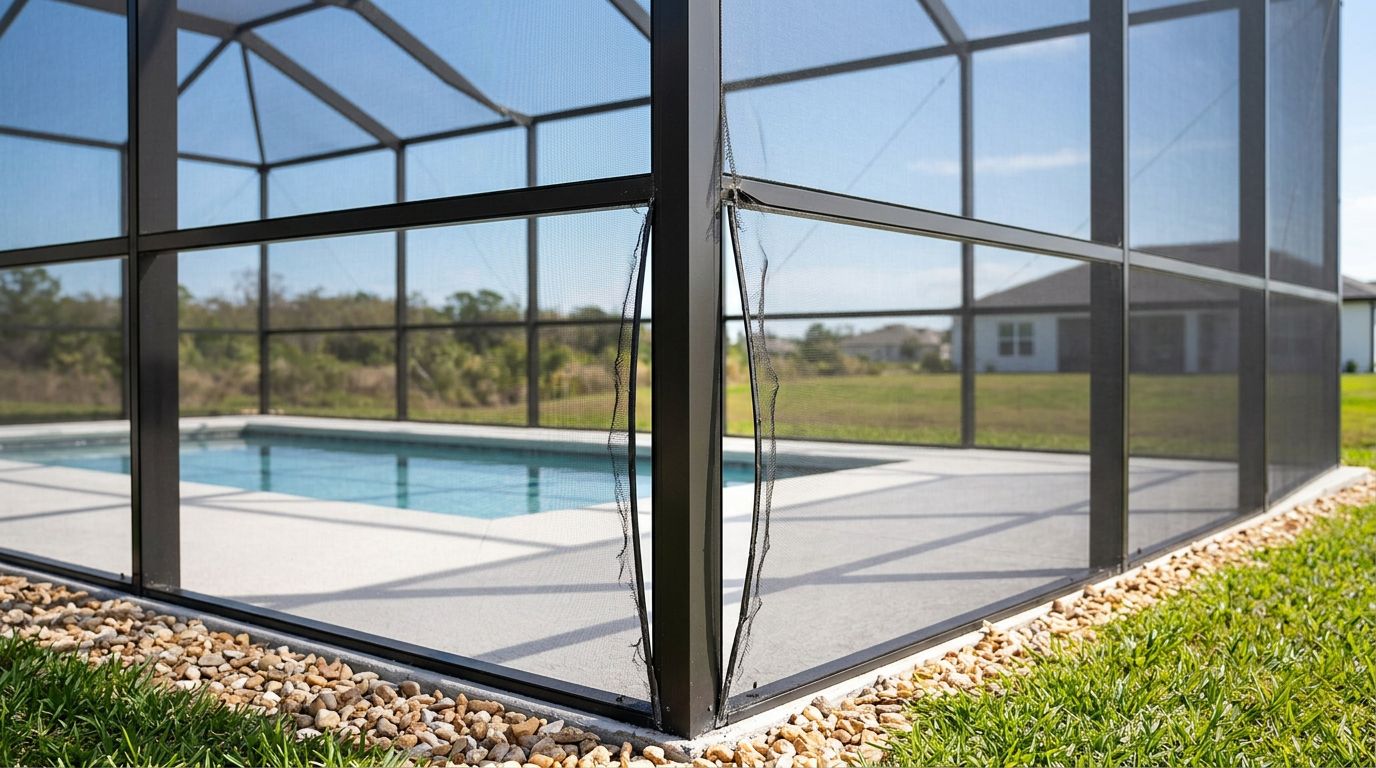
A torn screen, loose spline, or panel that has come out of its channel may be a screening issue. A frame member that looks bent, cracked, corroded, or separated is a different concern.
Look at the panel edges and the aluminum around them. If the mesh is damaged but its frame remains straight and aligned, describe the screen problem specifically. If the surrounding structure also looks changed, don't assume rescreening alone will address it.
Inspect safely from the ground
A useful inspection doesn't require physical contact with the enclosure. Choose a clear route around the outside or inside perimeter, and keep a safe distance from any visibly damaged area. Check each side, the corners, doors, posts, and the parts you can see overhead without climbing.
Never climb onto the frame or roof, use a ladder to reach a damaged section, or lean against a post or beam. Don't pull on mesh, shake members, or push a frame to test how firmly it holds. Those actions can put you at risk and won't provide a reliable assessment.
Make a clear record
Write down the location of each concern, such as "left side near the door" or "rear corner post." Describe what you can see in plain terms: a gap at a joint, a post that looks out of line, or a crack in the metal. Avoid diagnosing a cause.
Photos can help show the appearance and location. Take them from a stable, ground-level position, and don't step into an unsafe area to get a closer view. If there are several concerns, photograph each separately.
Don't confuse inspection with testing
A visual check helps you report visible changes, but it can't establish how a connection performs or whether a structural member is sound. Avoid improvised tests, including pulling a post or applying pressure to a beam.
When a concern involves a support, connection, or damaged metal, leave hands-on evaluation to a professional. That's particularly important if the enclosure's shape or alignment appears to have changed.
Know when structural damage needs professional assessment
Professional assessment is warranted when you see a cracked or bent frame member, a separated connection, a post that appears to have shifted, or damage that changes the enclosure's alignment. These signs do not automatically determine the exact repair, but they involve parts that support or connect the frame.
If you notice more than one change in the same area, explain that when contacting an enclosure company. For example, mention a door that no longer aligns along with a nearby post that appears tilted. The combined observations help direct attention to the area, while the professional assessment determines what work is suitable.
A screen-only repair may be appropriate when the frame appears intact and the problem is limited to mesh or panel fit. When framing is also visibly damaged, ask for the frame to be assessed before arranging work limited to the screen. Back Bay Screens serves Cape Coral and Southwest Florida with enclosure and rescreening services, including pool, lanai, patio, and sunroom projects.
Frequently asked questions
Can a torn screen mean the frame needs repair?
Not by itself. A tear or loose mesh edge can be limited to the screening. Look at the surrounding aluminum for bending, cracks, corrosion, separated joints, or changes in alignment. If you see those as well, describe them when seeking professional help.
What if the door sticks but the frame looks straight?
A sticking door may involve its hardware or fit. Don't force it. Note where it rubs and whether the latch meets the frame. If the door's alignment changed or you also see a shifted or damaged frame component, request a professional assessment.
Should I test a loose-looking post?
No. Don't push, pull, shake, or lean on it. Record what looks different from a safe distance and contact an enclosure professional if the post appears displaced or its connection looks damaged.
Make the frame part of the inspection
A screen tear is easy to notice, while a frame change can be subtler. Look for visible bending, corrosion, cracks, separated joints, shifting posts, and doors or panels that no longer align. Keep the inspection visual and stay off the structure.
When the concern involves a post, beam, or connection, professional assessment is the safer next step. Clear observations help distinguish a screening issue from a possible frame problem.