Can a Screen Enclosure Reduce Pool Evaporation in Naples?

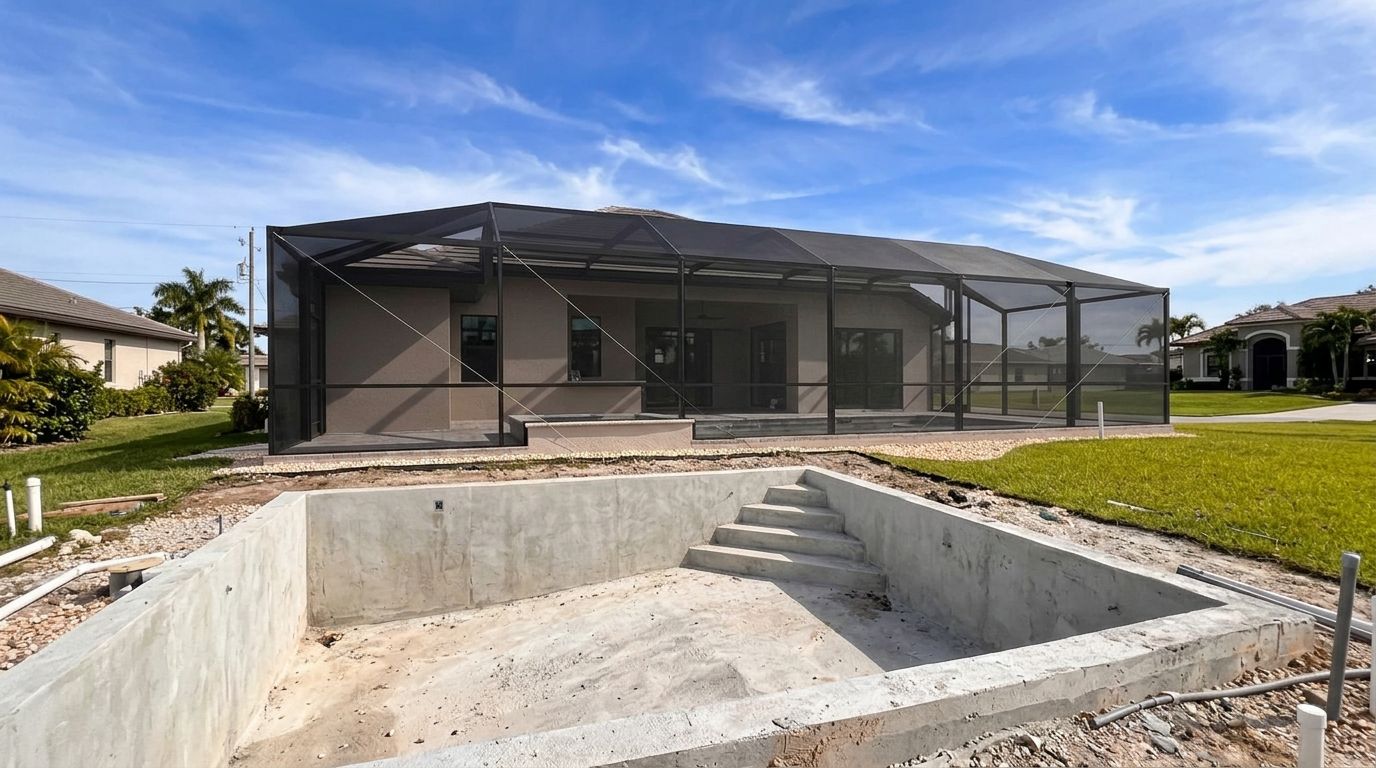
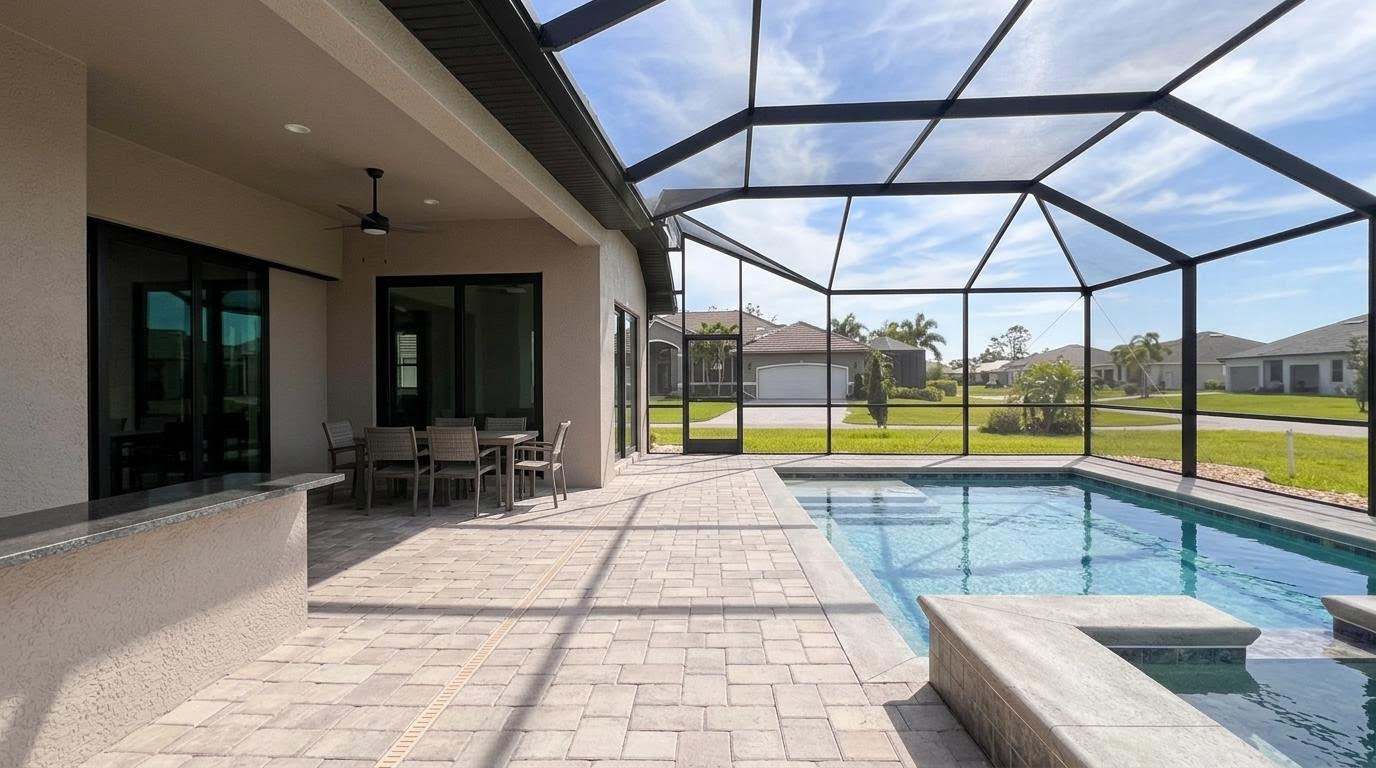
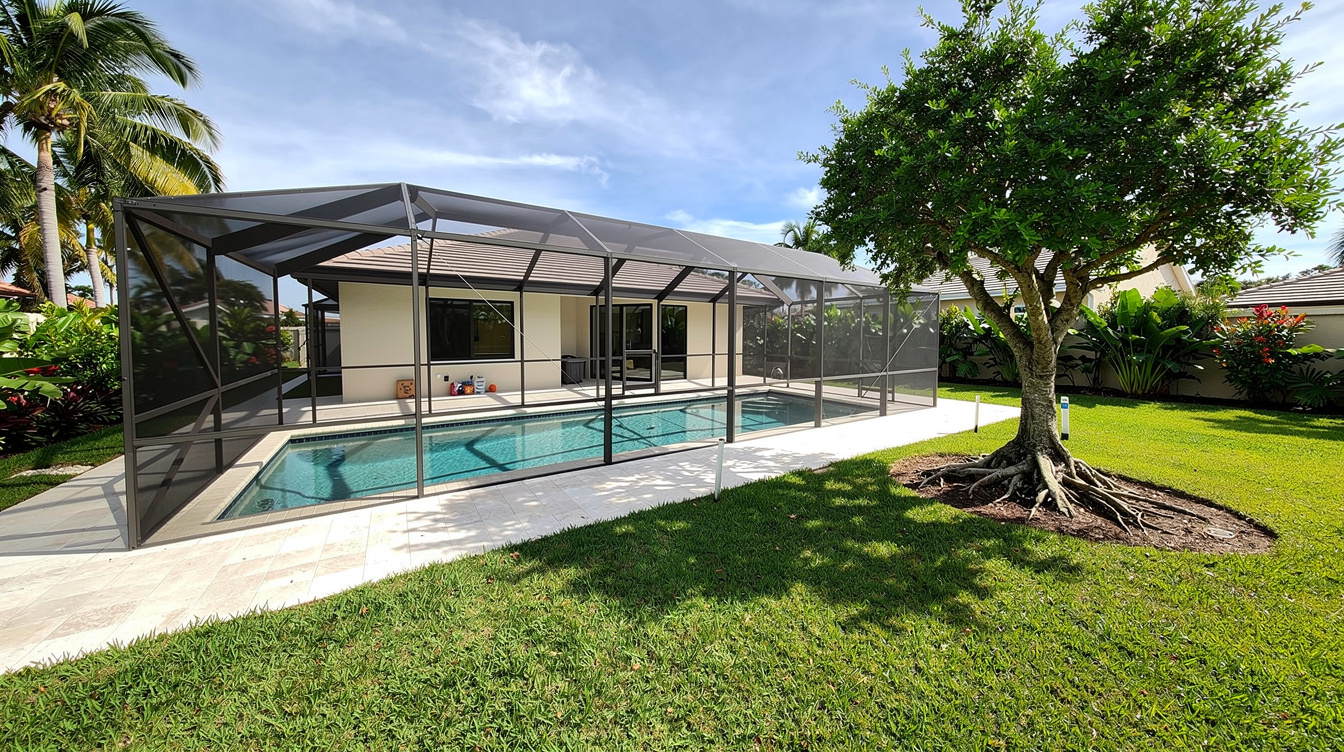
A screen enclosure may reduce some wind exposure around a pool, but it won't stop pool evaporation. Its effect depends on how the cage sits on your property, how much air moves through the mesh, and the weather. In Naples, wind, humidity, water temperature, and sun exposure all matter. Understanding what the enclosure can change helps you choose better ways to limit water loss.
How a screen enclosure affects evaporation
It can soften some breezes, but it isn't a cover
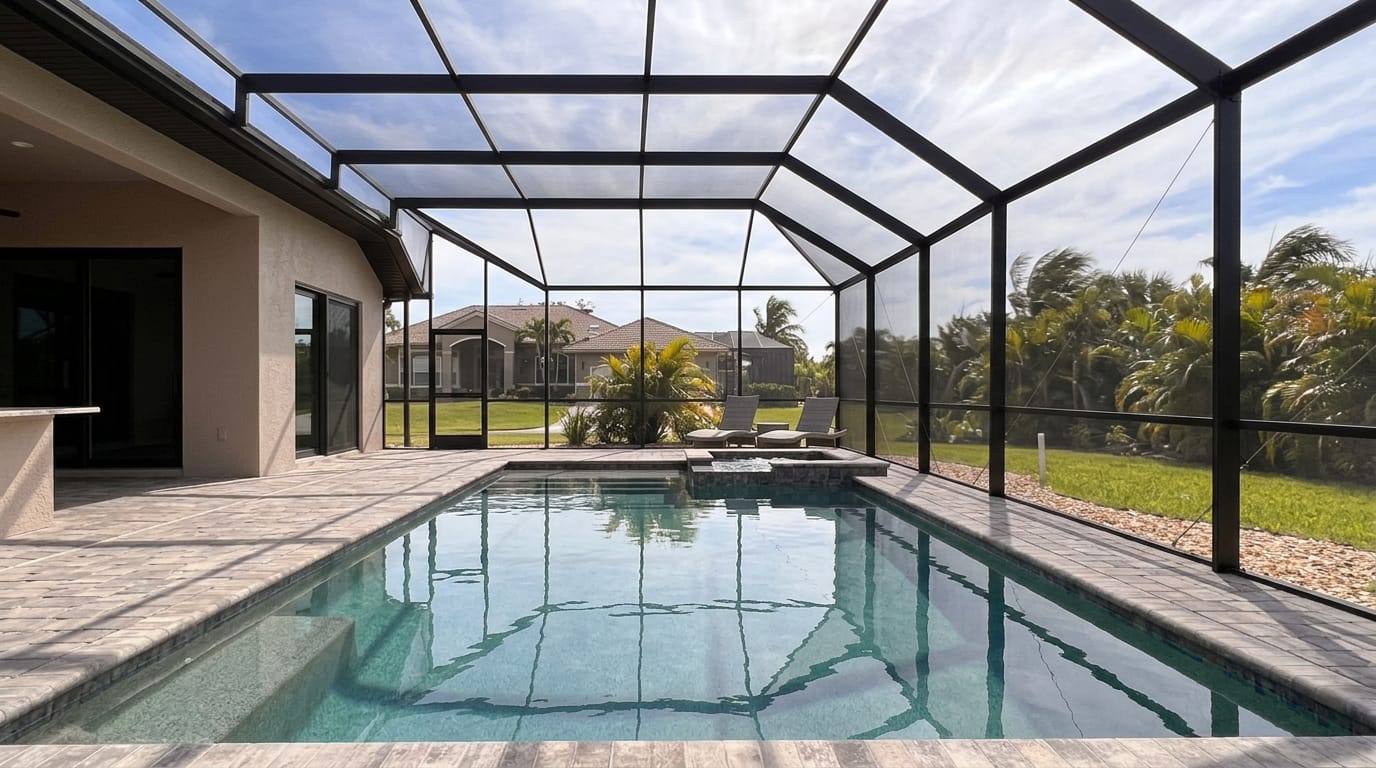
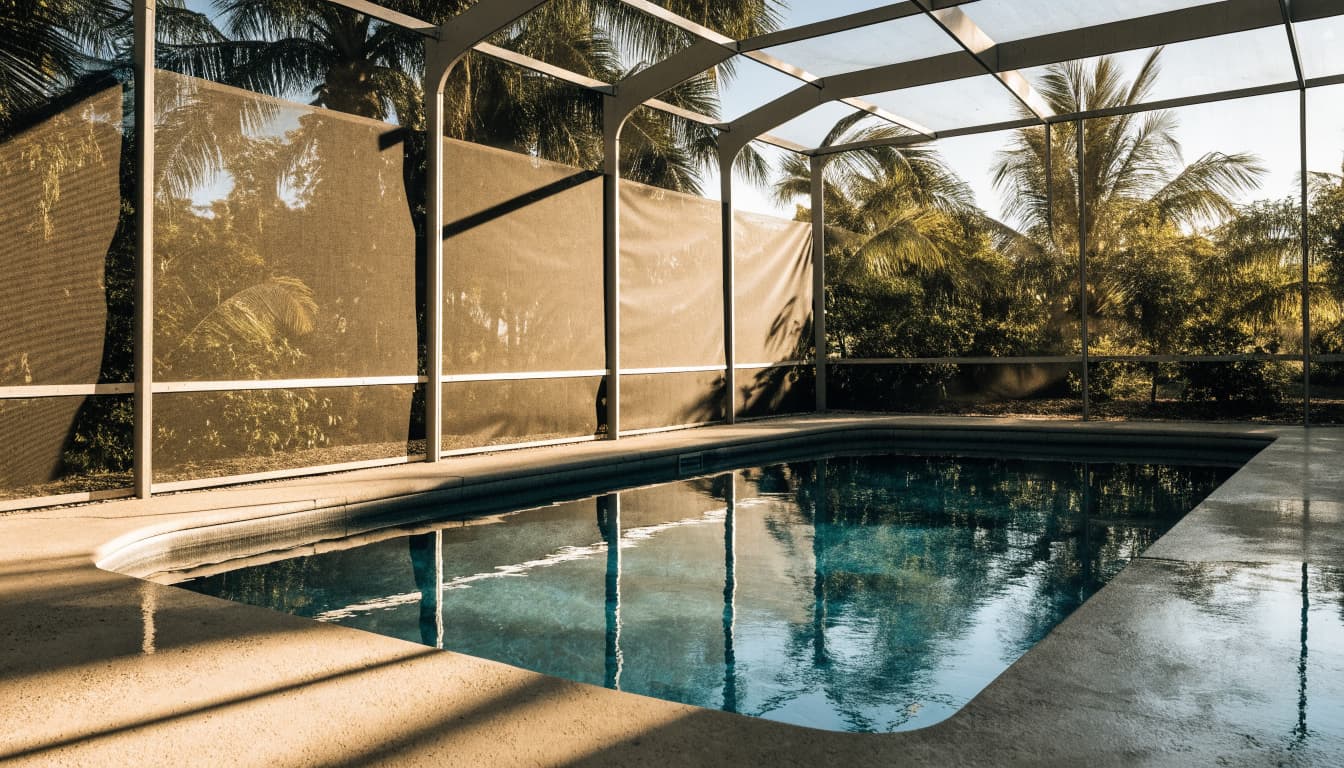
Wind carries humid air away from the water's surface, allowing more water to evaporate. Screen panels may reduce or redirect some wind, depending on their position and the enclosure's design. However, mesh allows air to pass through, and an open pool cage doesn't create a sealed barrier above the water.
That means a screen enclosure can change the pool's exposure without reliably controlling evaporation. The result will vary with wind direction, surrounding buildings and landscaping, and the cage's layout.
Mesh and layout affect comfort, not just the view
Screen type, panel placement, and the enclosure's frame influence airflow, visibility, and privacy. A choice made for insect protection or a clearer view doesn't automatically reduce evaporation. Compare how mesh looks in your actual yard and consider the space you use most. Our guide to pool cage screen mesh for clearer views covers practical factors to weigh when selecting screening.
Weather conditions that drive pool water loss
Evaporation depends on the movement of water from the pool into the air. In practical terms, the conditions at the water's surface matter more than the presence of a cage by itself.
Wind and humidity work together
Breezy conditions can increase evaporation by moving moist air away from the pool. Humid air, by contrast, already holds more moisture, so it generally reduces the difference between the air and the water surface. Naples homeowners may see both conditions, and the balance changes with weather and season.
A screen enclosure may interrupt some wind, but it can't control the humidity outdoors. If your pool loses more water on a breezy, dry day than on a calm, humid one, the weather may explain part of the difference.
Sun and water temperature matter
Sunlight warms the pool and can raise water temperature. Warmer water evaporates more readily, so a sunny pool may lose more water than a cooler, shaded one under otherwise similar conditions. The enclosure's roof and mesh may create some shade at certain times, but a standard screen cage isn't a solid roof or a dependable shade structure.
Pool heaters can also raise water temperature. If you heat the pool, that added warmth can affect evaporation, especially when the air is cooler or dry.
What an enclosure can and cannot do
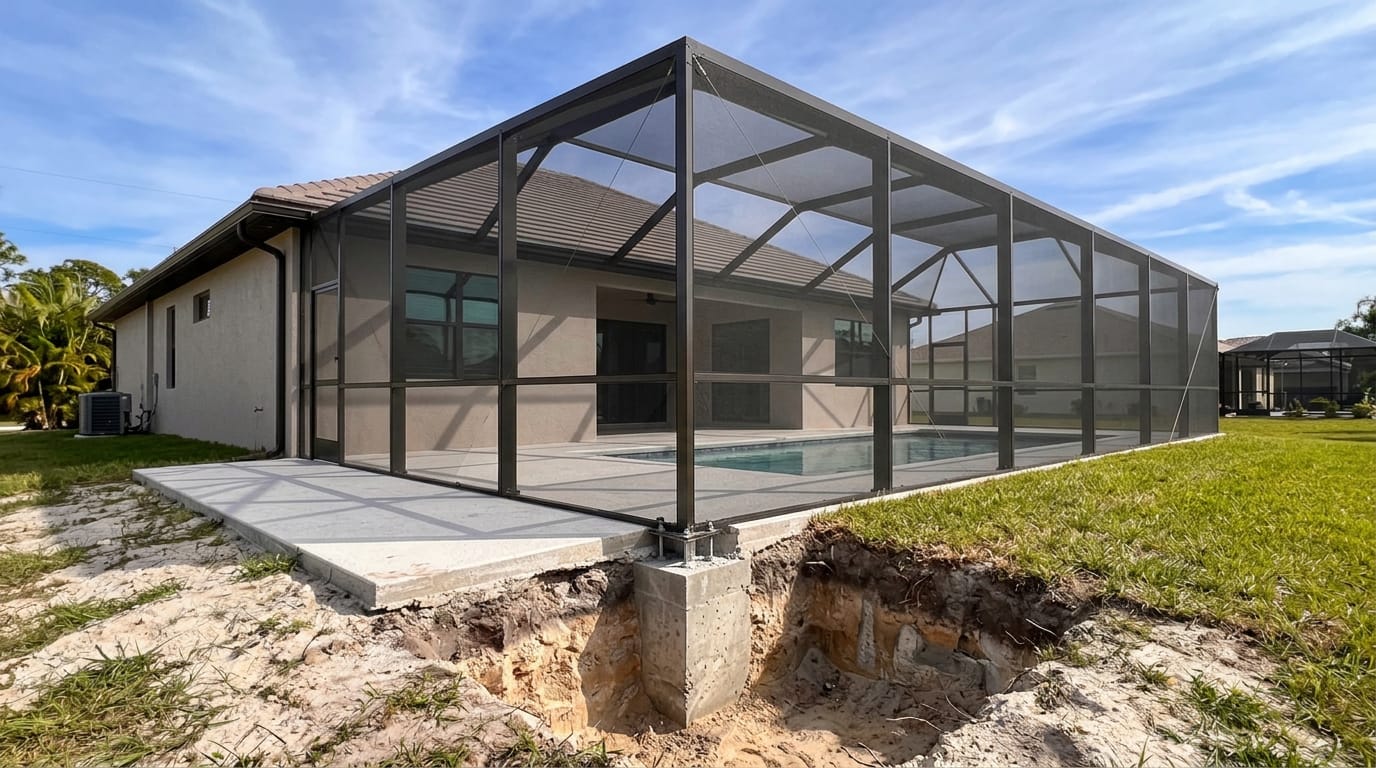
A pool cage helps keep insects, leaves, and larger debris out of the pool area. It can make the space more comfortable and reduce routine cleanup, but it doesn't cover the water's surface or block outdoor air. Those benefits should be considered separately from water conservation.
Design also matters for everyday use. Enclosure planning should account for the property, materials, airflow, and the views you want to preserve. Our Cape Coral enclosure design and installation overview describes why a property-specific plan matters for a Southwest Florida home.
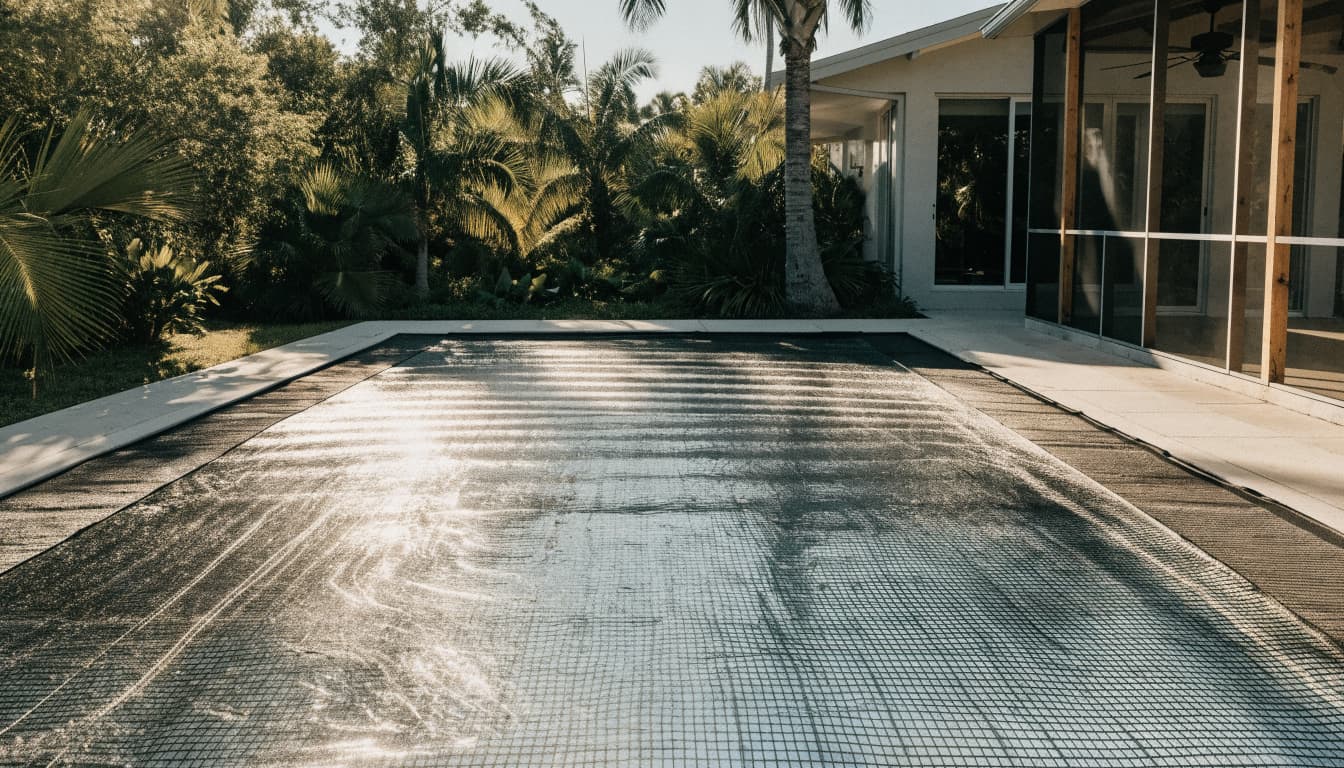
If reducing evaporation is your main goal, treat the enclosure as one part of the setting, not the primary control. A pool cover acts directly on the water surface; mesh doesn't.
Other reasons a pool may lose water
Evaporation isn't the only cause of a falling water level. Swimmers can splash water out, and leaks in the pool shell or plumbing can cause ongoing loss. Backwashing a filter or running water features can also send water out of the pool or increase the amount exposed to air.
Rainfall may raise the level temporarily, which can make a gradual loss harder to notice. If water loss continues during calm, humid weather or seems unusually high, consider whether a leak or equipment issue could be involved rather than assuming evaporation is responsible.
Practical ways to reduce evaporation
Cover the water when the pool isn't in use
A pool cover is a more direct way to limit evaporation because it sits over the water and reduces its exposure to open air. Use a cover suited to your pool and household. Follow its safety instructions, and keep children away from uncovered water.
Limit avoidable heat and water movement
If you heat the pool, use a temperature that suits your needs rather than keeping the water warmer than necessary. Turn off fountains and other water features when no one is using them, since they increase water movement and expose more water to air.
Also keep track of the pool level over time. Regular enclosure care can help keep the space functioning as intended, though it won't prevent evaporation. For guidance on caring for the mesh and frame, see our notes on screen enclosure cleaning and maintenance.
Key takeaways
- A screen enclosure may reduce some wind exposure, but it doesn't seal the pool.
- Humidity, wind, sun, and water temperature affect evaporation.
- A pool cover acts directly on the water surface.
- Splashing, water features, backwashing, and leaks can also lower the pool level.
Frequently asked questions
Does a screen enclosure keep pool water from evaporating?
No. Mesh allows outdoor air to pass through, and an enclosure doesn't cover the water. It may change wind exposure, but it can't reliably prevent evaporation.
Does shade from a pool cage reduce water loss?
Shade can limit direct sun on parts of the pool and may help keep water cooler. However, a standard screen enclosure doesn't provide solid, consistent shade across the entire pool.
What's the most direct way to reduce evaporation?
Covering the pool when it's not in use reduces the water's exposure to air. A screen enclosure can improve the pool area, but it isn't a substitute for a pool cover.
A screen cage is only one part of the picture
In Naples, a screen enclosure can shape how wind reaches your pool, but weather and water temperature still affect evaporation. For a noticeable reduction in water loss, focus on the water itself with a pool cover, and consider other causes if the level keeps dropping.