How Salt Air Affects Screen Enclosure Hardware in Sanibel
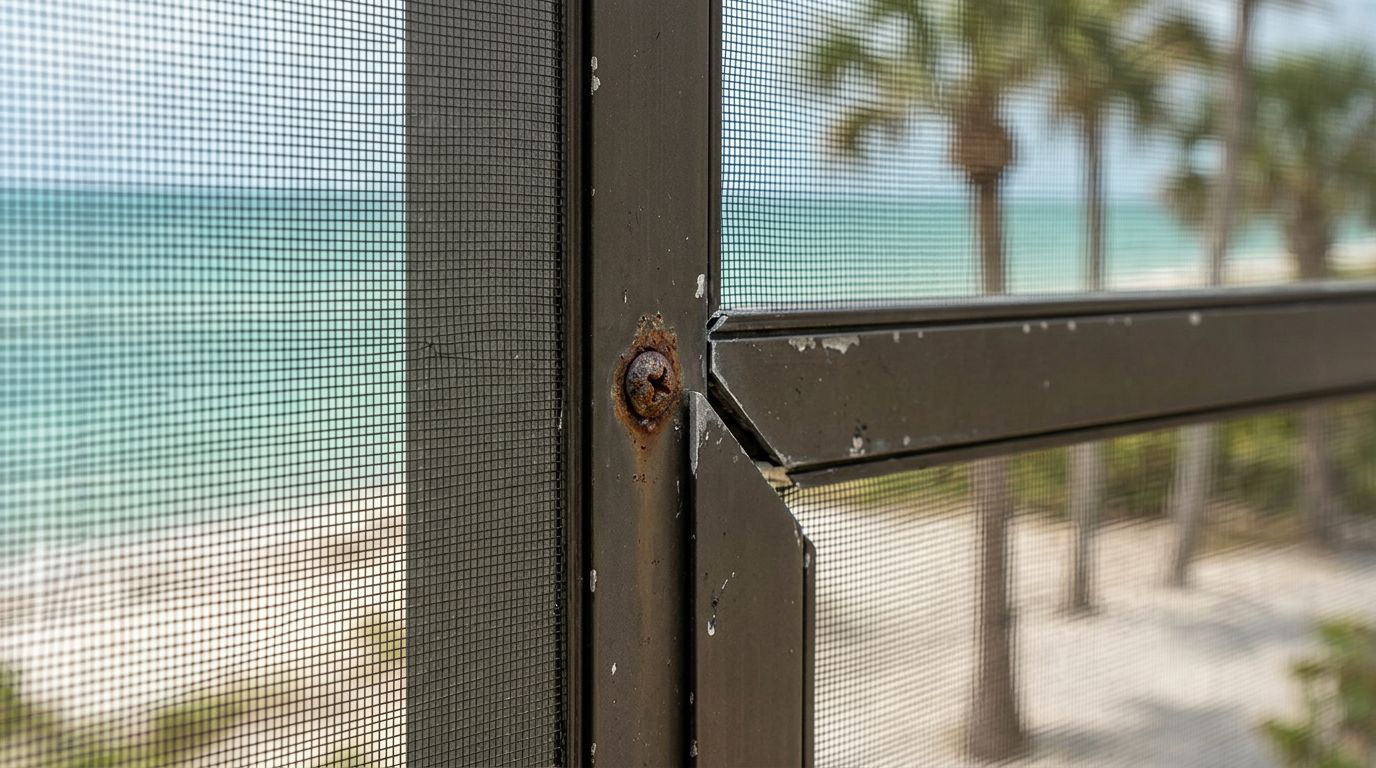
Coastal salt exposure can contribute to corrosion on screen enclosure hardware, affecting connections even when the mesh looks sound. For Sanibel homeowners, the important warning signs include deteriorating fasteners, separated joints, and changes in frame alignment.
A clean-looking enclosure can still have connection problems , while a torn screen may involve only the mesh. Understanding that distinction helps you recognize when cleaning, screen replacement, or a professional assessment is the appropriate next step.
Why salt exposure matters on Sanibel
Sanibel's coastal setting puts enclosure components in contact with airborne salt and moisture. However, a property's location alone doesn't establish the condition of its hardware.
Salt and moisture affect metal surfaces
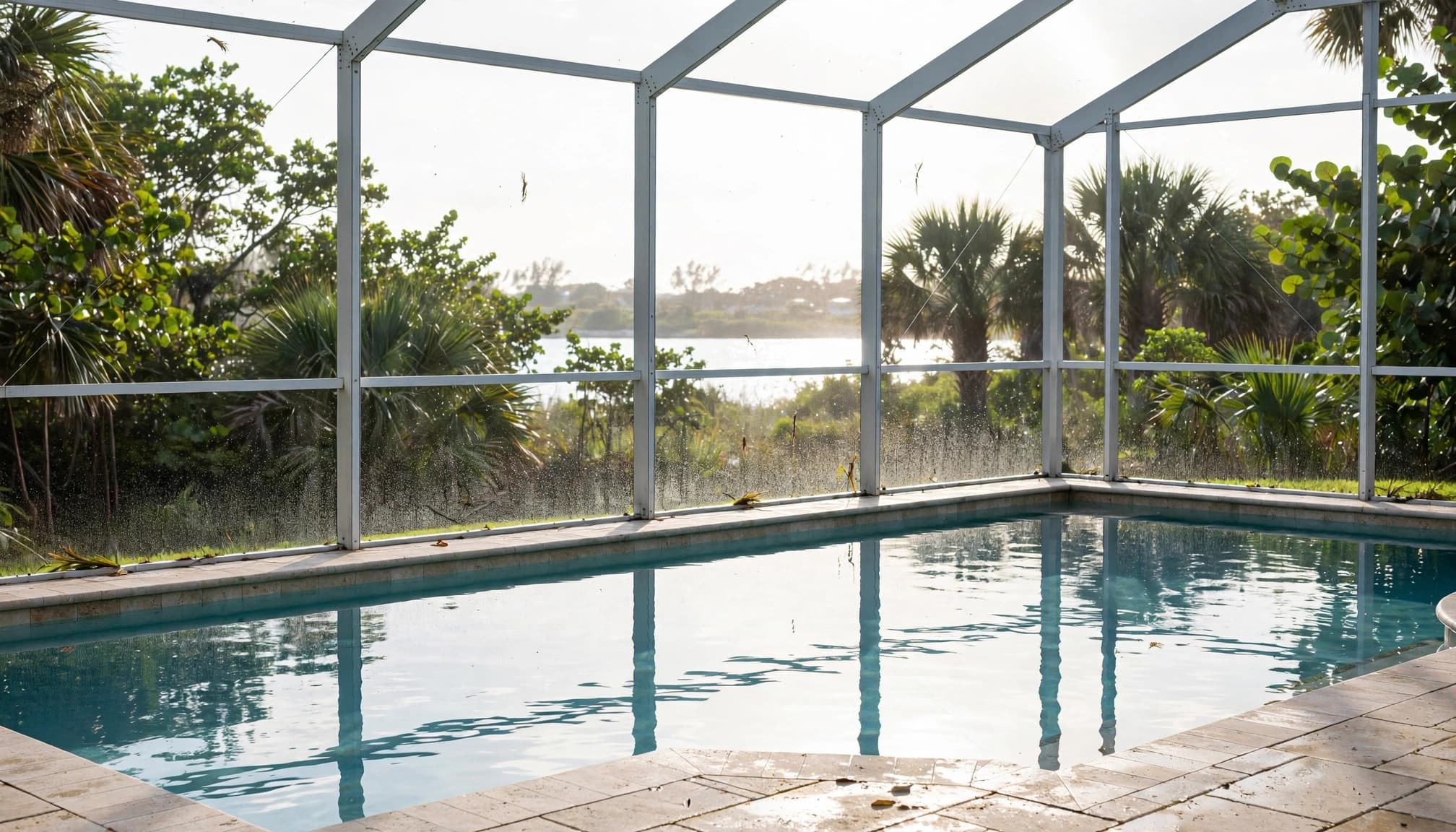
Salt deposits can remain on exposed surfaces after airborne spray or moisture dries. When those deposits become wet again, the resulting salty moisture supports the chemical reactions involved in corrosion.
The practical concern extends beyond discoloration. Corrosion can consume metal, so damage at a connection deserves attention even when the surrounding screen remains intact. Nevertheless, appearance alone doesn't reveal how much material remains or whether a connection is sound.
Exposure varies around the enclosure
An open, wind-facing side may experience different conditions than a sheltered corner. Landscaping, nearby buildings, and the enclosure's layout also affect what reaches individual surfaces.
Look at the enclosure as several connected areas rather than assuming every section has the same condition. For example, a concern near one doorway doesn't establish that every connection needs replacement. Likewise, an undamaged-looking side doesn't settle the condition of a weathered corner.
Fasteners, connectors, and frames need different attention
These components work together, but each has a different role. Recognizing those roles helps you describe a problem without guessing at its cause.
Fasteners secure individual attachments
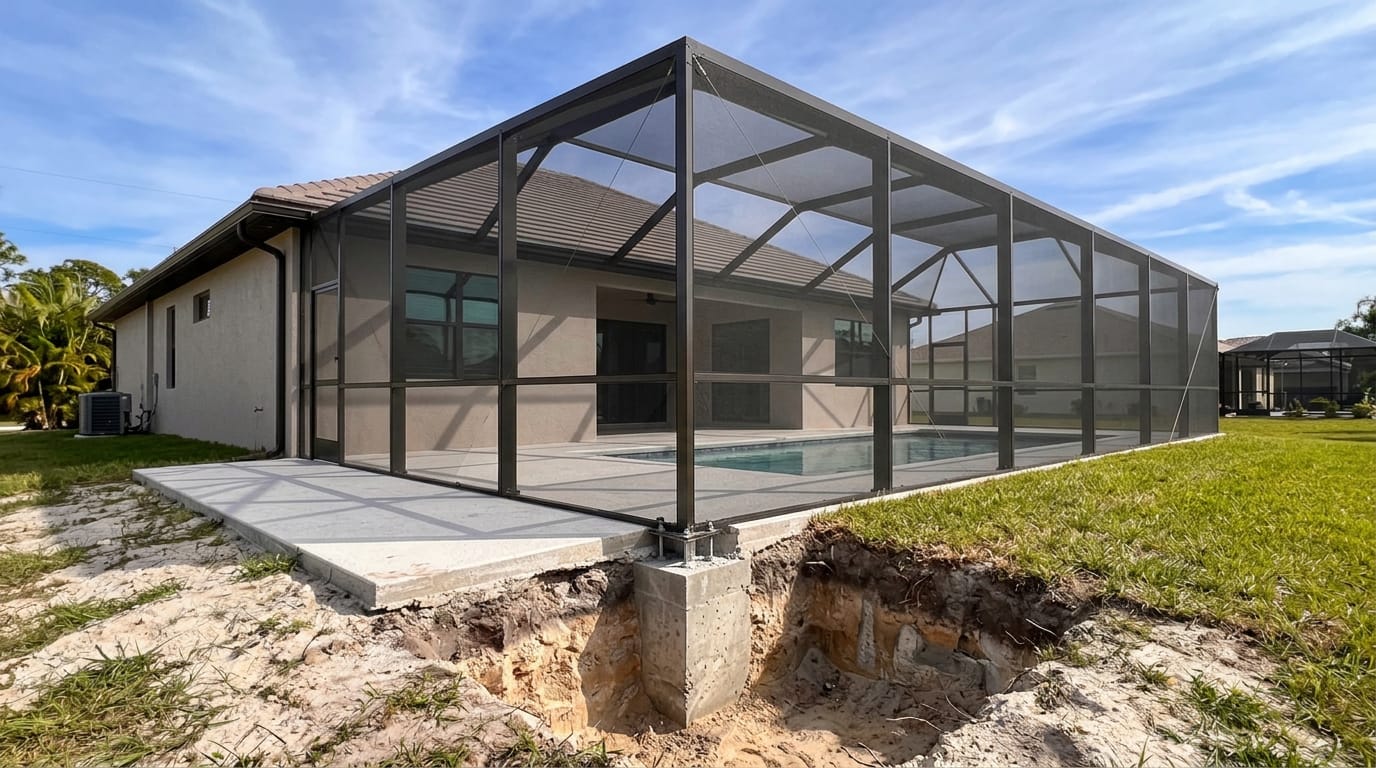
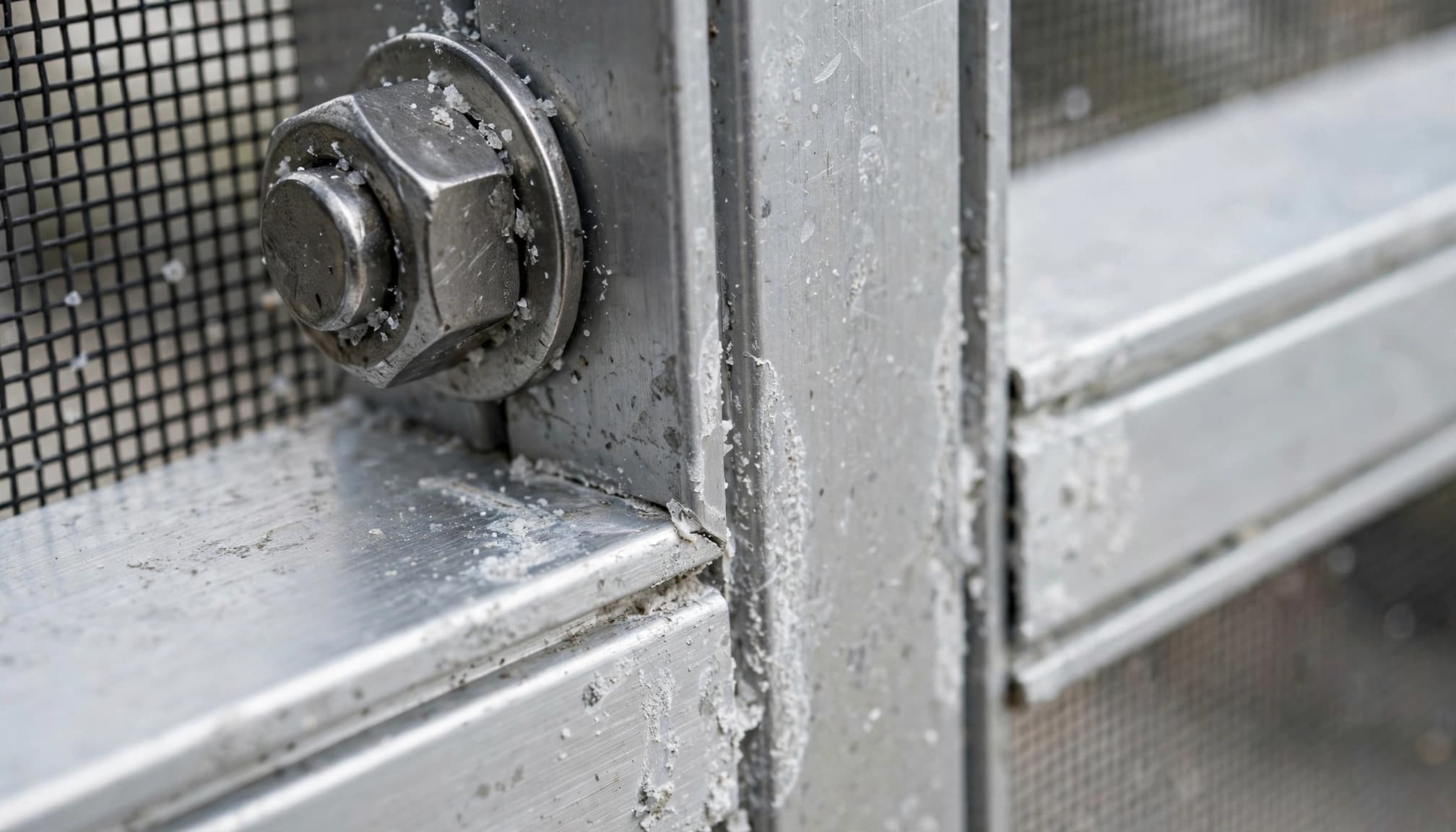
Screws, bolts, and anchors hold enclosure parts together or attach them to supporting surfaces. Corrosion on an exposed head may be visible, while the condition of concealed portions remains unknown.
Missing fasteners, damaged heads, or visible separation around an attachment warrant attention. However, don't remove or tighten structural hardware to investigate. The visible fastener is only one part of the connection, and disturbing it doesn't provide a reliable assessment.
Connectors join the structure
Brackets and other connectors bring frame members together. Their condition matters because a joint must transfer forces between the parts it connects.
Look for gaps, separation, or changes in alignment around these meeting points. Corrosion beside an opening deserves professional review, but the opening alone doesn't establish salt as the cause. Movement, damage, and attachment conditions can also affect a joint.
Frame members support the screens
Posts, beams, and rails give the enclosure its shape and support the screening. Their condition therefore matters independently of whether the mesh has holes.
Visible corrosion, cracks, bending, or a leaning post can indicate concerns beyond screening. A damaged rail or screen attachment channel may also affect whether replacement mesh can sit securely. The repair decision should account for the surrounding structure, not simply the most noticeable defect.
Rinsing and appearance don't establish structural condition
Rinsing belongs to cleaning; evaluating damaged hardware is a separate task. An enclosure can look cleaner without any change in the condition of its connections.
For example, removing surface deposits doesn't replace metal already lost to corrosion. It also doesn't correct a separated joint, restore a cracked member, or explain why a door has moved out of alignment.
The distinction works in both directions. A stain doesn't automatically mean a connection has failed, and a bright surface doesn't establish that everything underneath is sound. Photos and surface appearance provide useful observations, but they can't establish the remaining strength of concealed components.
Cleaning can change what you see without changing what a damaged connection can support.
When you notice a persistent concern, describe the visible condition rather than assigning it a diagnosis. "Discoloration around the lower door attachment" is more useful than assuming that every mark is corrosion or that cleaning has resolved the issue.
If there are cracks, separated joints, or shifting members, keep the focus on professional assessment rather than appearance.
Inspect safely from the ground
A useful homeowner inspection is visual. It doesn't require climbing, pulling on mesh, or pushing against the frame.
Follow the perimeter without testing components
From a safe position, look along each side and at visible corners, doors, posts, and overhead members. Pay attention to changes in shape and alignment as well as surface deterioration.
Never climb onto the enclosure roof, lean against a questionable post, or shake a member to test its strength. Avoid ladder access to damaged areas and work above the pool. Those actions create risks without providing a dependable structural diagnosis.
If a section appears unstable, keep people and pets away while arranging an assessment with a qualified local professional.
Record related changes together
Note the location of each concern in plain language. Useful descriptions include "gap at the rear corner" or "door rubbing beside the left post."
Also record whether several changes appear together. A door that no longer aligns and a nearby post that looks tilted deserve attention as a combined concern.
Photos taken safely from the ground can help communicate what you noticed. However, don't reach into a joint or remove hardware for a closer image. When mesh is also affected, distinguish a tear from an opening along its border. Our guidance on screens pulling loose explains that difference.
When repair should extend beyond the screen
The right scope depends on what is damaged and whether the surrounding components remain serviceable. Salt exposure alone doesn't mean the entire enclosure needs replacement.
Localized screen damage may allow a focused repair
A single torn panel can often receive new mesh when its frame, attachment channel, and neighboring screening remain sound. That decision depends on the condition around the opening as well as access to it.
However, a panel replacement won't correct a bent rail or weakened connection. Our explanation of replacing one torn screen panel separates isolated mesh damage from concerns that require a broader assessment.
Damaged connections need their own repair decision
Missing hardware, separated joints, cracks, or shifting posts call for professional evaluation before screen-only work proceeds. The assessment should identify the affected components and how they connect to the rest of the enclosure.
A localized component replacement may be appropriate when the surrounding structure can support the repair. More extensive replacement may be appropriate when damage affects several connected areas or prevents a dependable localized repair.
Those decisions require more than counting damaged panels. Significant damage warrants a qualified local enclosure professional, with structural expertise involved when needed.
Meanwhile, widespread worn mesh may justify complete enclosure rescreening. Rescreening renews the screening surface; any hardware or frame work should have a clearly defined scope.
What a clear enclosure estimate should include
An estimate should distinguish screening work from work involving doors, hardware, connections, or structural members. A broad description such as "screen repair" can leave those differences unclear.
For a Sanibel property with visible corrosion concerns, the proposal should identify the affected area and the components receiving attention. It should also distinguish replacement from adjustment or screening work, rather than grouping everything under one general description.
This matters when several issues overlap. New mesh, a door adjustment, and a damaged connection involve different tasks, even when they sit beside one another.
At Back Bay Screens, our enclosure and rescreening services address the project according to its condition and agreed scope. Related hardware work can form part of a rescreening project when included in that scope.
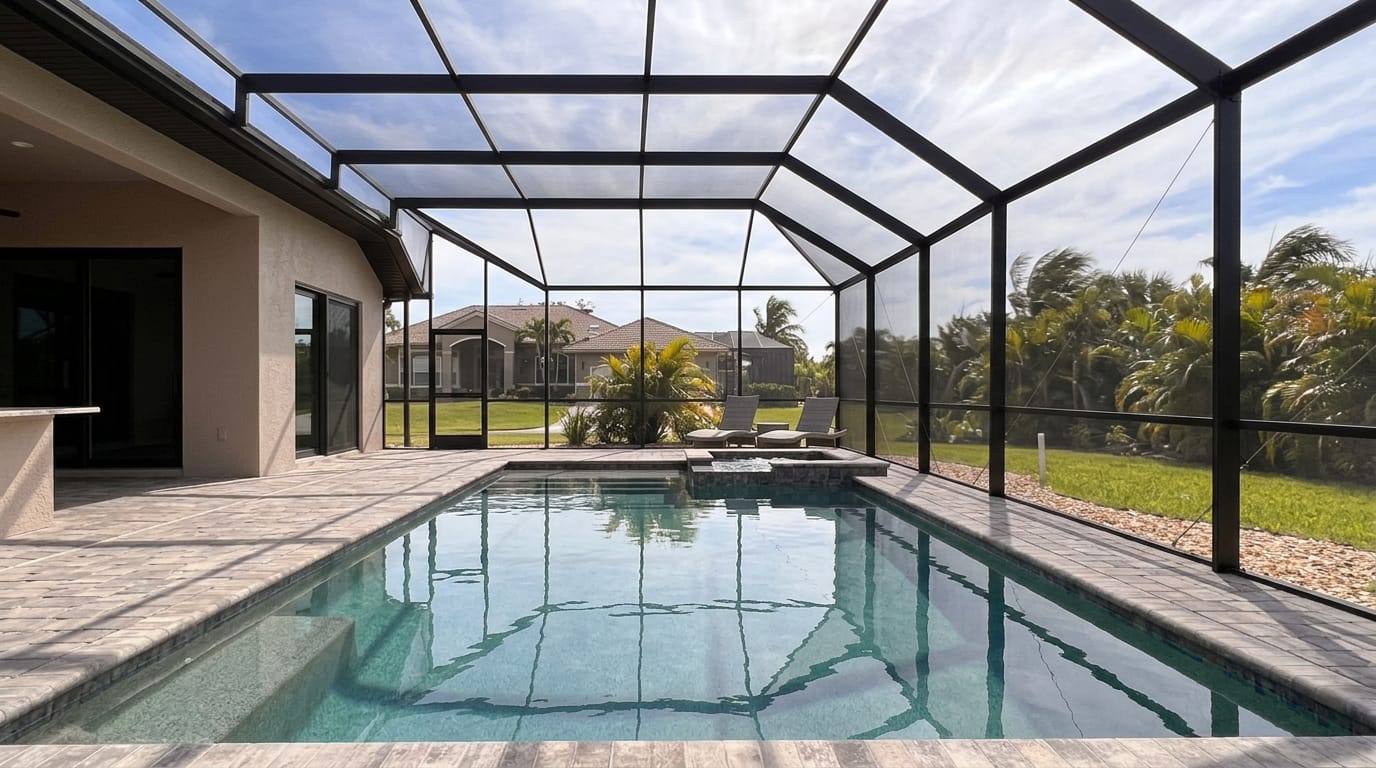
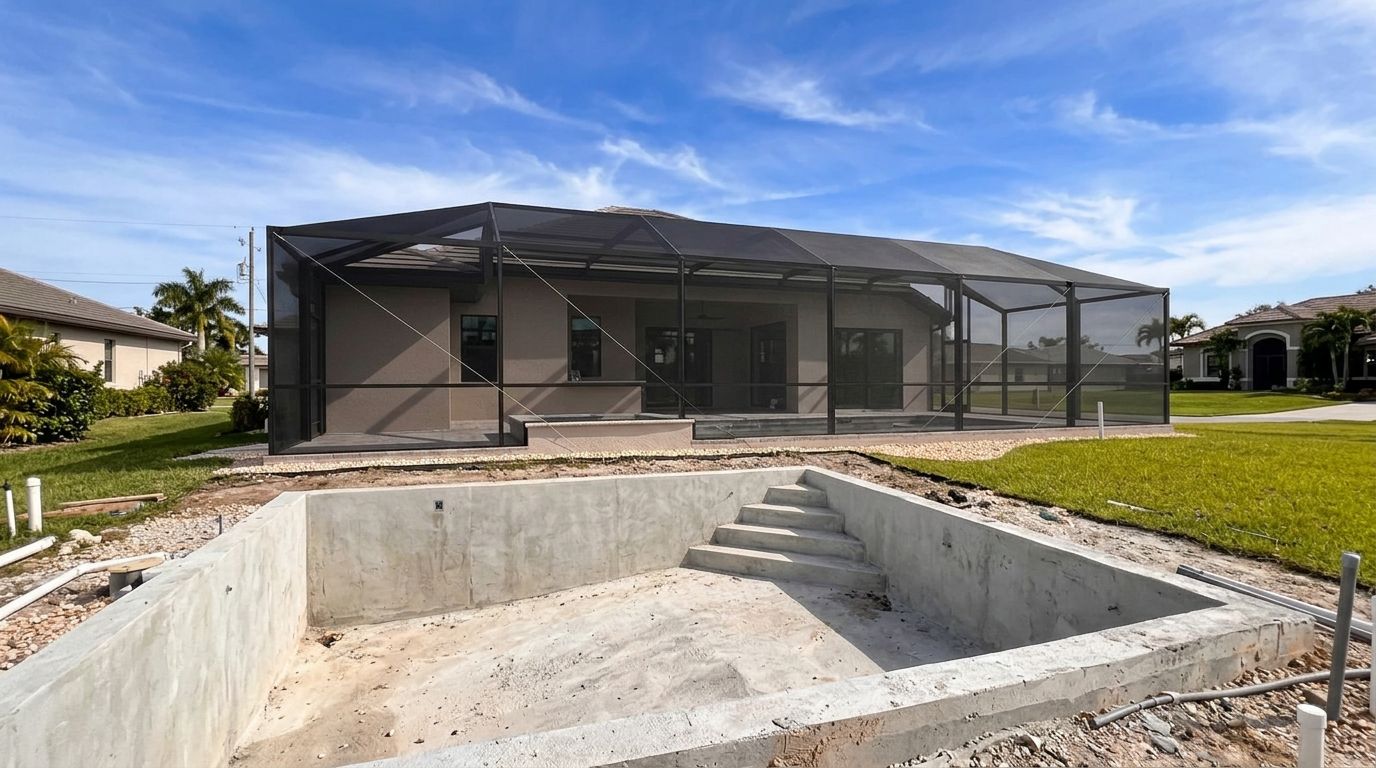
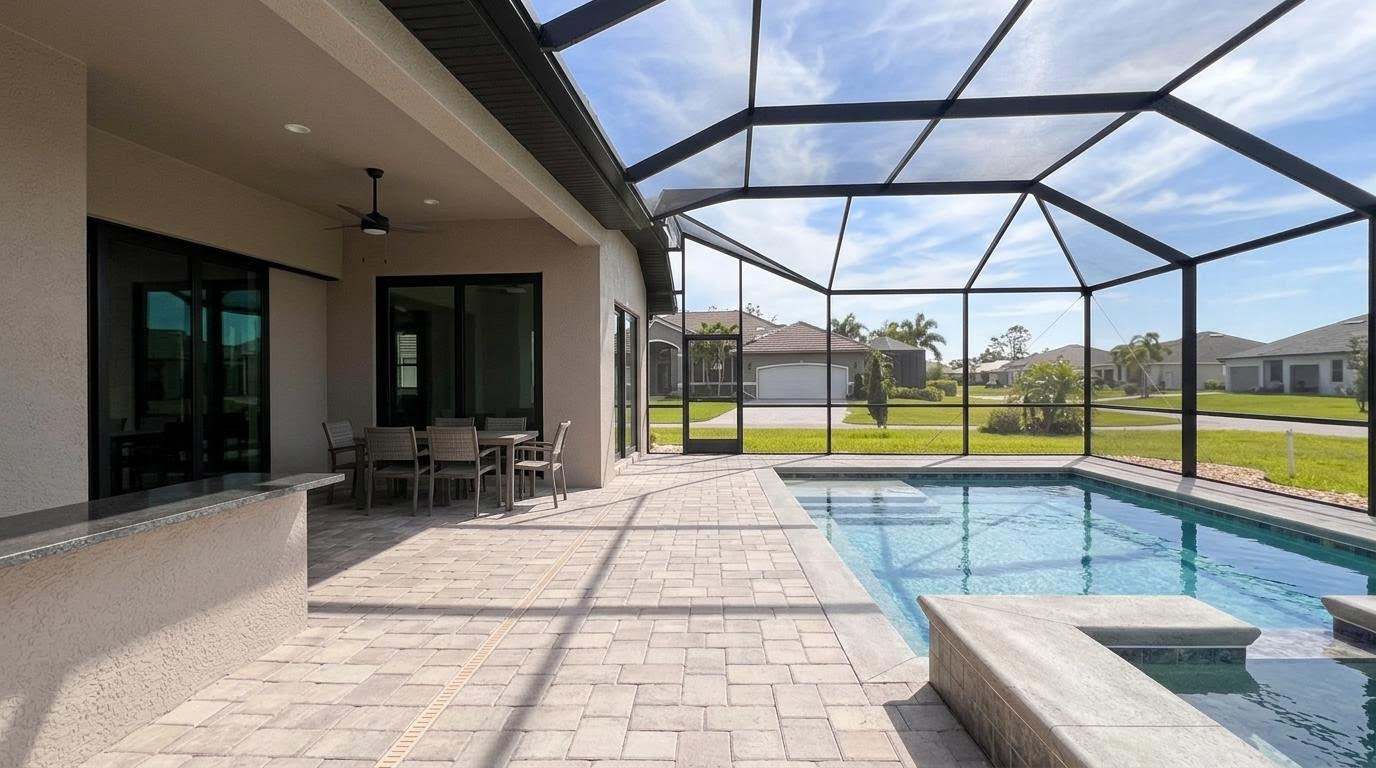
For a new enclosure, our pool enclosure installation service includes framing, screening, doors, and associated hardware. Clear planning keeps those components part of the project discussion.
The useful outcome is a defined job that addresses the observed concerns without treating every blemish as a reason for complete replacement.
Key Takeaways
- Salt exposure makes connections worth watching, but location alone doesn't determine an enclosure's condition.
- Fasteners, connectors, and framing have different functions, so describe the affected component as clearly as possible.
- Cleaning and rescreening don't automatically address damaged hardware or structural members.
- Cracks, separated joints, and shifting posts warrant a professional assessment before screen-only work proceeds.
Frequently Asked Questions
Does a torn screen prove the frame has salt damage?
No. A tear may remain limited to one section of mesh. Look at the surrounding rails, joints, and attachment channel for separate concerns, without touching or testing them. If the frame appears bent, cracked, corroded, or out of alignment, include those observations in the assessment request.
Can a door problem indicate a larger concern?
It can, although a door problem alone doesn't identify the cause. Worn hardware or door alignment may require attention, while nearby changes in posts or connections broaden the concern. Describe both conditions together rather than assuming that adjusting the door will address everything.
Does visible corrosion mean the entire enclosure needs replacement?
Visible corrosion doesn't establish the necessary scope by itself. Its location, extent, and effect on connected components matter. A professional assessment can distinguish a localized repair from more extensive work. Similarly, an isolated concern doesn't establish the condition of every other joint or member.
Match the Work to the Enclosure's Condition
Salt exposure gives Sanibel homeowners a reason to pay attention to hardware and connections alongside the screens. The strongest warning signs involve changes in shape, attachment, or alignment , especially when several appear together.
Keep inspections visual and separate cleaning concerns from repair decisions. When damage reaches a post, beam, or connection, a qualified local professional can determine the appropriate scope before new screening goes in.