How to Prepare a Pool Enclosure for Hurricane Season in Cape Coral
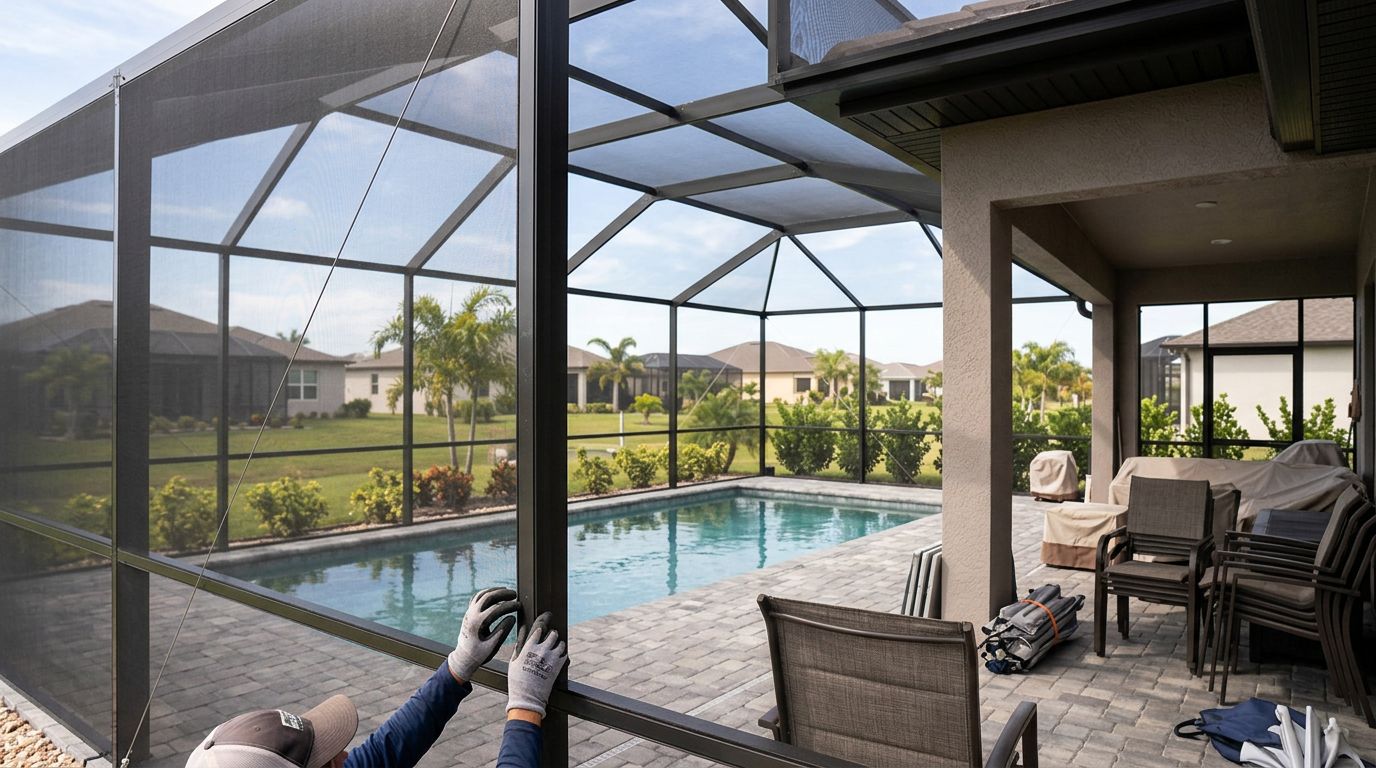
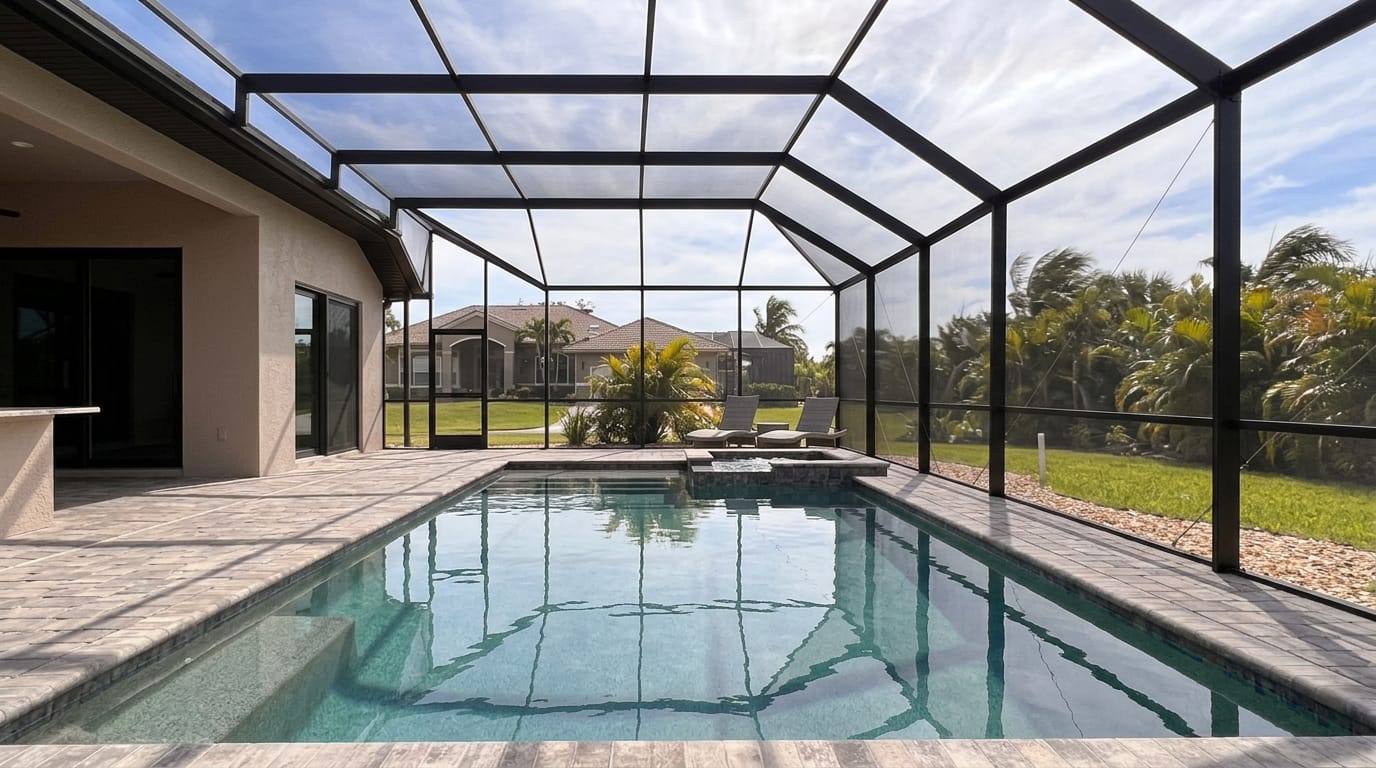
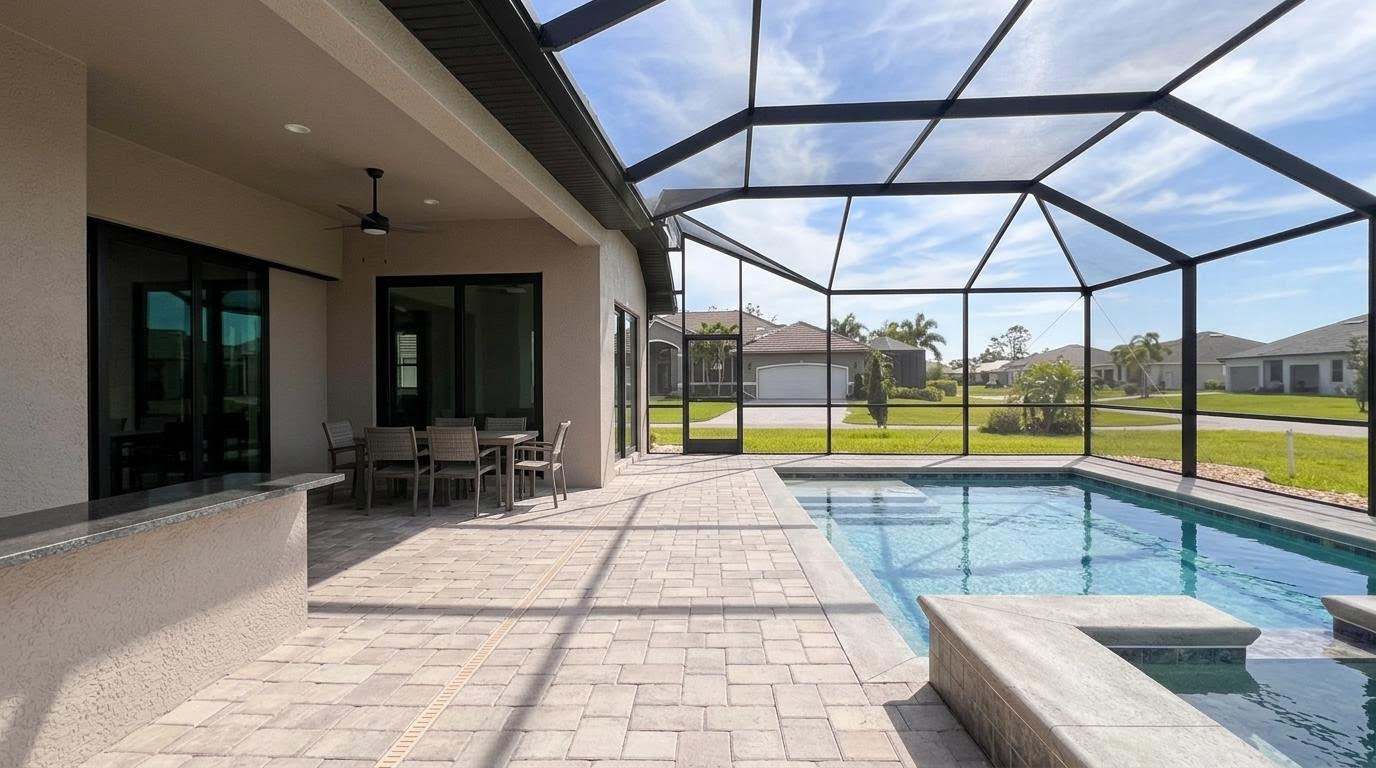
A well-kept enclosure can still need attention before a storm. Preparing a hurricane pool enclosure in Cape Coral means checking the screens and frame, securing loose items, and protecting pool equipment without making unapproved changes to the structure.
The Atlantic hurricane season runs from June 1 through November 30. A little preparation before a storm threatens gives you time to arrange repairs and make a separate plan for pool safety and equipment.
Key Takeaways
- Inspect the enclosure from the ground for torn mesh, loose edges, or visible frame damage.
- Secure loose outdoor items, but don't put furniture in the pool.
- Follow the pool and equipment manufacturers' instructions, and don't drain the pool before a storm.
- Don't remove screen panels or alter the enclosure without qualified guidance.
- After a storm, wait for a safe assessment before approaching the pool or equipment.
Start Before Hurricane Season
Cape Coral homeowners can start preparing well before a storm appears in the forecast. The NOAA/National Hurricane Center lists the Atlantic season as June 1 through November 30. That window is a useful reminder to review your property and address repair needs early.
Walk around the enclosure and pool area on a calm day. Note visible screen damage, frame changes, blocked access, loose outdoor items, and anything near the pool equipment that could become airborne. Keep notes or take photos from a safe position so you can describe a concern clearly if you contact a qualified contractor.
Preparation does not mean trying to make the enclosure storm-proof. Follow the enclosure manufacturer's guidance and local emergency instructions. If you aren't sure whether a condition is cosmetic or structural, avoid touching or adjusting it and seek qualified help.
Inspect the Enclosure Before Storm Season
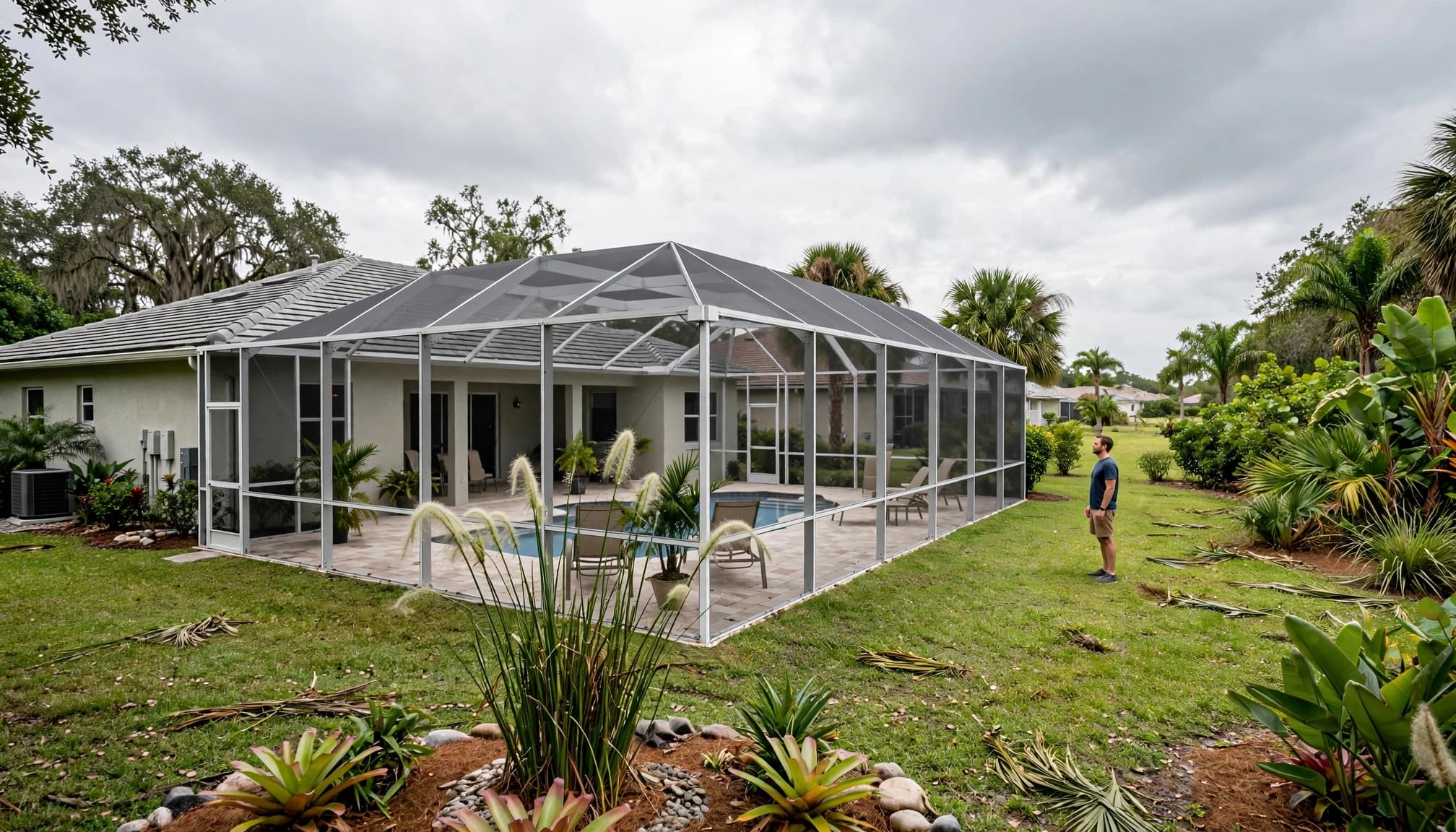
A ground-level visual check can help you spot damage early. Look at the mesh, aluminum framing, door, and visible connections without climbing, leaning on the structure, or opening panels.
Look for screen and door problems
Check for holes, frayed mesh, loose edges, or sections that appear to have pulled away from the frame. Open and close the enclosure door normally, and note if it sticks, fails to latch, or no longer lines up.
A small tear in the mesh doesn't by itself show that the frame is damaged. Still, visible changes nearby can matter. Learn what to check when pool cage screens come loose if you're trying to describe a loose screen or panel.
Watch for visible frame changes
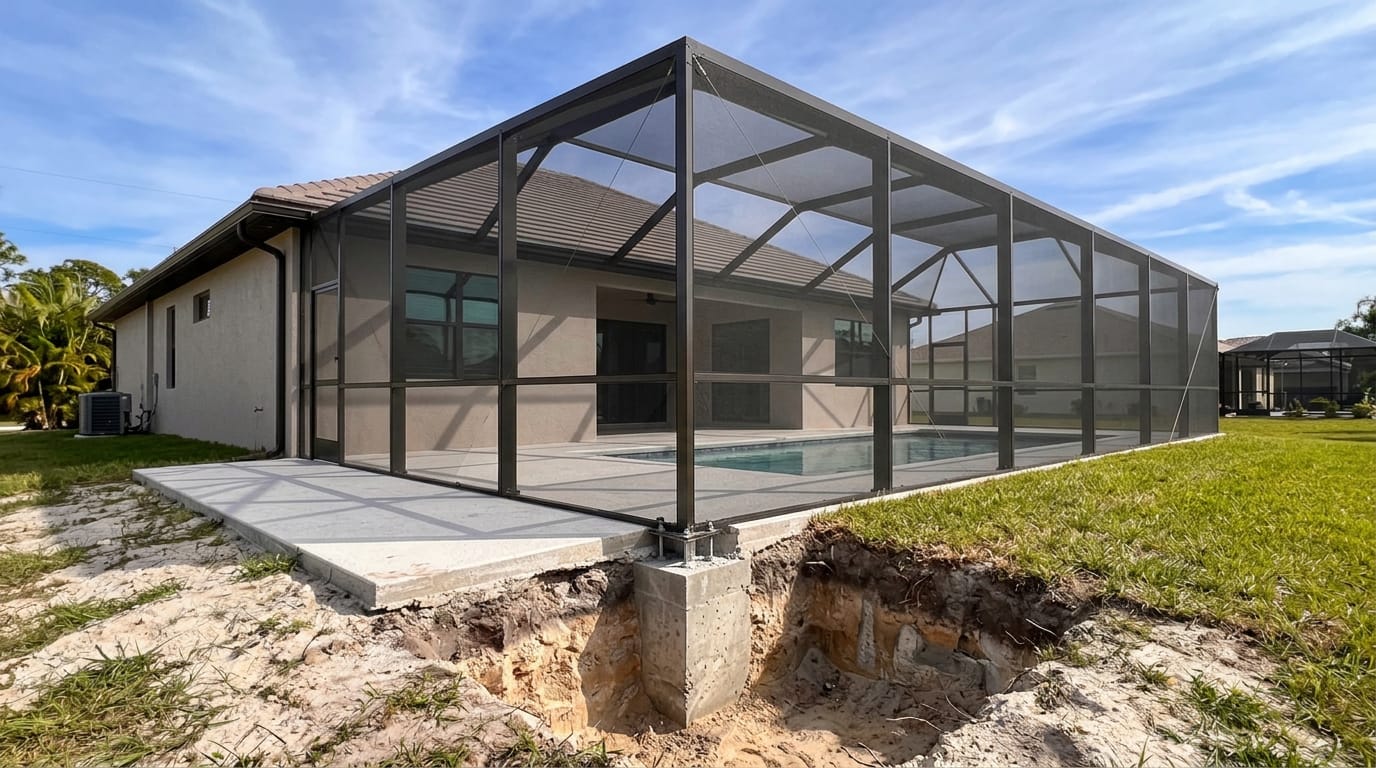
From the ground, look for bent or cracked framing, corrosion, separated joints, shifted posts, or a noticeable change in alignment. Don't climb a ladder to inspect a roof panel or try to tighten a connection. A screen enclosure's structural condition needs qualified assessment when something looks unstable or damaged.
For routine upkeep, see our screen enclosure cleaning and maintenance tips. Cleaning can help you see the mesh and frame clearly, but it isn't a substitute for assessing damage.
Arrange Repairs Without Making Structural Changes
A damaged screen can worsen if it's left unattended, but storm preparation isn't a reason to improvise a repair. Don't remove screen panels, cut mesh, add fasteners, brace the frame, or change the enclosure's structure unless a qualified professional directs the work.
Describe what you can see
When asking for help, explain where the damage appears and what it looks like. Mention whether the concern is limited to mesh or also includes a frame, connection, or door that looks out of position. Photos taken safely from the ground can help communicate the location.
A repair should match the condition of the enclosure. A damaged screen panel and a visibly bent frame are different concerns, so avoid assuming a screen-only repair will address both.
Make time for broader rescreening
If mesh is brittle, faded, loose, or damaged in several areas, a professional can discuss whether individual repairs or a broader rescreen is appropriate. Back Bay Screens provides complete screen enclosure rescreening in Cape Coral, along with pool, lanai, patio, and sunroom enclosure services.
If you need work, plan it before a storm is imminent. Scheduling may become harder when many homeowners seek repairs at once, and rushed work can leave less time to evaluate the enclosure properly.
Secure Loose Items and Prepare the Pool
Preparing the yard and preparing the pool are separate tasks. Loose objects can become hazards in high winds, while pool care should follow the product and equipment instructions for your system.
Clear the area around the enclosure
Bring in or secure patio furniture, umbrellas, planters, toys, and other loose items. Don't put furniture or accessories into the pool. UF/IFAS Extension Indian River County warns that pool chemicals and water can corrode furniture, while debris trapped in the water can stain the pool finish.
Cape Coral Emergency Management also advises securing loose outdoor items as part of general severe-weather preparation. That guidance applies to outdoor belongings, not to altering a pool enclosure.
Keep pool water and treatment in mind
Don't drain or partially drain the pool as a pre-storm measure. UF/IFAS cautions that draining can create problems such as leaks or plumbing and electrical damage. A lower water level can also leave the pump without enough water if expected rain doesn't arrive.
The same UF/IFAS guidance says homeowners may shock the pool before a storm to help limit algae and bacteria if flooding occurs. Follow the chemical label and your pool professional's advice for treatment and wait time. Don't put chemicals into the water without following those directions.
Protect Pool Equipment and Utilities
Pool pumps, filters, and related equipment need their own preparation plan. Clear loose items from around the equipment, and review the manufacturer's instructions for the pump, filter, and any controls. Don't cover, move, disconnect, or alter equipment unless the manufacturer or a qualified professional directs you to do so.
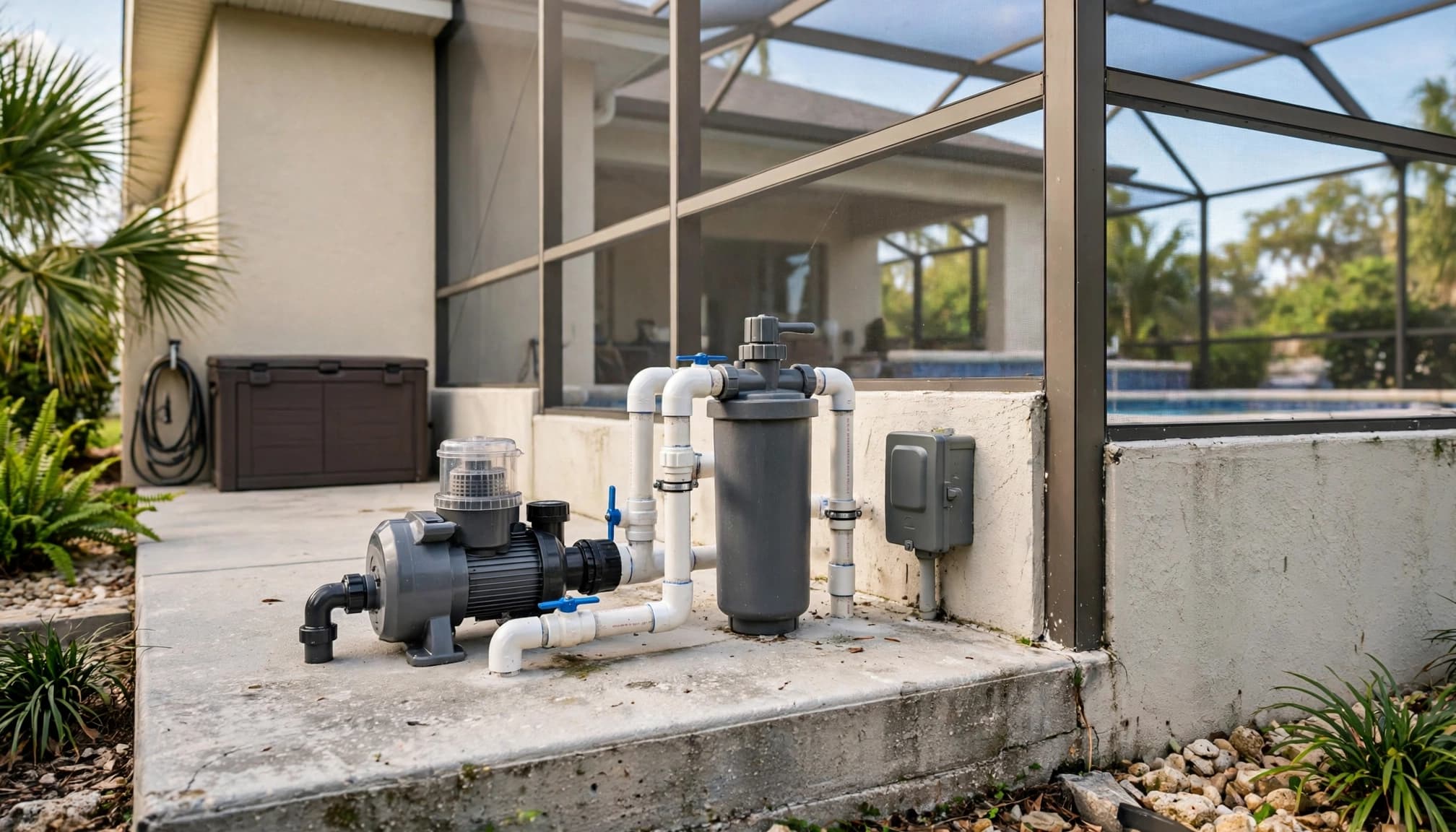
UF/IFAS advises keeping the pump running as long as possible if power remains on . That isn't a direction to operate equipment in unsafe conditions. If a storm creates flooding, exposed wiring, or other hazards, stay clear and follow local emergency instructions. Don't approach damaged utilities or attempt electrical work.
Before the storm, know where the equipment is and how you'll keep people away from it if conditions become unsafe. Don't invent a power shutoff procedure based on general advice; use the equipment manufacturer's guidance and emergency instructions for your situation.
After the Storm, Wait for a Safe Assessment
A pool and enclosure can look accessible while nearby hazards remain. Before approaching, wait until the area is assessed as safe. Downed power lines, unstable parts, standing water, and storm debris can all create risks.
Check for hazards before cleanup
Look from a safe location first. Keep people away from damaged framing, loose electrical components, and debris until it's safe to proceed. UF/IFAS also notes that snakes or alligators may enter pools after flooding, so don't assume the water is safe to approach.
Once conditions are safe, remove debris carefully and follow the pool manufacturer's maintenance guidance. If the enclosure has visible damage, avoid using the area until a qualified person assesses it.
Restore pool care gradually
UF/IFAS recommends waiting for standing water around the pool to recede before lowering the pool level toward the middle of the tile line or halfway up the skimmer. Don't lower the water while floodwater remains around the pool, and don't resume equipment operation if the area or electrical components may be unsafe.
After debris removal and restoration of power, pool treatment may need adjustment. Follow chemical labels and advice from a qualified pool professional rather than estimating a dose or adding chemicals while hazards remain.
Follow Cape Coral Emergency Instructions
Cape Coral's severe-weather guidance recommends securing outdoor items and looking around the home for areas that may need extra protection. Follow those local instructions as the storm approaches, especially if they call for evacuation or other immediate action.
General household advice about windows, doors, or shutters shouldn't be treated as a pool-cage procedure. The local guidance cited here doesn't direct homeowners to remove enclosure panels, open enclosure doors, anchor the cage, or disconnect pool power. For the enclosure itself, follow manufacturer guidance and get qualified help before making structural changes.
Quick Pre-Season Checklist
Use this list during a calm-weather walk-through, then keep your pool and emergency plans separate:
- Inspect screen mesh, door operation, and visible framing from the ground.
- Photograph and note damage without climbing or touching unstable parts.
- Arrange qualified assessment for visible frame or connection problems.
- Secure outdoor furniture and loose accessories away from the pool.
- Review pool and equipment manufacturer instructions, including chemical labels.
- Keep the pool filled and follow local emergency directions as conditions change.
- After a storm, wait for a safe assessment before approaching the pool or equipment.
Frequently Asked Questions
Should I remove screen panels before a hurricane?
Don't remove panels unless the enclosure manufacturer or a qualified professional specifically directs the work. Removing screens or changing the structure without guidance can create new problems and isn't part of the general local instructions cited here.
Should I put patio furniture in the pool?
No. UF/IFAS advises securing or storing loose outdoor items away from the pool. Furniture in pool water may corrode, and debris can stain the finish.
Should I turn off the pool pump?
There isn't a single storm-specific shutoff instruction in the pool guidance cited here. UF/IFAS says to keep the pump running as long as possible if power remains on. Follow your equipment manufacturer's directions and local emergency instructions, and stay away from unsafe or damaged utilities.
Prepare the Enclosure Without Guesswork
A useful pre-season plan starts with a ground-level inspection and early attention to visible problems. Keep enclosure care separate from pool safety and equipment protection, and leave structural work to qualified guidance.
A screen enclosure can be part of your everyday outdoor space, but preparation should never involve unsafe access or improvised changes. Back Bay Screens serves Cape Coral and Southwest Florida with enclosure construction and rescreening, and offers free, no-obligation estimates for projects.