Why Does a Screen Enclosure Door Stick or Slam?
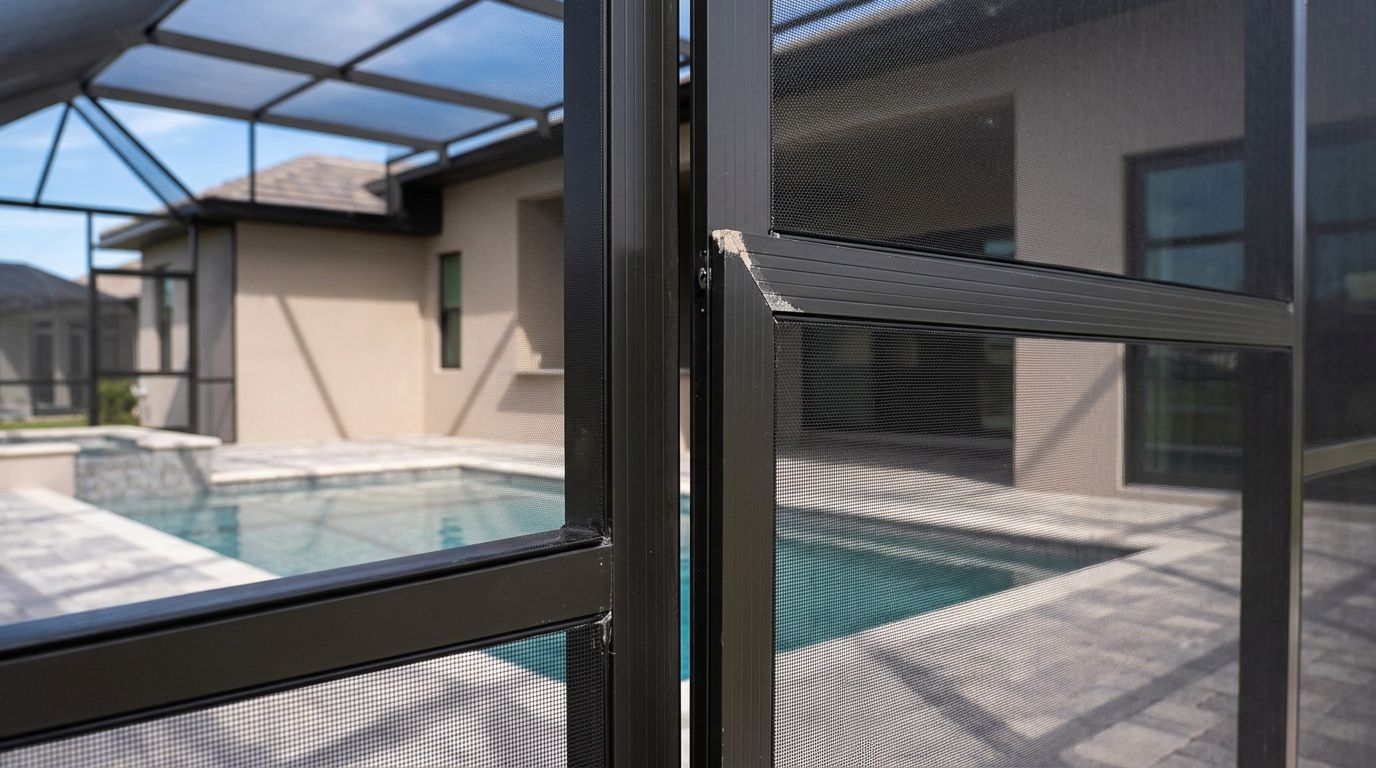
A screen enclosure door that sticks or slams is showing a change in how it fits or moves, but that symptom alone doesn't reveal the cause. The issue may be limited to the door, or it may appear alongside a change in the surrounding frame.
You can make a useful first assessment without forcing the door or touching the enclosure. Note how it moves, where it appears to rub, and whether the door and nearby frame still line up. Those observations help a screen professional understand what needs attention.
How to tell whether the door sticks or slams
A sticking door meets resistance during part of its travel or doesn't close as it should. A slamming door moves shut too quickly or closes with more force than expected. These are different symptoms, so describe what you see rather than grouping both under "door trouble."
Signs of a sticking door
If the door moves normally, open and close it gently once. Notice whether it rubs along one side, stops before closing, or fails to meet the frame evenly. You can also observe whether the latch meets its strike, the part of the frame it is meant to catch.
Stop if the door binds, catches, or needs force. Don't push through resistance to see whether it will close. If it moves normally but doesn't sit squarely, describe where the fit appears uneven.
Signs of a slamming door
A door that slams may still open and close without catching, but it shuts abruptly or with a hard impact. That's different from a door that drags, sticks partway, or won't meet the frame.
Notice whether the fast closing happens consistently, and whether the door closes fully afterward. Avoid holding or restraining a door that's moving forcefully. A screen enclosure door can be difficult to assess safely if its movement is unpredictable.
What to look for when a door sticks
Start with a visual check from a safe position. Look at the door opening, the gap around the door, and the nearby aluminum frame. A door that no longer lines up can point to a change in fit, but it doesn't prove that the frame is damaged.
Check the gap and the latch
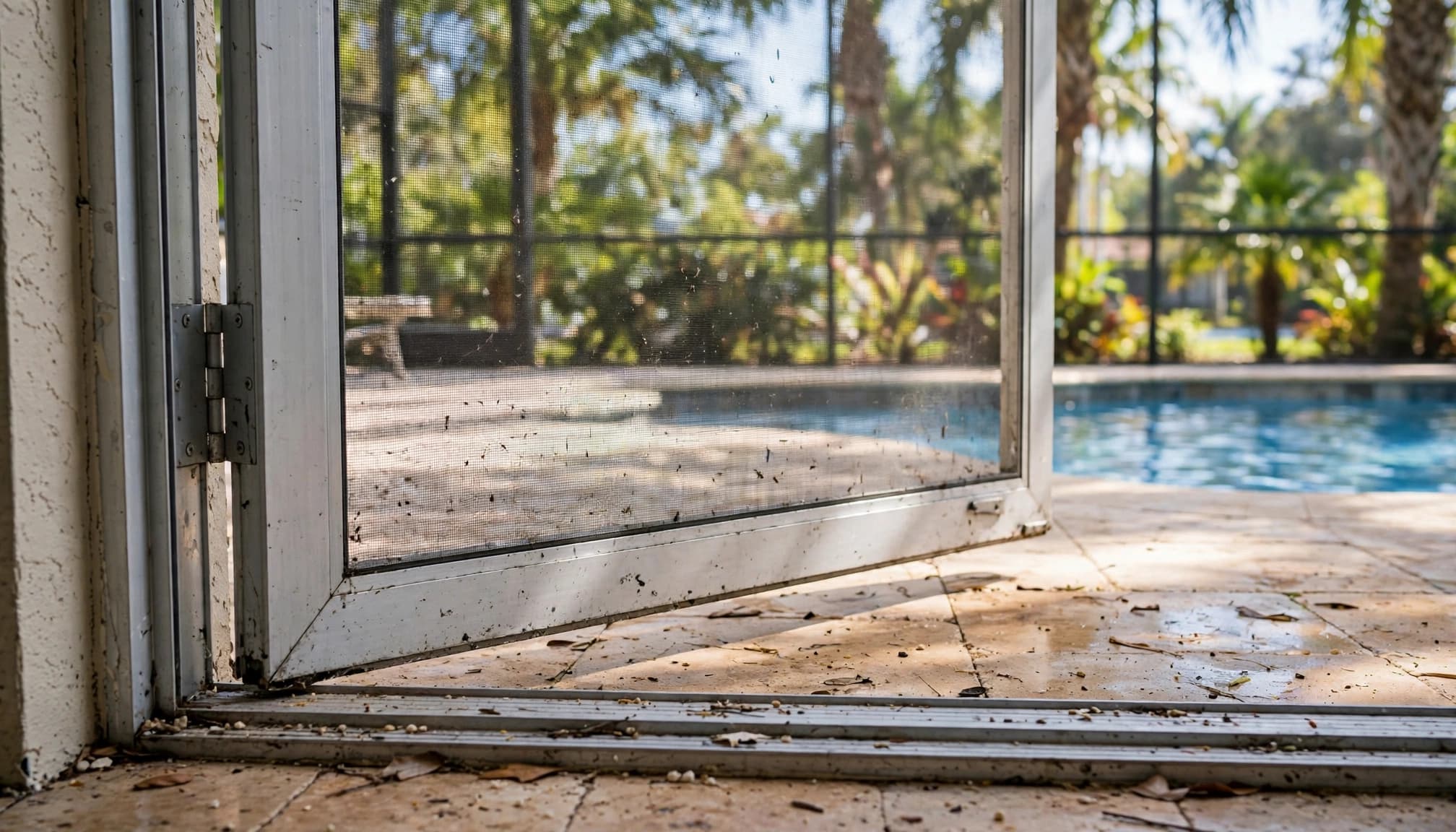
Look for a gap that appears uneven around the door, or a side where the door sits closer to the frame. If the door moves without binding, note whether it rubs in one spot and whether the latch meets its strike when the door closes.
These details help describe the symptom. They don't establish what needs repair. A sticking door may have a hardware issue even when the surrounding frame appears straight.
Compare the door with nearby framing
From the ground, look at the frame around the opening and nearby posts or connections. Note visible bending, cracks, corrosion, gaps at joints, or parts that seem out of line. A door that has stopped aligning is worth mentioning, especially if another change appears close by.
For more examples of visible enclosure concerns, see signs your screen enclosure frame needs repair. A visual clue helps direct an assessment, but it isn't a structural diagnosis.
Safe troubleshooting before you arrange an assessment
A careful observation is more useful than a risky repair attempt. Keep the inspection visual, and don't lean on the enclosure, pull on the mesh, or push a frame member to test it.
Record what happens without forcing the door
If the door moves normally, observe one gentle opening and closing. Write down where it rubs, whether the gap looks uneven, and whether the latch meets the frame. If it sticks or needs extra force, stop there.
It can also help to note when you first saw the change and whether the same issue has returned after earlier attention. Record what happened, not what you think caused it. A clear description helps a professional focus on the area you observed.
Leave hardware and frame adjustments alone
Don't bend the door, move its frame, or try to alter attached hardware. Avoid removing parts or tightening connections. These changes can damage the door or frame and can make the original problem harder to assess.
If the frame looks unstable, keep people and pets away from that area and arrange a professional assessment. Don't climb onto the enclosure or reach overhead to inspect a screen or connection.
Why a screen door may slam
A slam describes how the door closes, not the reason it closes that way. The door may still appear aligned, or the fast closing may occur alongside a change in fit. Without an assessment, it isn't possible to identify the cause from the sound or speed alone.
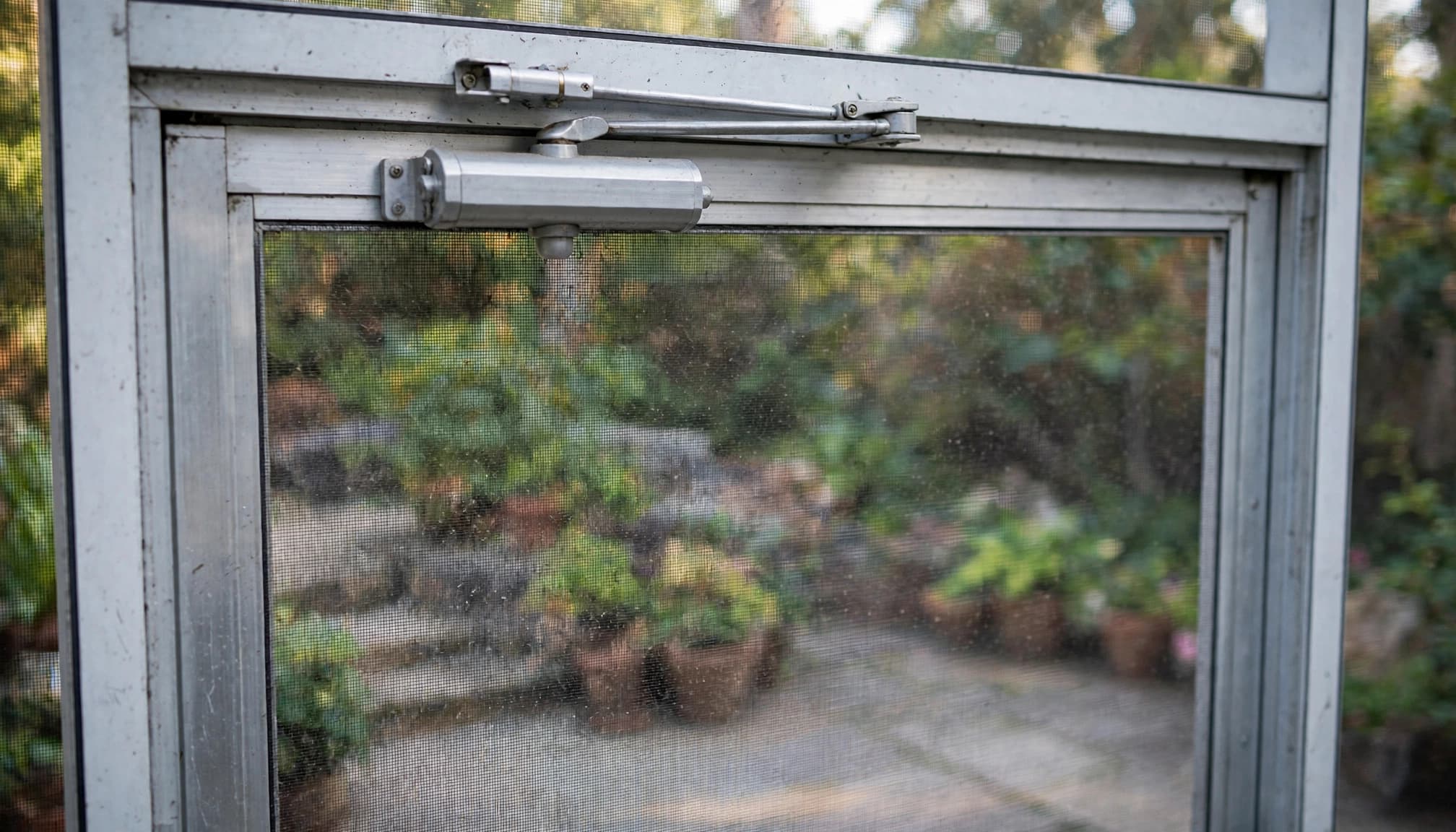
Observe the whole closing motion
Notice whether the door moves quickly throughout its travel or only near the end. Also note whether it closes fully, rebounds, or stops short. These observations are more helpful than trying to change how the door closes.
Some screen doors have a closer attached near the top rail. You can identify whether one is present and mention what you observed, but don't adjust or remove it. The part's presence alone doesn't explain why the door is slamming.
Don't treat impact as proof of a frame problem
A hard close can sound alarming, but it doesn't prove that the enclosure frame has shifted. Likewise, a door that slams and also sits unevenly deserves a broader look than a door that closes forcefully while appearing aligned.
Report both observations together. For example, note that the door closes abruptly and that the gap is wider at one side. An enclosure professional can assess the door and its surroundings without relying on a guessed diagnosis.
When a door issue may call for a broader enclosure assessment
A door problem deserves attention beyond the door itself when you see other changes in the same area. Look for bent or loose framing, corrosion, cracks, separated joints, or posts that appear displaced. Don't touch or test any part that looks unstable.
Describe related changes clearly
Be specific about location. "The door drags near the pool side" gives more useful information than "the enclosure is out of alignment." If you also see a gap at a nearby joint or a post that looks tilted, describe both separately.
A door that no longer closes normally is a useful observation, not proof of structural damage. Why pool cage screens pull loose also explains why a visible screen concern and a possible frame concern should be described separately.
Keep away from unstable areas
If a post, beam, or connection looks unstable, keep people away and seek a professional assessment. Don't push, pull, shake, or lean on it to see whether it moves. Stay off the enclosure roof and avoid work above the pool.
A ground-level view can show where a concern appears. It can't confirm the condition of a joint or determine what repair is appropriate. Leave that assessment to a professional.
Screen, frame, and door work are different scopes
A door concern can appear alongside damaged mesh, but replacing screen doesn't automatically address the frame or door. Look at what is visibly affected: the mesh, the frame around it, the door, or more than one of these.
When the problem appears limited to screen
A torn screen, a loose edge, or mesh that has come out of its channel may be a screening concern. If one panel is affected and the surrounding frame and channel appear intact, a localized panel replacement may be appropriate.
For guidance on when a focused repair may fit, read about repair options for one damaged screen panel. If the frame or door also appears changed, include that in the assessment rather than treating the project as mesh-only.
When the door or frame also needs attention
A bent rail, cracked section, separated joint, or door that no longer aligns may require a different scope than screen replacement. A rescreen replaces mesh, but it doesn't by itself repair damaged frame members.
For an estimate, describe the affected door or panel and any nearby changes you can see. That helps distinguish a screen repair from work that may also involve the frame or door. Back Bay Screens provides enclosure and rescreening services in Cape Coral and Southwest Florida.
Key Takeaways
- A sticking door resists movement or fails to close normally; a slamming door closes too quickly or hits hard.
- If the door moves normally, observe its fit and closing motion gently. Stop if it binds or needs force.
- Note where the door rubs, whether its gap looks uneven, and whether the latch meets the frame.
- Report nearby frame changes, but don't treat them as a confirmed diagnosis.
- Don't adjust hardware, force the door, or test an unstable frame yourself.
Frequently Asked Questions
Can a screen enclosure door stick even if the frame looks straight?
Yes. A door can have a hardware or fit issue without an obvious change to the surrounding frame. Note where it rubs and whether it closes normally, but don't force it. If the fit has changed or other frame concerns are visible, include those observations when arranging an assessment.
Should I adjust the closer if the door slams?
No. Avoid changing or removing door hardware. A fast close is a symptom, not a diagnosis, and an adjustment can damage the door or attached parts. Note how the door moves and whether it closes fully, then have the issue assessed.
Does a sticking door mean the enclosure frame needs repair?
Not by itself. A door that no longer lines up can be a warning sign, but it doesn't confirm frame damage. If you also see bending, cracks, corrosion, separated joints, or a displaced post, describe those details and keep away from any area that looks unstable.
Get the door assessed without guessing at the cause
A door that sticks or slams tells you that its operation has changed, but the symptom alone can't identify why. Note how it moves, where it rubs, and whether the frame or nearby screen has also changed.
Avoid forcing the door or adjusting its hardware. Clear observations help a screen professional assess the right scope, whether the concern involves the door, the mesh, or the enclosure frame.