Can a Screen Enclosure Cover an Outdoor Kitchen?

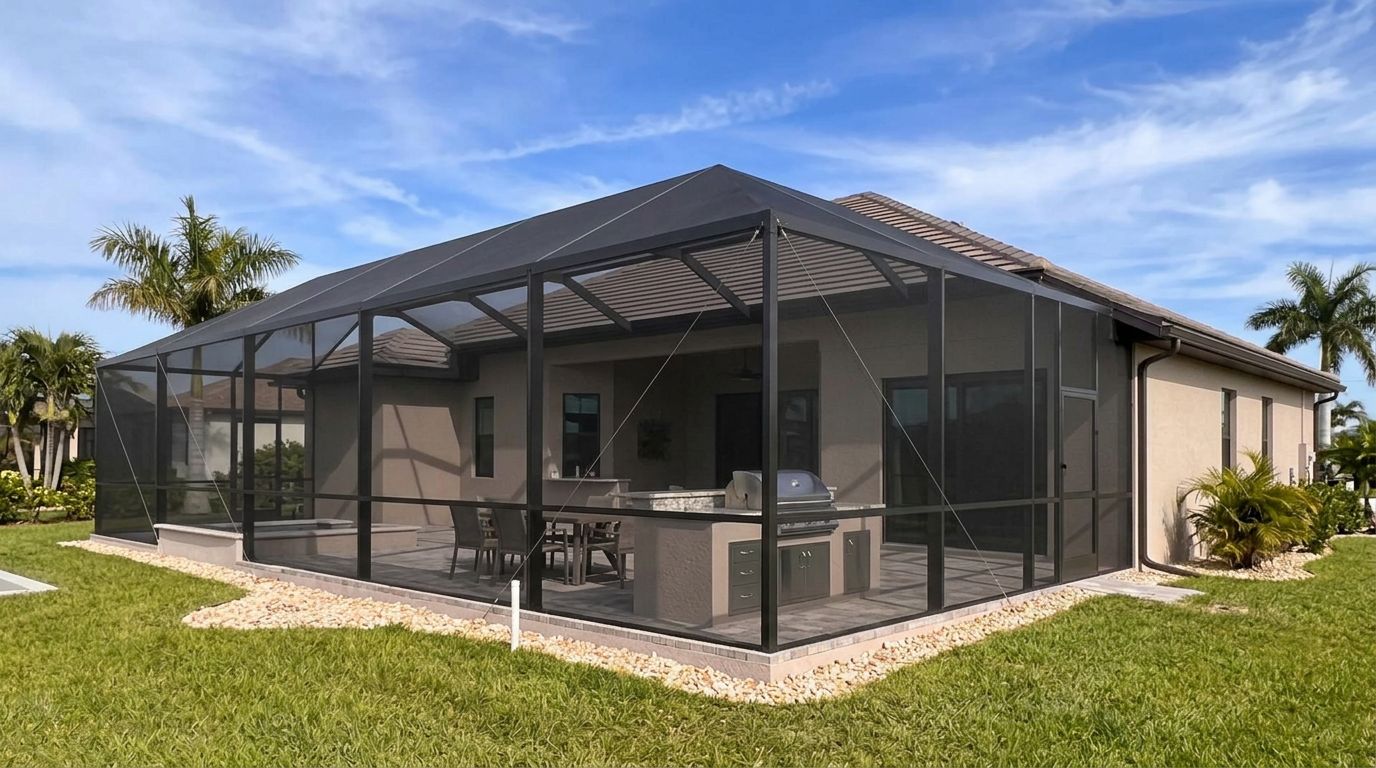
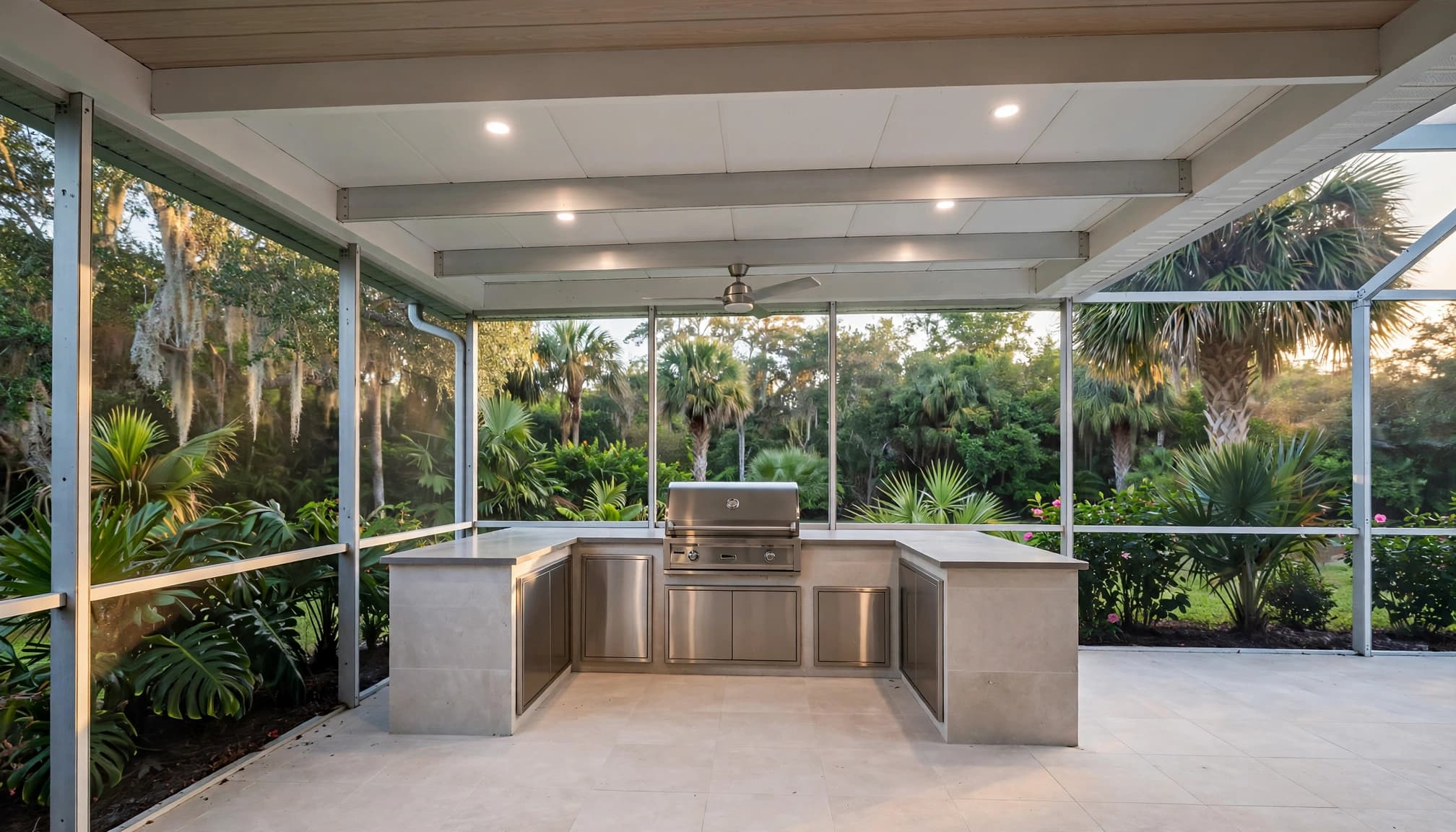
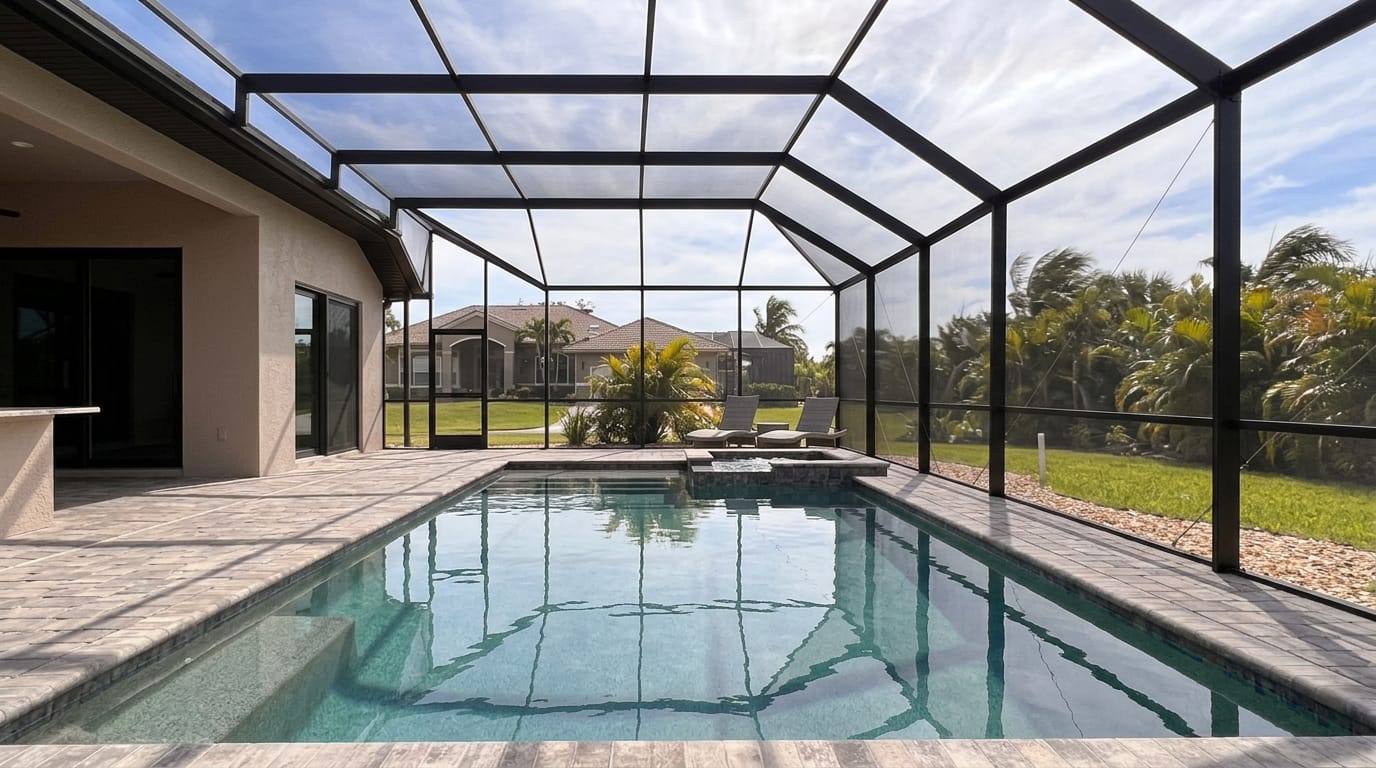
Yes, a screen enclosure can cover an outdoor kitchen in Fort Myers, provided the design suits the appliances and applicable building requirements. The most important detail is the cooking equipment : some grills aren't approved for use in screened spaces.
A screened lanai can make dining more comfortable, but mesh alone doesn't guarantee enough ventilation. Plan the enclosure and kitchen together before construction begins.
Key Takeaways
A screened kitchen can help reduce insects and debris while preserving an outdoor feel. However, grill instructions, clearances, wind design, and permits all affect what can be built.
If your preferred grill can't be used inside a screened area, an outdoor cooking station beside an enclosed dining area is another option.
Choose an Enclosure Design That Fits the Kitchen
The right layout depends on your home's roofline, the appliances you want, and how much space you have. Start with the cooking equipment, then make room for seating and access.
Screen an Existing Covered Lanai
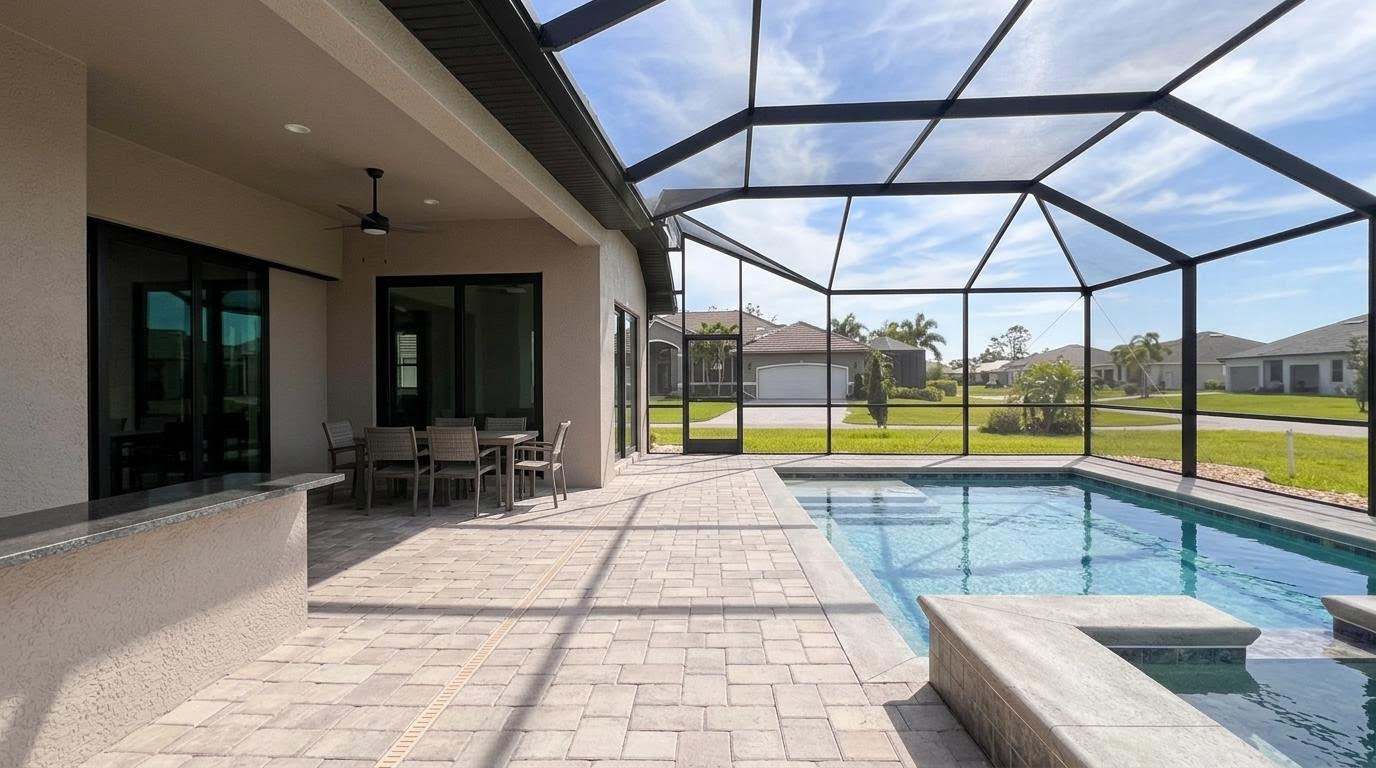
An existing roof can provide shade and some rain protection, while screened walls help keep insects out. This arrangement can work for an outdoor kitchen, but the roof and surrounding walls also affect appliance ventilation and overhead clearance.
Allow space for cabinet doors to open and for people to move around the cook. Our guide to planning a lanai for dining covers seating and circulation decisions.
Keep the Grill Outside the Screened Area
If a grill's instructions prohibit screened-porch use, place the grill outside the enclosure in a location that meets its requirements. You can still use the screened area for food preparation, serving, and dining.
A door between the two spaces makes it easier to carry food without leaving the enclosure open throughout the meal. This layout also keeps cooking smoke farther from the dining table.
Follow the Grill's Ventilation and Clearance Rules
A lanai can feel open to you while still counting as an enclosed area under a grill's instructions. Screens allow air through, but they can restrict airflow and may not count as permanent openings.
Screened Openings Don't Always Qualify
One Napoleon gas grill manual, identified as N415-0290, prohibits use in a screened-in porch or other enclosed area. Its requirements also call for 18 inches of clearance at the rear and sides from combustible construction.
Those measurements apply to the equipment covered by that manual. They aren't a general clearance rule for every outdoor kitchen.
Measure the Space Around the Appliance
Clearance can apply to the sides, rear, and area above a grill. A roof, cabinet, wall, or other nearby material can affect where the appliance may go.
A different Napoleon Rogue manual gives its own opening and clearance requirements and says screened openings don't count as permanent openings. A fan or open door doesn't automatically make a screened area acceptable. Follow the instructions for your exact appliance and its intended installation.
Select Materials for Fort Myers Conditions
Aluminum framing is a common choice for screened lanais. For the kitchen itself, outdoor-rated cabinetry, countertops, and appliances are better suited to exposure than materials intended only for indoor use.
Humidity, rain, sun, and salty coastal air can take a toll on finishes and hardware. Corrosion-resistant fasteners and suitable connections matter alongside the frame. Look for deteriorating fasteners, separated joints, and changes in frame alignment as part of routine care.
Screen selection affects everyday comfort, too. Finer mesh can improve protection against small insects, while other options emphasize visibility or durability. Discuss the trade-offs with your enclosure company rather than choosing by appearance alone.
Plan for Permits and Wind Loads
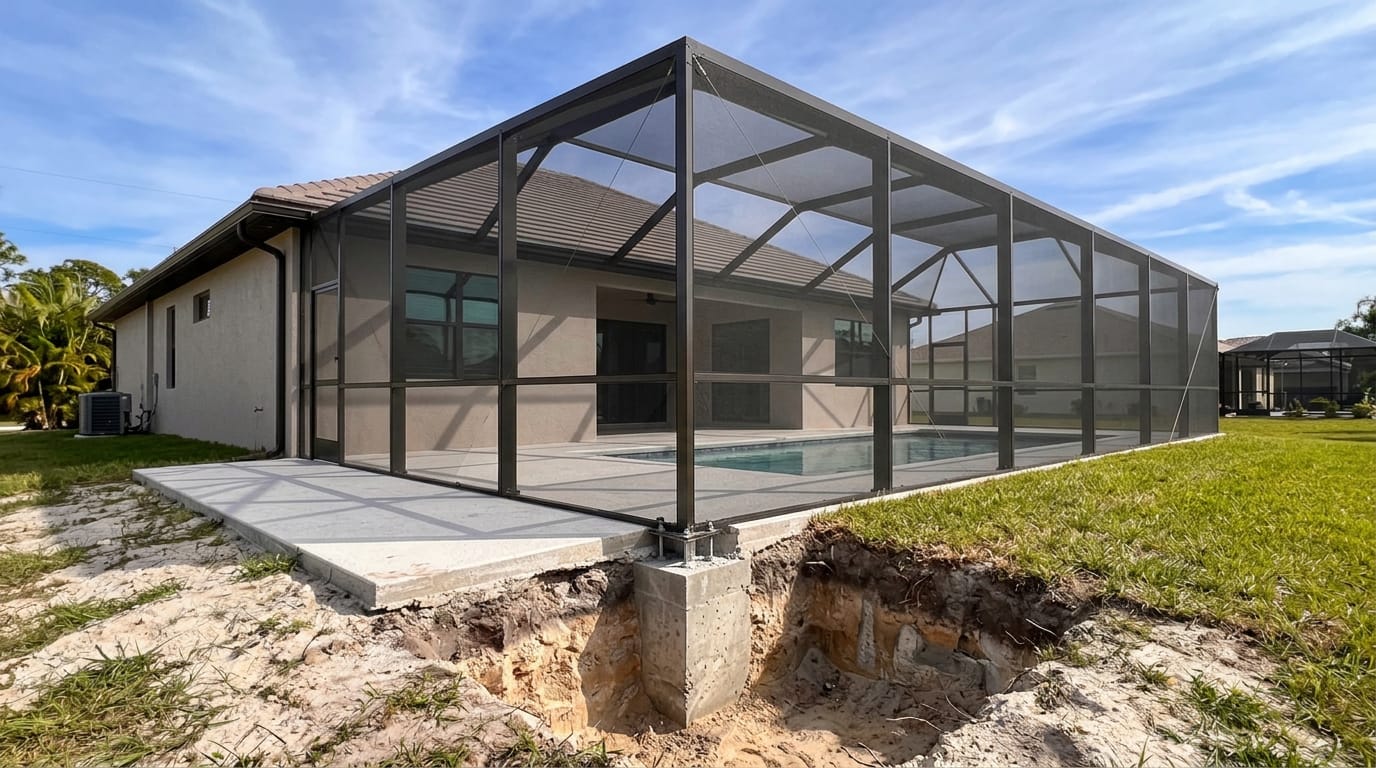
A kitchen enclosure needs a design suited to the property, including its connection to the home and its exposure to wind. Height, roof configuration, and surrounding conditions all affect the structural plan. Screen mesh doesn't make the frame or its attachments exempt from wind design.
Permit jurisdiction depends on the parcel. The City of Fort Myers handles properties within city limits, while Lee County handles unincorporated properties. City rules generally require a construction permit before work unless an exemption applies; plans, a survey, or other documents may be required.
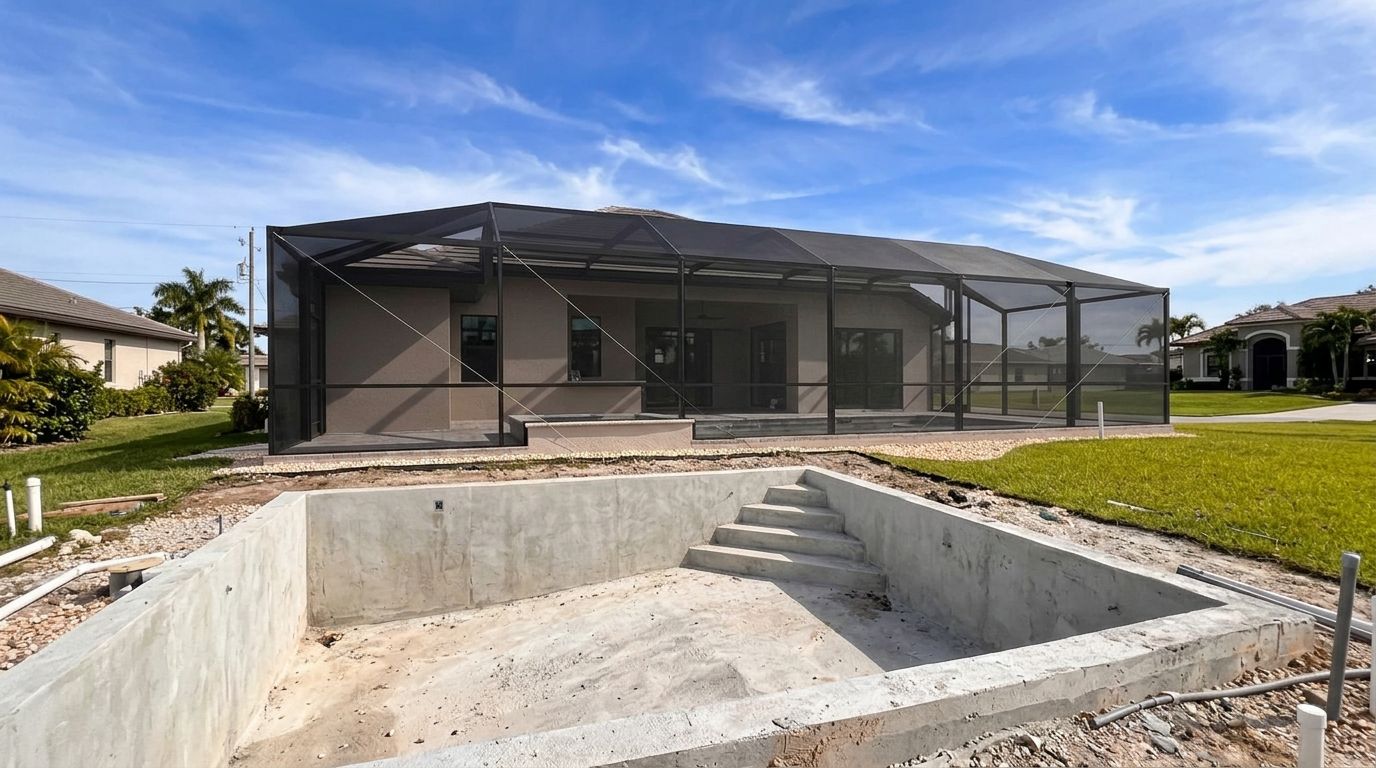
Gas and electrical work can add separate requirements. If the enclosure surrounds a pool, its doors and layout also need to account for applicable pool-barrier rules. At Back Bay Screens, we provide design, permitting coordination, and installation for enclosure projects in Southwest Florida.
Keep the Kitchen Comfortable in Daily Use
A screen roof provides a different kind of coverage than a solid roof. It can help keep insects and debris out, but it won't make the kitchen rainproof. Plan shade and weather protection around the appliances' clearance and ventilation requirements.
Keep exits and walkways clear, and position seating away from cooking heat. Outdoor-rated lighting makes evening meals easier, while a qualified professional can handle electrical or gas work where needed.
Clean grease and food residue before they build up, and look for loose mesh or damaged door hardware. Our screen enclosure maintenance guide covers routine care for the frame and screens.
Frequently Asked Questions
Can Any Grill Go Inside a Screened Lanai?
No. Some manufacturers prohibit screened-porch use, and others set conditions for overhead covers and open wall area. The exact appliance instructions determine whether your proposed arrangement is suitable.
Does a Screen Enclosure Protect an Outdoor Kitchen From Rain?
Screens can reduce windblown debris, but they don't provide a watertight roof or walls. A solid roof offers more rain protection, though it also changes overhead clearance and ventilation conditions for cooking appliances.
Start With the Appliance, Then Plan the Enclosure
A screened outdoor kitchen can be a comfortable addition to a Fort Myers home when the enclosure and equipment work together. Choose the appliance location first, then design around its ventilation and clearance requirements.
For help planning the space, contact Back Bay Screens for a free, no-obligation estimate.