
Is Pressure Washing Safe for Pool Cage Screens?

Is Pressure Washing Safe for Pool Cage Screens?

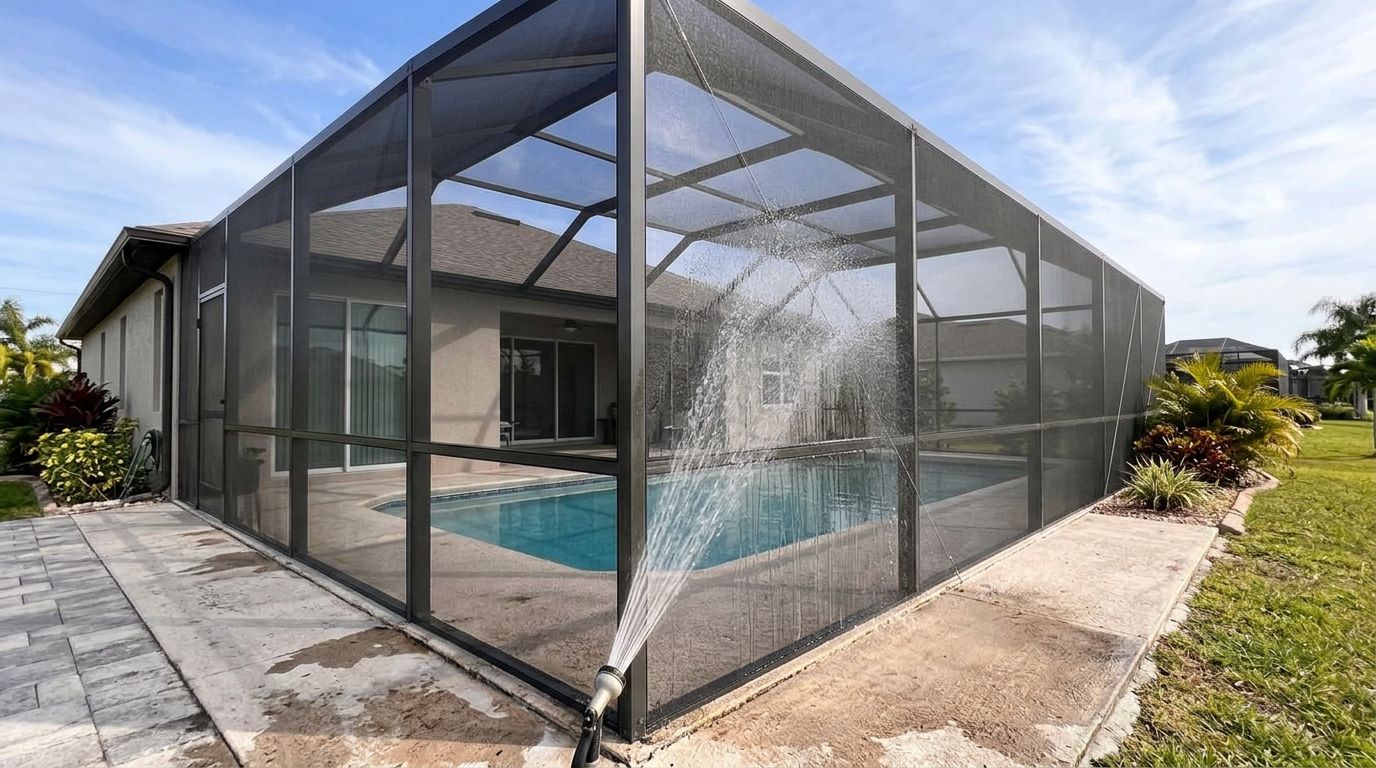
Pressure washing can be safe for pool cage screens when the mesh and frame are sound and the water's force is gentle enough for the enclosure. Too much force can tear mesh, loosen its edges, or damage a weathered frame finish.

For many homeowners, a gentle rinse and hand-cleaning are the safer starting point. Before you wash your screen enclosure, look at its condition and choose a method that won't put unnecessary stress on it.

When Pressure Washing Pool Cage Screens Is Safe

A sturdy screen panel can handle gentle cleaning better than one that's already loose or worn. Even so, a pool cage needs different treatment than a concrete deck. The mesh is held under tension, and its edges depend on the frame and spline to stay in place.

How water force affects the mesh and frame

A forceful stream can push the mesh out of shape or worsen an existing tear. It can also pull a weakened edge away from its channel. On aluminum, aggressive washing can damage a deteriorated finish or disturb loose areas around joints.

Gentle water flow is the priority. If you can't control the force well enough to avoid stressing the panels, use a garden hose and clean by hand instead.

What to inspect before washing

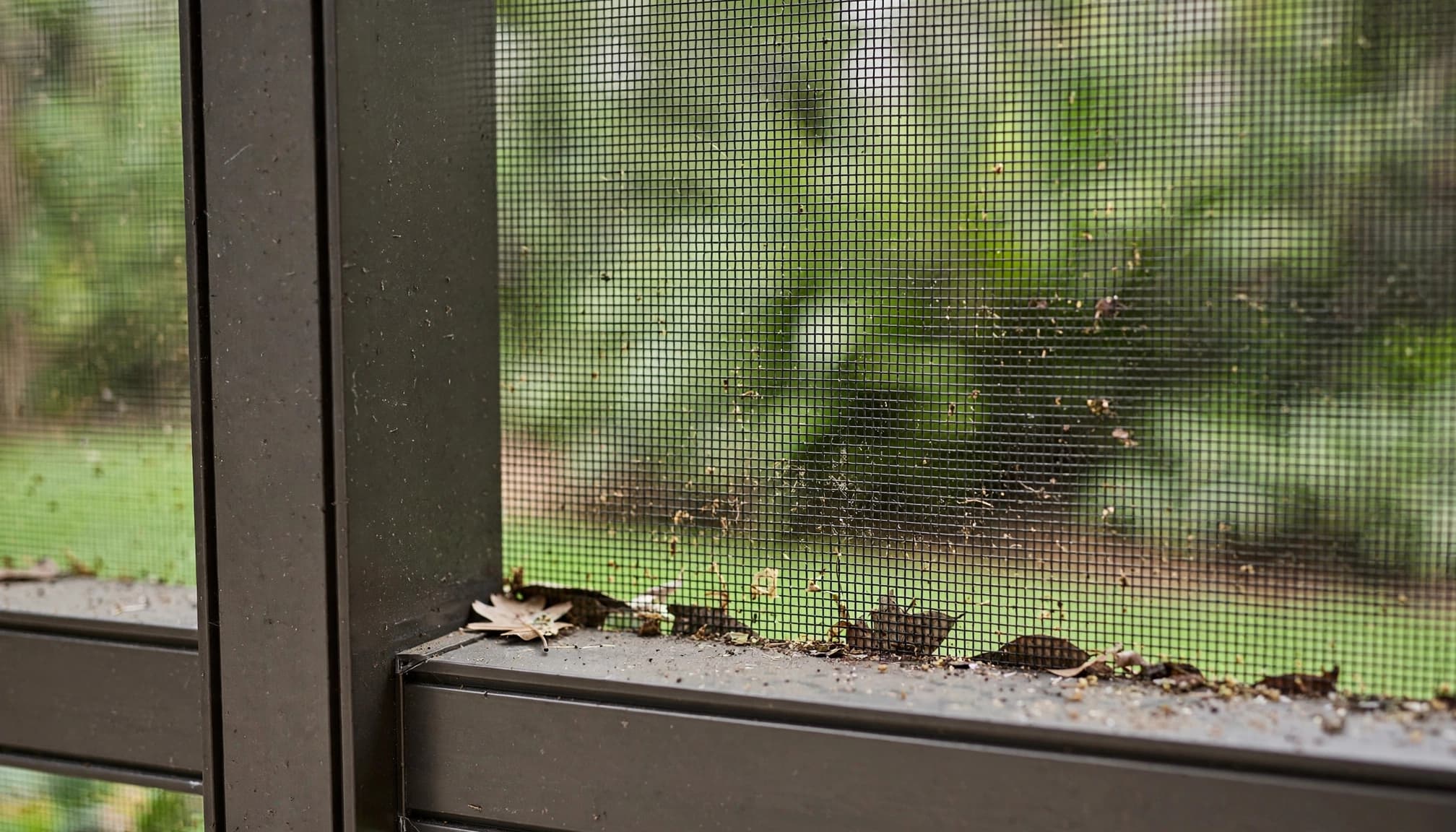
Walk around the enclosure and look for holes, sagging mesh, and gaps along panel edges. A screen can look intact in the middle while its edge has started separating from the frame.

Look at the rails, corners, and door, too. Bent framing, cracks, corrosion, or a door that's out of alignment deserve attention before cleaning. Our guide to signs a pool screen is pulling loose can help you distinguish a loose edge from a tear.

How to Clean a Pool Cage More Gently

Start with the least forceful method that removes the dirt. A garden hose, soft cloth, and soft brush are useful for reachable areas that don't need aggressive cleaning.

Prepare the area

Move lightweight furniture and other objects away from the panels. Remove loose leaves by hand, and keep pets away while you work. This gives you room to see the screen edges and prevents debris from rubbing against the mesh.

Keep pool equipment and electrical components dry. For overhead panels, stay on the ground and avoid leaning on the frame or climbing onto the enclosure.

Wash without pressing on the screen

Rinse loose dirt with a gentle flow of water. For spots that remain, use a soft cloth or brush with water and light pressure. Work carefully around the spline and panel edges, where pulling or hard scrubbing can loosen the mesh.

Rinse away the loosened debris, then look over the cleaned areas for changes. If the screen starts to sag or an edge comes loose, stop cleaning that panel. Our screen enclosure cleaning and maintenance guide covers other parts of the structure that need attention, including the frame and door.

When Hand-Cleaning Is the Better Choice

Hand-cleaning gives you more control around fragile areas. Choose it when a panel has minor surface dirt but its mesh appears aged, its edge is beginning to loosen, or the frame finish looks worn.

A soft cloth can also reach accessible corners and lower rails where leaves collect. Use a light touch, and don't push against the center of a panel to scrub a stubborn spot.

If a screen is torn, brittle, or pulling away, avoid washing the damaged area altogether. Cleaning won't restore its tension, and additional force can make the repair larger. For high or difficult-to-reach sections, professional help is safer than trying to reach them while leaning on the cage.

Common Pool Screen Cleaning Mistakes

The biggest mistake is treating the screen and frame like the pool deck. Deck cleaning may call for a much stronger approach than thin mesh can tolerate. Keep those jobs separate, even when dirt has collected on both.

Another mistake is focusing only on the center of each panel. Corners and edges can collect debris while hiding loose spline or small gaps. Look at those areas before and after cleaning so you can spot a change.

Avoid stiff brushes, hard scrubbing, and pulling at material caught in the mesh. Also, don't assume a panel is sound because it looks clean. A tidy screen can still have a loose edge or a damaged rail.

What to Do When Cleaning Reveals Damage

The right repair depends on whether the problem is limited to the mesh or extends to the structure. Note the affected panel and describe what you see rather than guessing what caused it.

One damaged panel

A single torn panel can often be replaced when the damage is isolated and the surrounding frame and spline channel are sound. New mesh may look different beside older panels that have faded or weathered.

A small patch may cover a hole, but it doesn't replace the panel. Our article on replacing one torn screen panel explains when a localized repair makes sense.

Widespread wear or frame damage

If several panels are loose, torn, or sagging, a broader rescreen may be worth discussing. Bent rails, separated connections, or an unstable frame need attention as well. Replacing mesh alone won't repair the structure that holds it.

At Back Bay Screens, we provide pool enclosure rescreening services in Southwest Florida. We can discuss the condition of the screens and the scope of work your enclosure needs.

Keep the Cleaning Method Gentle

Pool cage screens can be cleaned safely when the method matches their condition. Use gentle water flow on sound panels, and choose hand-cleaning when you need more control.

If you find loose mesh or visible frame damage, address that condition before applying more force. A clean enclosure should still have secure panels and a sound frame.

By Back Bay Screens • November 20, 2026
A screen enclosure may reduce some wind exposure around a pool, but it won't stop pool evaporation. Its effect depends on how the cage sits on your property, how much air moves through the mesh, and the weather. In Naples, wind, humidity, water temperature, and sun exposure al...
By Back Bay Screens • November 19, 2026
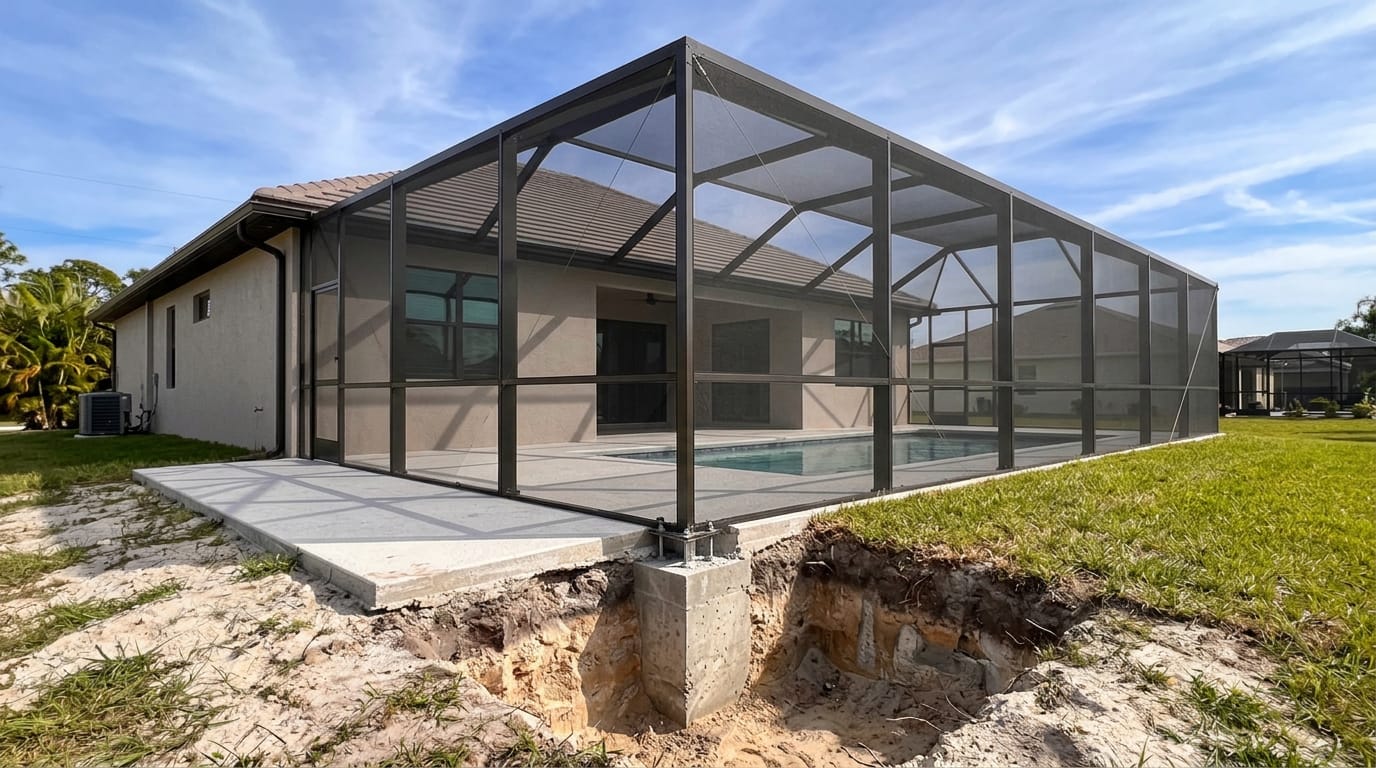
A pool cage foundation typically consists of concrete footings or other designed concrete support, with the enclosure posts anchored to it. On a sandy Southwest Florida lot, the foundation must transfer the cage's weight and wind forces into ground capable of supporting them....
By Back Bay Screens • November 18, 2026
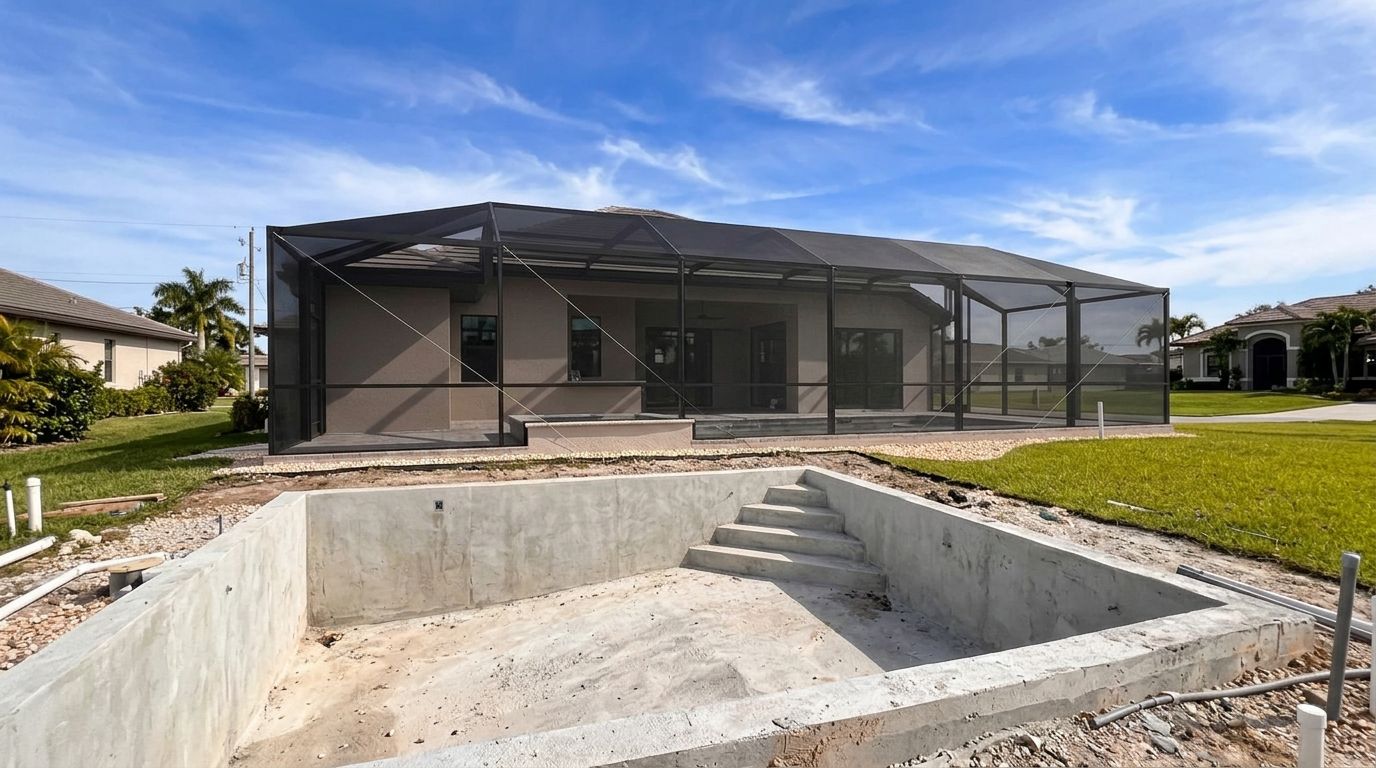
A pool cage can sometimes be installed before the pool is fully complete. The timing depends on whether its approved supports are ready and whether remaining pool work can continue without damaging or obstructing the enclosure. Pool cage installation may fit into the schedule...
By Back Bay Screens • November 17, 2026
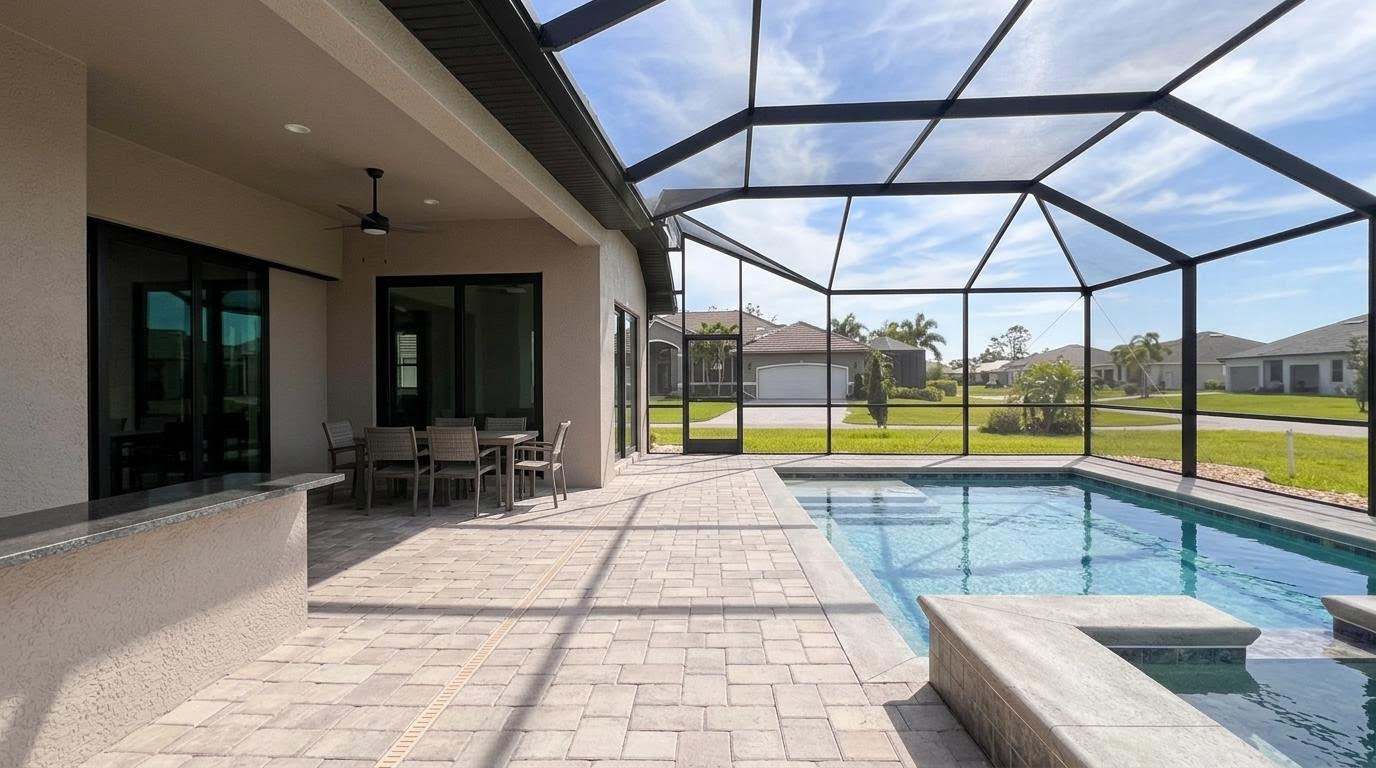
Good pool enclosure door placement connects the routes you use most while leaving room for furniture, walking, and upkeep. The right location depends on how your house, pool deck, and backyard fit together. A door that looks convenient on an empty plan can feel crowded once th...