
Pool Cage vs. Pergola for Backyard Dining

Pool Cage vs. Pergola for Backyard Dining

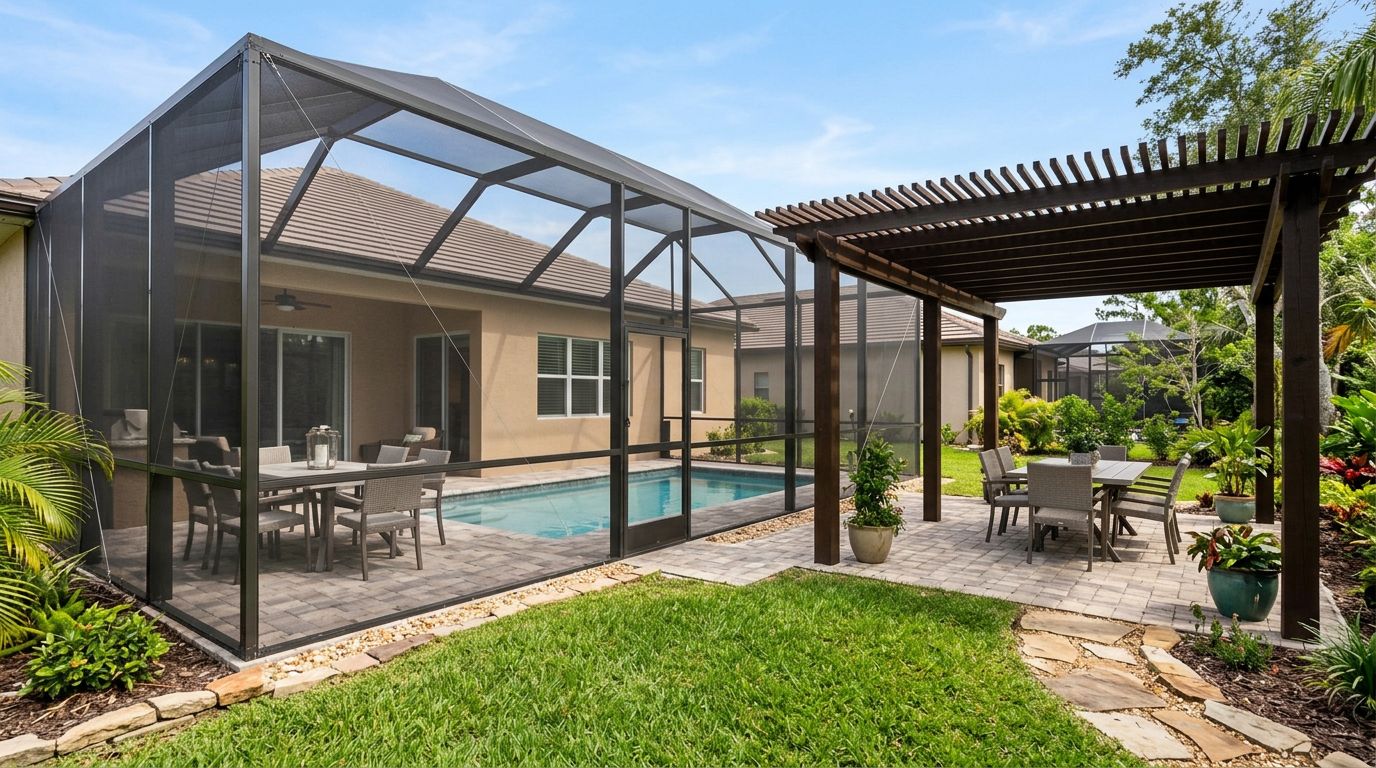
A pool cage is a better fit if you want to dine near the water with fewer insects and less windblown debris. A pergola is a good choice if you prefer an open-air setting with shade over the table.

Neither structure solves every dining comfort issue on its own. The right choice depends on when you eat outside, how much space you have, and which conditions interrupt your meals.

How the two dining spaces compare

A pool cage is a framed screen enclosure that can cover the pool and surrounding deck. A pergola is an overhead structure, often with a slatted roof and open sides, that can define a smaller dining area.

The differences matter most when you're sitting down to eat.

Dining consideration Pool cage Pergola
Insects Screening helps keep them out Open sides leave the area exposed
Shade Mesh provides some filtering; added shade may be needed Slats provide partial shade that moves with the sun
Rain Screen mesh isn't waterproof Rain passes through an open slatted roof
Privacy Depends on mesh and surroundings Open sides offer little privacy on their own
Pool access Can enclose dining and swimming together Can sit beside the pool or near a separate enclosure

The choice is less about which structure looks better in isolation and more about how you expect the space to work during a meal .

Shade and weather protection at the table

Shade under a pergola

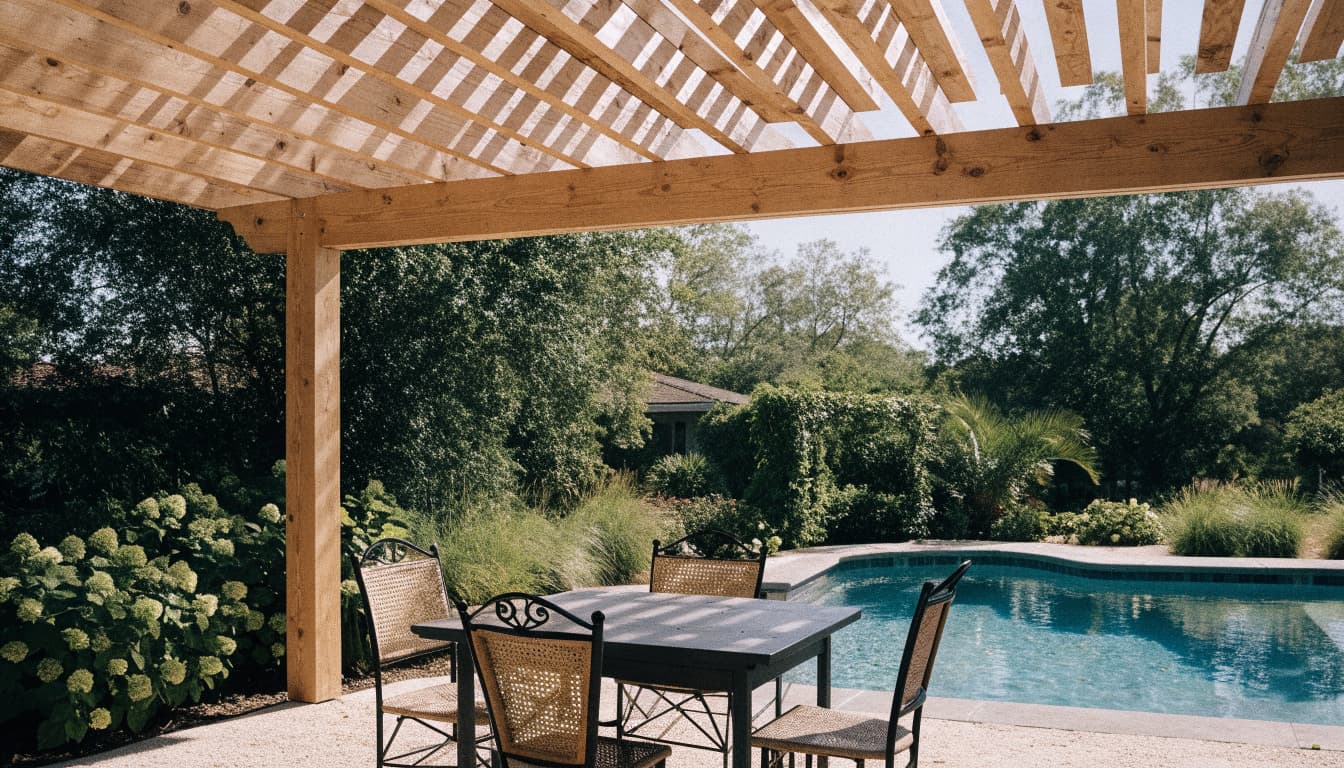
A pergola's slats cast broken shade across the patio. The pattern changes as the sun moves, so the table may receive more direct light at one meal than another.

Slat spacing, orientation, and the pergola's position all affect where shade falls. A retractable canopy or shade fabric can add overhead coverage, although the open sides still allow low-angle sunlight into the dining area.

An open slatted roof also lets rain through. If you want to leave cushions and a set table outside during a Southwest Florida shower, a basic pergola won't provide reliable cover.

Weather protection inside a pool cage

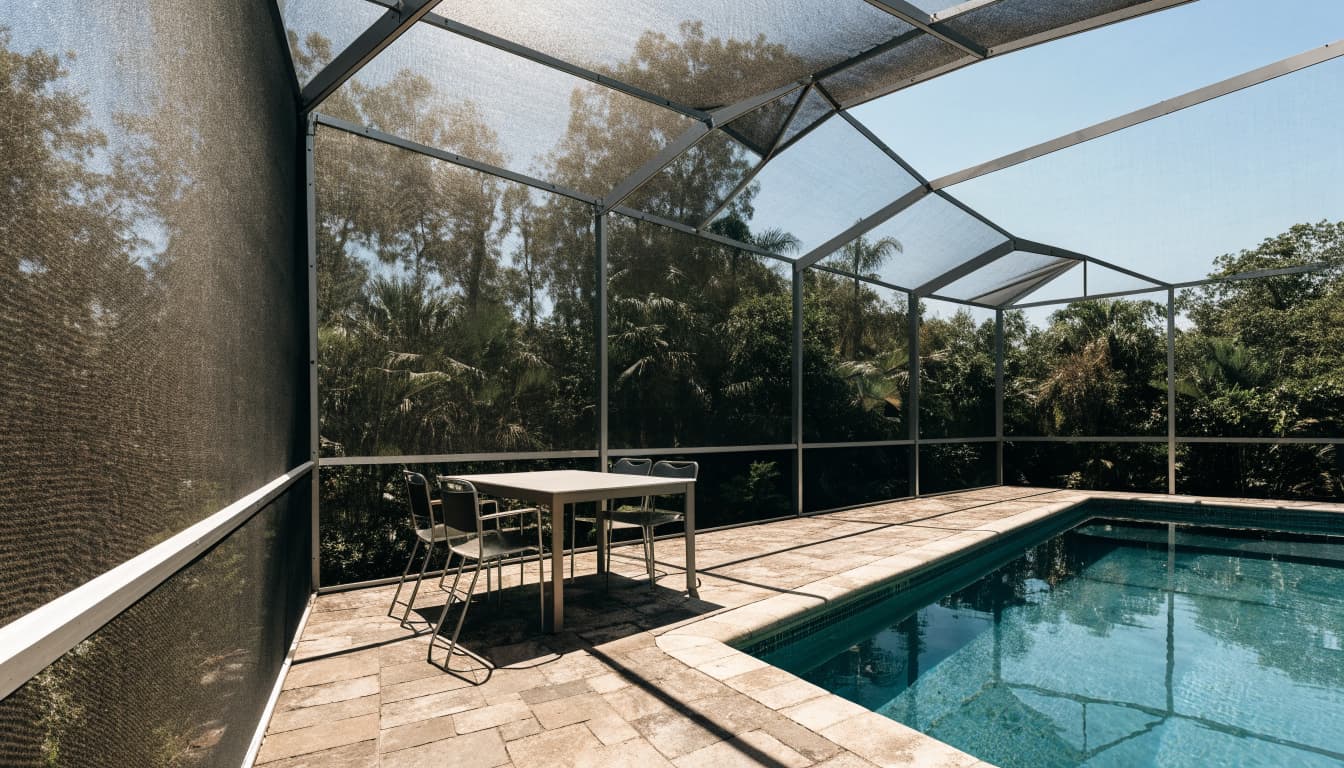
Screen mesh filters some sunlight, but a screened roof doesn't create the same kind of shade as a solid roof. It also lets rain through, and wind can carry rain through the sides.

For a dining space that needs overhead cover, a screened area beneath an existing covered lanai can offer a different combination: a solid roof above the table and screening around the sides. A pool cage can extend the screened space beyond that covered portion.

Consider both the midday sun and the lower evening sun when placing furniture. A roof overhead may shade the table at lunch while allowing direct sun to reach diners later in the day.

Airflow and insect protection during meals

Screening helps keep insects away

If mosquitoes regularly cut dinner short, a pool cage has an advantage. Properly fitted mesh helps keep insects outside while allowing air to pass through. Closed doors and intact panels also matter because openings give insects a way in.

Screen selection changes the balance. Standard insect mesh can suit households that value airflow and visibility. Finer mesh targets smaller insects, including no-see-ums, but the denser weave can affect how open the enclosure feels.

A screen also helps reduce windblown leaves and larger debris around the pool and dining area. You'll still need to clean the deck and furniture, particularly after wet or windy weather.

Open sides offer unrestricted airflow

A pergola with open sides lets breezes reach the table without passing through mesh. That open connection to the yard can be appealing when you want a relaxed dining spot close to the garden.

The trade-off is exposure. Mosquitoes and other insects can reach the table, so you may choose to eat indoors when they're active. A ceiling fan may improve comfort where one can be safely installed, but it doesn't turn an open pergola into an insect barrier.

Privacy and the view from your chair

Neither structure automatically makes a dining area private. Start by looking at the table's position in relation to neighboring windows, nearby patios, and the rest of your yard.

Screen choice can influence visibility, but ordinary insect mesh shouldn't be treated as an opaque wall. Lighting and viewing angle affect what people can see, especially after dark when the dining area is lit. Denser or solar-screen materials can offer more screening, though they can also change the brightness and view from inside.

If you want to see the pool and landscaping clearly, compare the view from your usual seat. Our guide to pool cage screen mesh and visibility explains how the surroundings and light affect the way mesh looks.

A pergola's open sides leave sightlines largely unchanged. Landscaping or a separate privacy feature can help screen a dining area, but its placement matters: a feature that shields one side of the table may also block a favorite pool view.

Make room for dining alongside the pool

Plan the table and circulation first

Start with the furniture you intend to use, including the space chairs need when people sit down and stand up. Then consider how someone carrying a tray will move between the kitchen and the table.

Leave a clear route to the pool, doors, and gates. Diners shouldn't have to move chairs each time someone wants to pass, and a door shouldn't open into a chair that's in use.

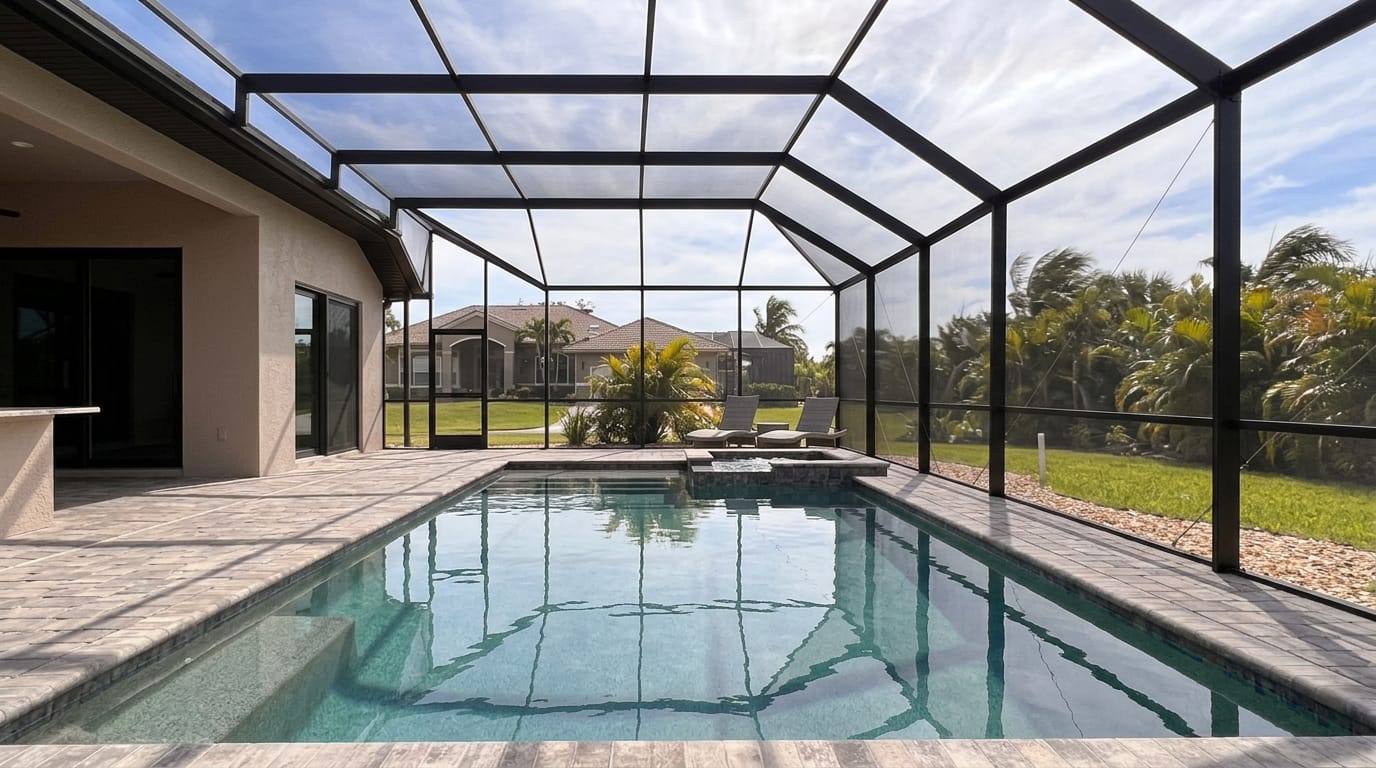
A pool cage can bring the pool and dining area into one screened space, provided the deck and enclosure layout accommodate both. Our advice on planning a lanai for dining can help you organize seating and circulation.

Place pergola posts with pool use in mind

A pergola can define a dining zone without enclosing the whole deck. Its posts still take up space, so place them where they won't interrupt seating, walkways, or access to pool equipment.

Consider the view from the house as well as the view from the table. A post directly in front of a favorite sightline may affect how the pool area feels even when nobody is dining outside.

Pool barriers and gates need attention in either layout. A screen enclosure shouldn't be assumed to satisfy every pool safety requirement on its own. The overall plan needs to account for applicable local rules and safe access.

Can you use a pergola and a pool cage together?

You don't always have to choose one structure for the entire backyard. A screened pool area could sit beside an open pergola, giving you separate places to eat according to the weather and time of day.

Another option is to plan shade within or beside an enclosure. The details depend on the home's roofline, the available deck, and the structure supporting the screen. A covered lanai, for example, may already provide shade for a table while the pool cage surrounds the adjacent deck.

Treat any added structure as part of the overall design. Posts, attachments, doors, and drainage all affect how the space functions. A qualified professional can address the structural and safety details rather than relying on the existing screen frame to support an addition.

Maintenance differs for each structure

Caring for a pool cage

Screens collect dust and debris and can develop tears. Frames, doors, and hardware also need attention so the enclosure continues to look and function as intended.

A small tear doesn't necessarily mean every panel needs replacement. Widespread screen wear or frame damage calls for a different scope of work. Our screen enclosure maintenance guide covers the mesh, frame, and doorway as separate parts of the space.

Caring for a pergola

Pergola upkeep depends on its material and finish. Wood may need cleaning and periodic refinishing, while other materials have their own care requirements. Slats and joints can also collect dirt and leaves.

If you add fabric shade or a canopy, that material becomes another item to clean and maintain. Poolside exposure matters too, so consider how the chosen finish will suit the conditions around your deck.

What affects the project cost?

For either option, the scope begins with more than the table itself. The area being covered, structural design, site conditions, materials, and any changes to the existing deck can all affect the project.

For an enclosure, screen choice, doors, frame design, and the connection to the home are part of that scope. A pergola plan may involve posts, an overhead shade system, and finishes. Features such as lighting or electrical work add their own planning considerations.

Permitting belongs in the budget conversation as well. In Cape Coral, a new residential pool screen enclosure requires a building permit. Our guide to Cape Coral pool enclosure permits explains the paperwork involved.

At Back Bay Screens, we offer free, no-obligation estimates for enclosure projects. Sharing your dining layout and priorities helps us define the work around the way you intend to use the space.

Choose the setting that fits your meals

For a Southwest Florida backyard where insects often affect dinner, a pool cage is the stronger starting point. Pair it with a covered dining area if shade and shelter from overhead rain matter too.

If you mainly eat outside when conditions are pleasant and want open sides, a pergola can define a comfortable place near the pool. Plan its position around the sun, your furniture, and the routes people use.

Choose based on your regular meals , not an occasional gathering. The right layout gives you a table you can use comfortably while keeping the pool and backyard easy to enjoy.

By Back Bay Screens • November 20, 2026
A screen enclosure may reduce some wind exposure around a pool, but it won't stop pool evaporation. Its effect depends on how the cage sits on your property, how much air moves through the mesh, and the weather. In Naples, wind, humidity, water temperature, and sun exposure al...
By Back Bay Screens • November 19, 2026
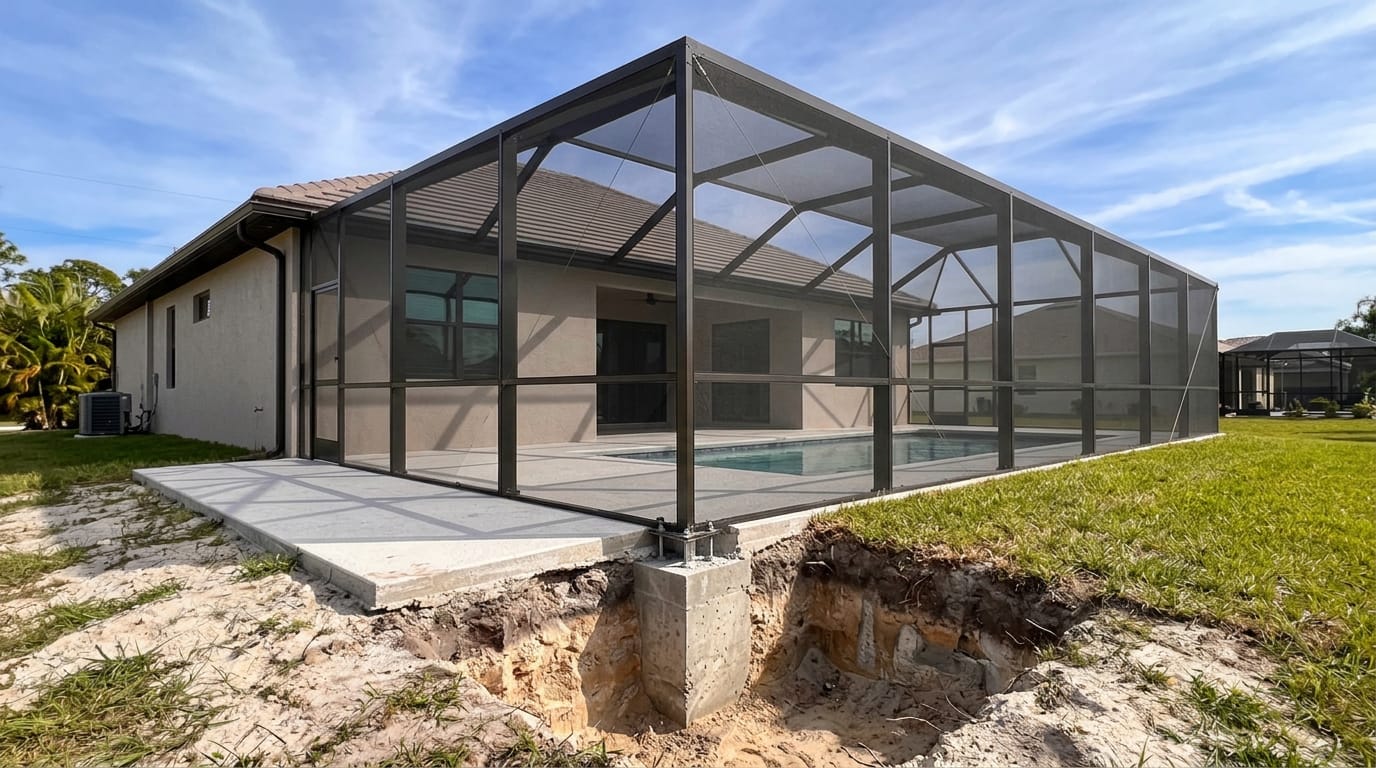
A pool cage foundation typically consists of concrete footings or other designed concrete support, with the enclosure posts anchored to it. On a sandy Southwest Florida lot, the foundation must transfer the cage's weight and wind forces into ground capable of supporting them....
By Back Bay Screens • November 18, 2026
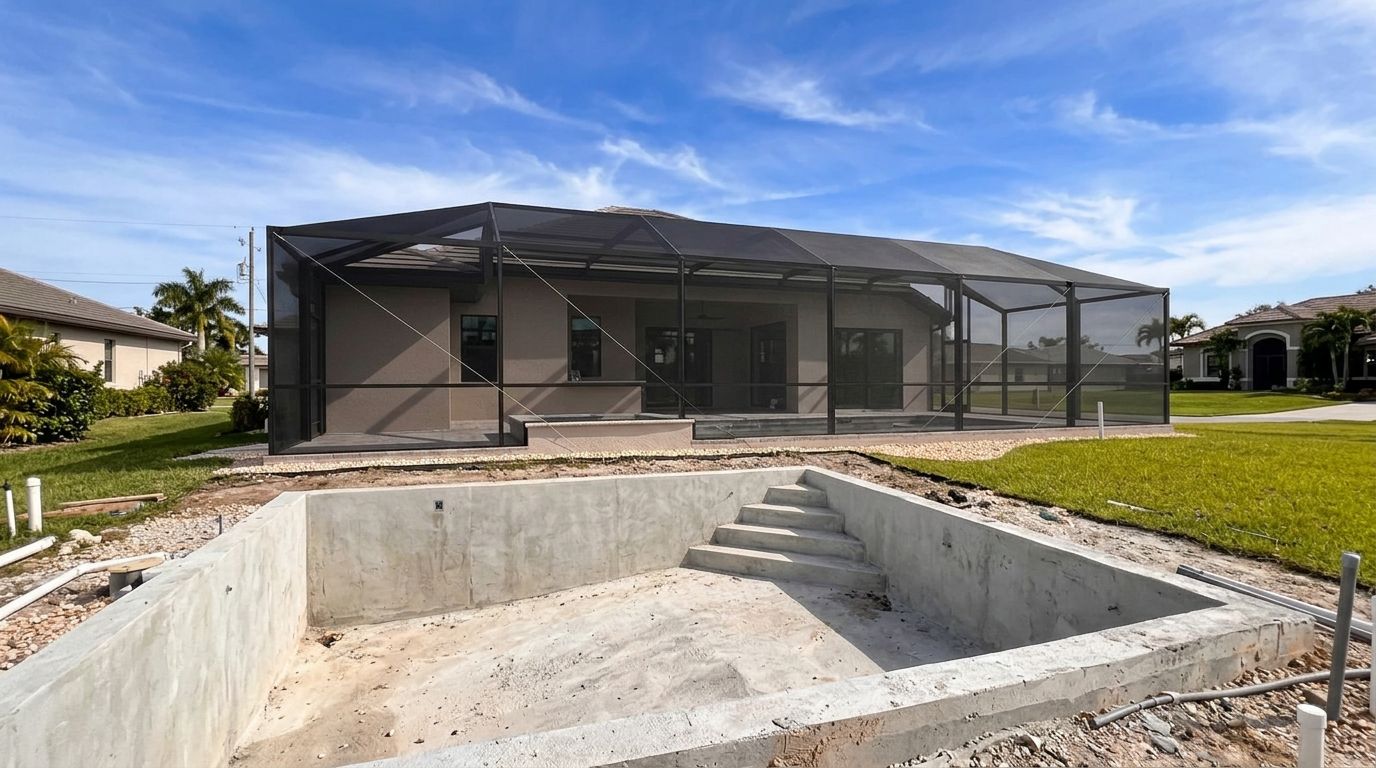
A pool cage can sometimes be installed before the pool is fully complete. The timing depends on whether its approved supports are ready and whether remaining pool work can continue without damaging or obstructing the enclosure. Pool cage installation may fit into the schedule...
By Back Bay Screens • November 17, 2026
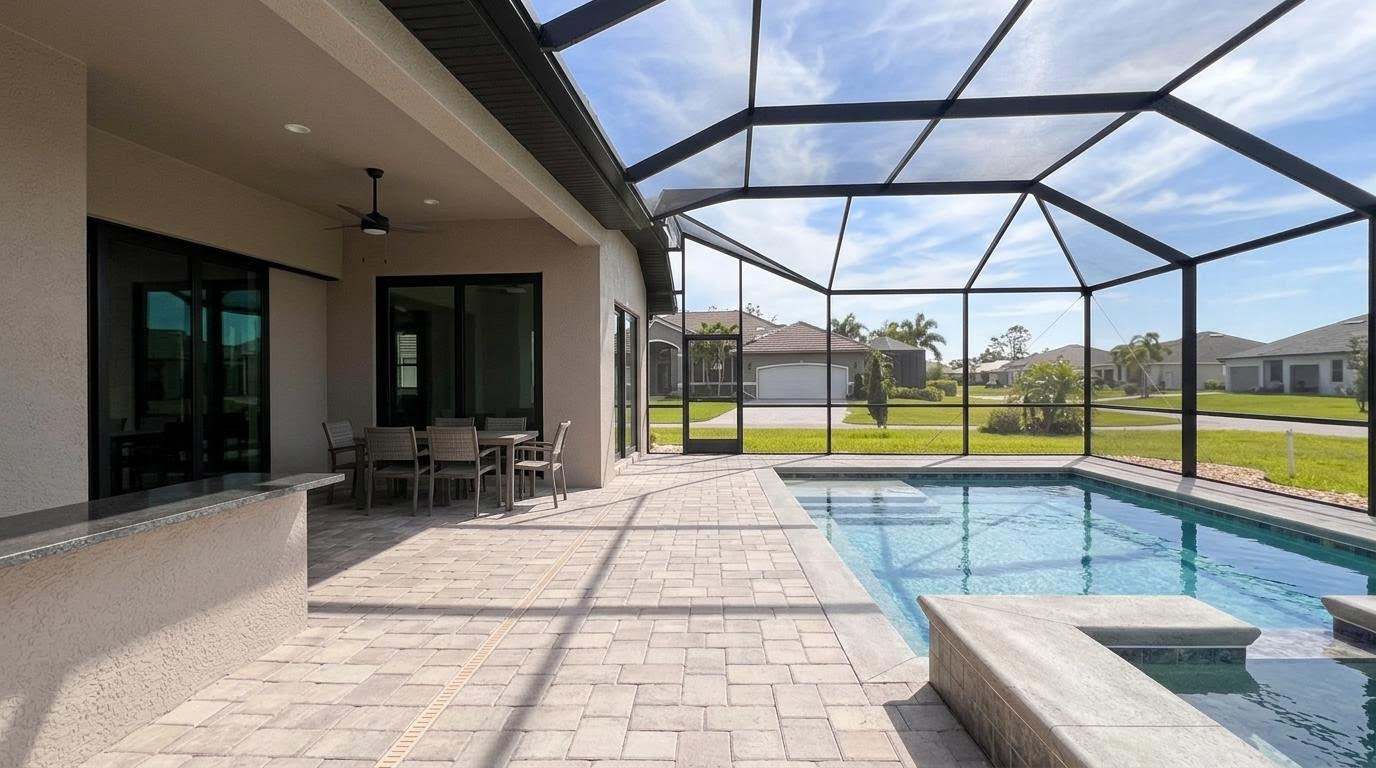
Good pool enclosure door placement connects the routes you use most while leaving room for furniture, walking, and upkeep. The right location depends on how your house, pool deck, and backyard fit together. A door that looks convenient on an empty plan can feel crowded once th...