What Is a Kick Plate on a Screen Enclosure?

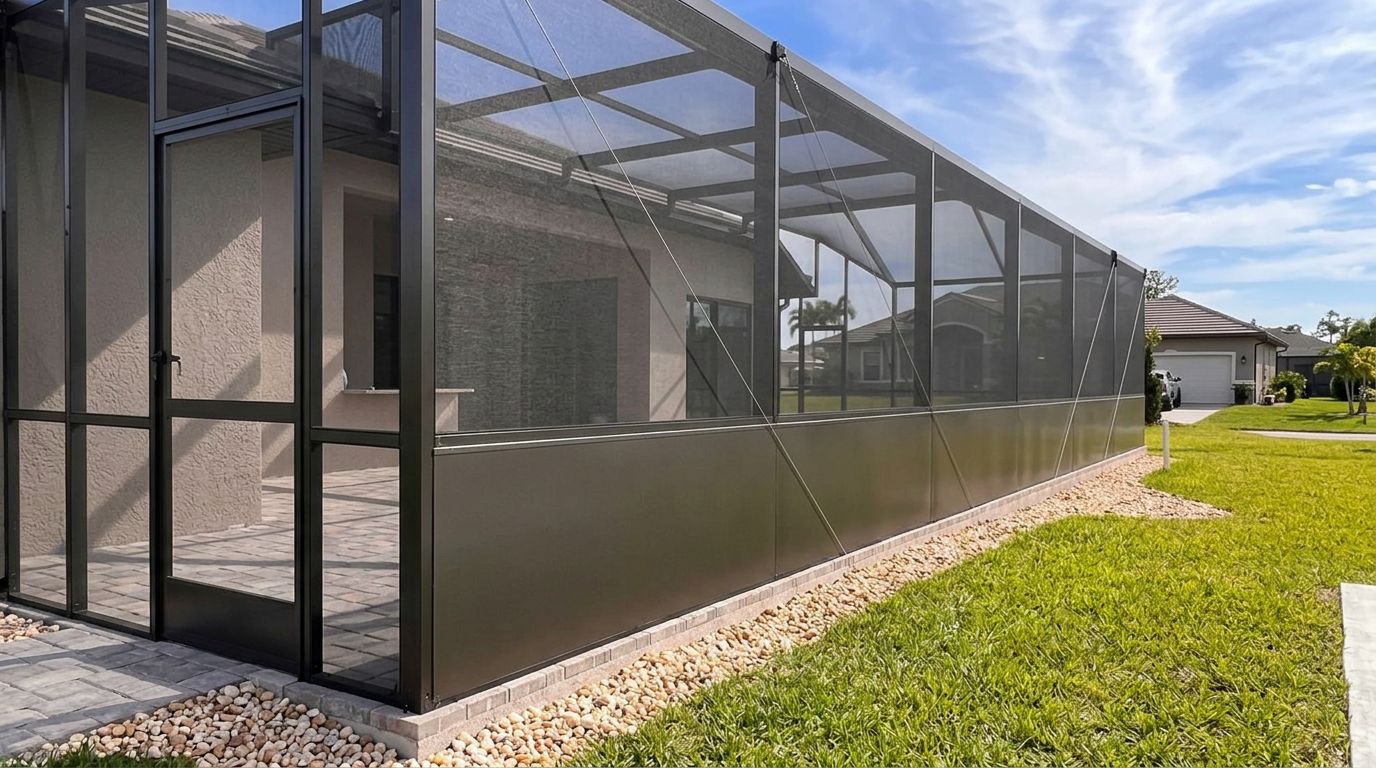
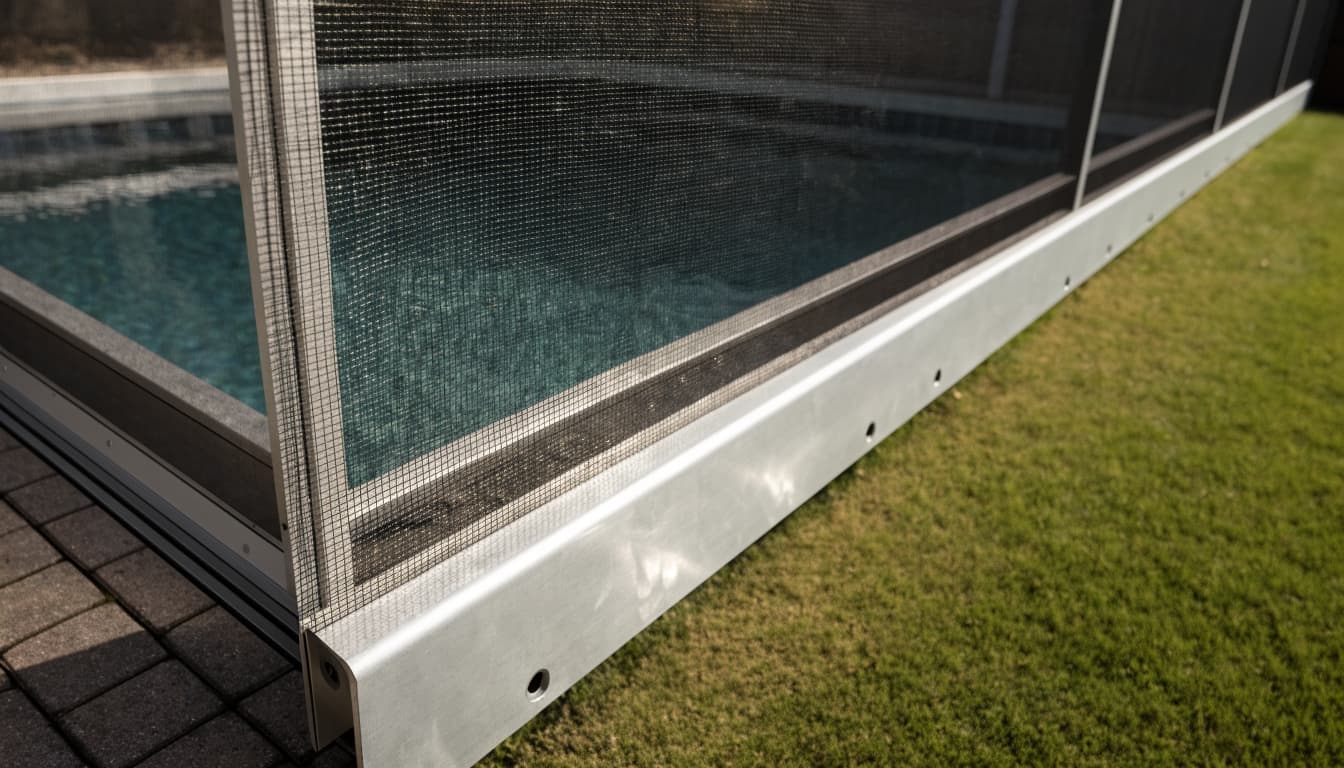
A kick plate is a solid panel along the bottom of a screen enclosure. It gives the lower perimeter a sturdier surface where pets, yard equipment, and everyday activity can bring objects into contact with the enclosure.
For some homes, that added protection at ground level is worth the change in appearance. Here's how a kick plate fits into an enclosure and what to consider before choosing one.
What a Kick Plate Does
A kick plate occupies the lower portion of an enclosure wall, with screen mesh above it. Instead of having mesh extend all the way to the bottom, you have a solid surface across the area where feet, paws, or yard debris are most likely to make contact.
Aluminum is a common kick plate material. Its solid surface gives the lower edge a different look from the open mesh above. Depending on the enclosure design, a plate may be useful around the perimeter or in areas that receive more contact.
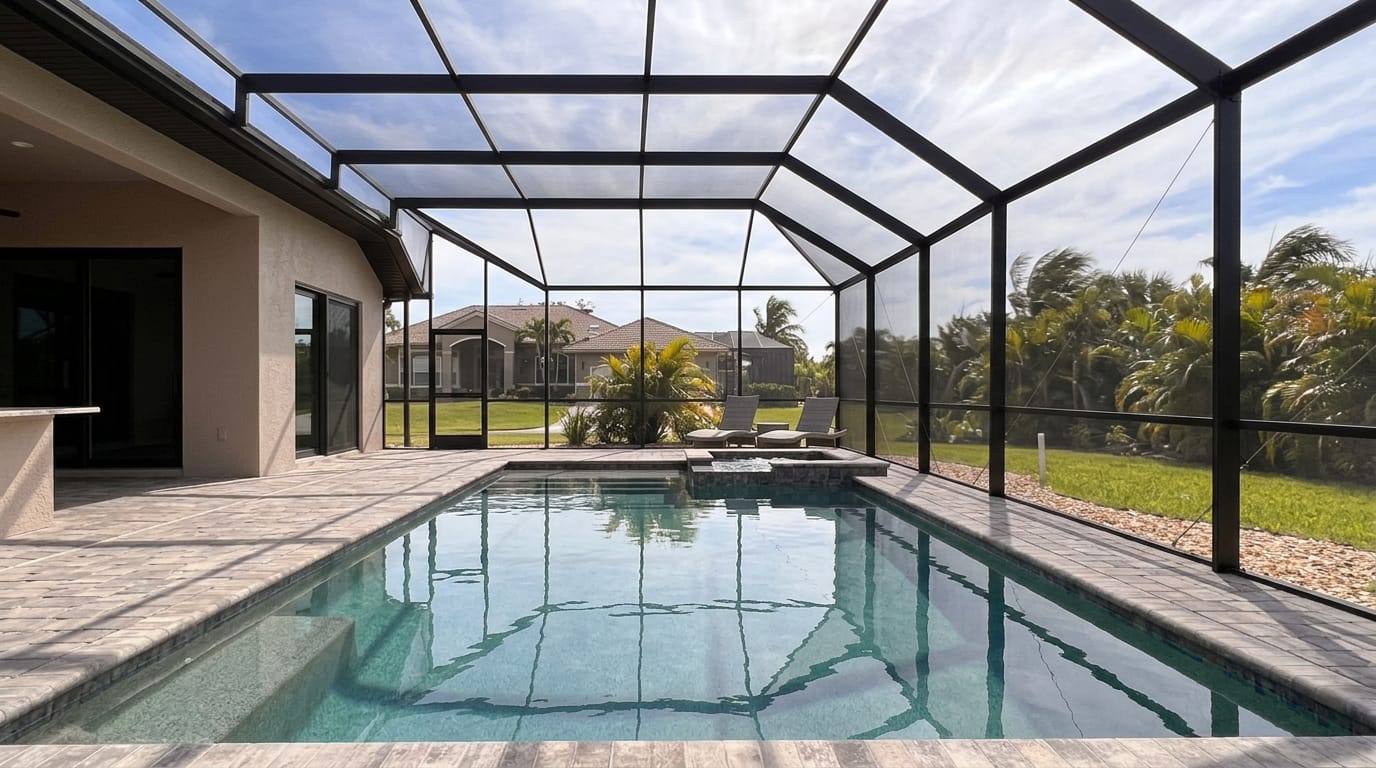
The screen above the plate still provides the open feel many homeowners want for a pool area or lanai. A kick plate doesn't replace the need to choose mesh that suits your priorities for airflow, visibility, and insect protection.
When a Kick Plate Is Useful
The most useful location for a kick plate is often the place where daily activity meets the enclosure. Look at both sides of the structure: the way you use the patio matters, and so does the work happening in the yard.
Homes with pets or frequent activity
A solid lower panel can give pets a sturdier surface at the base of the enclosure. It may be worth considering if a dog regularly rests against the perimeter or a cat spends time near a favorite corner.
The plate only covers the area it occupies, though. A pet may still reach the mesh above it or scratch at a screen door. Pay attention to where contact happens, and consider ways to protect screen panels from pet scratches throughout the enclosure.
Furniture and foot traffic matter too. The lower edge near a seating area or a frequently used route can receive occasional bumps during ordinary use.
Lawns and landscaping near the enclosure
Yard work brings equipment close to the base of an enclosure. A kick plate gives that area a solid surface where a mower or other equipment may come near the wall.
Leaves, grass clippings, and other yard debris may also contact the lower perimeter. The plate changes the surface they reach at that height, although the mesh above remains exposed. Give the enclosure room when working nearby, since equipment can still contact other parts of the structure.
Materials, Appearance, and Airflow
A kick plate changes both the function and the look of the lower wall. Consider how it will appear beside the frame and how much of the view you want to keep open.
Choose a look that fits the enclosure
Aluminum offers a clean, solid appearance that can sit alongside the enclosure's framing. The finish and the visible panel area affect how prominent the plate looks from both the patio and the yard.
Look at the enclosure from your usual seats as well as from outside. A solid lower section may feel tidy and provide some privacy near the floor. It also hides the view through that part of the wall, which matters if you enjoy seeing landscaping or the pool deck from a low chair.
Balance protection with an open feel
Mesh allows air to pass through its openings. A solid plate takes the place of some of that mesh, so there's less airflow through the covered portion near the base. The remaining screened area continues to admit air.
If an unobstructed lower view is your priority, pet-resistant mesh may be worth considering instead. For example, Phifer's PetScreen is designed to resist damage from most dogs and cats. Mesh options also differ in appearance, so compare durability with the view and airflow you want.
Planning a Kick Plate for Your Space
Start with the areas that receive the most activity. A lower panel near a pet's favorite spot may be more useful to your household than one beside an area you rarely use. On the other hand, a consistent appearance around the enclosure may matter more to you than treating one section alone.
Include doors and walking paths in the discussion. A doorway sees different use from a stationary wall, and nearby furniture can change how easily people move through the space.
If your enclosure also has worn mesh, you can discuss the lower panel as part of a broader screen project. Our complete enclosure rescreening service includes guidance on screen choices for pools, lanais, and patios.
Caring for the Plate and Surrounding Screen
Routine care can be simple. Remove loose leaves and dirt from the plate with a soft cloth or gentle brush. Mild soap and water can help clean the surface without making the surrounding mesh the focus of a heavy cleaning job.
Keep an eye on the screen, frame, and door as separate parts of the enclosure. After heavy rain or yard work, look for debris around the base and any visible changes to the mesh. Avoid forceful cleaning that could stress the screen or frame.
If a panel looks damaged or loose, an enclosure professional can assess it. Our screen enclosure cleaning and maintenance guidance offers more ways to think about care for the whole structure.
Choose the Lower Panel That Fits Your Routine
A kick plate gives the bottom of an enclosure a solid surface where everyday contact is common. The trade-off is less visibility and airflow through the portion it covers.
At Back Bay Screens, we help Southwest Florida homeowners plan enclosures around their priorities. Contact us for a free, no-obligation estimate and a conversation about your space.