Why Aluminum Enclosure Frames Develop White Powder
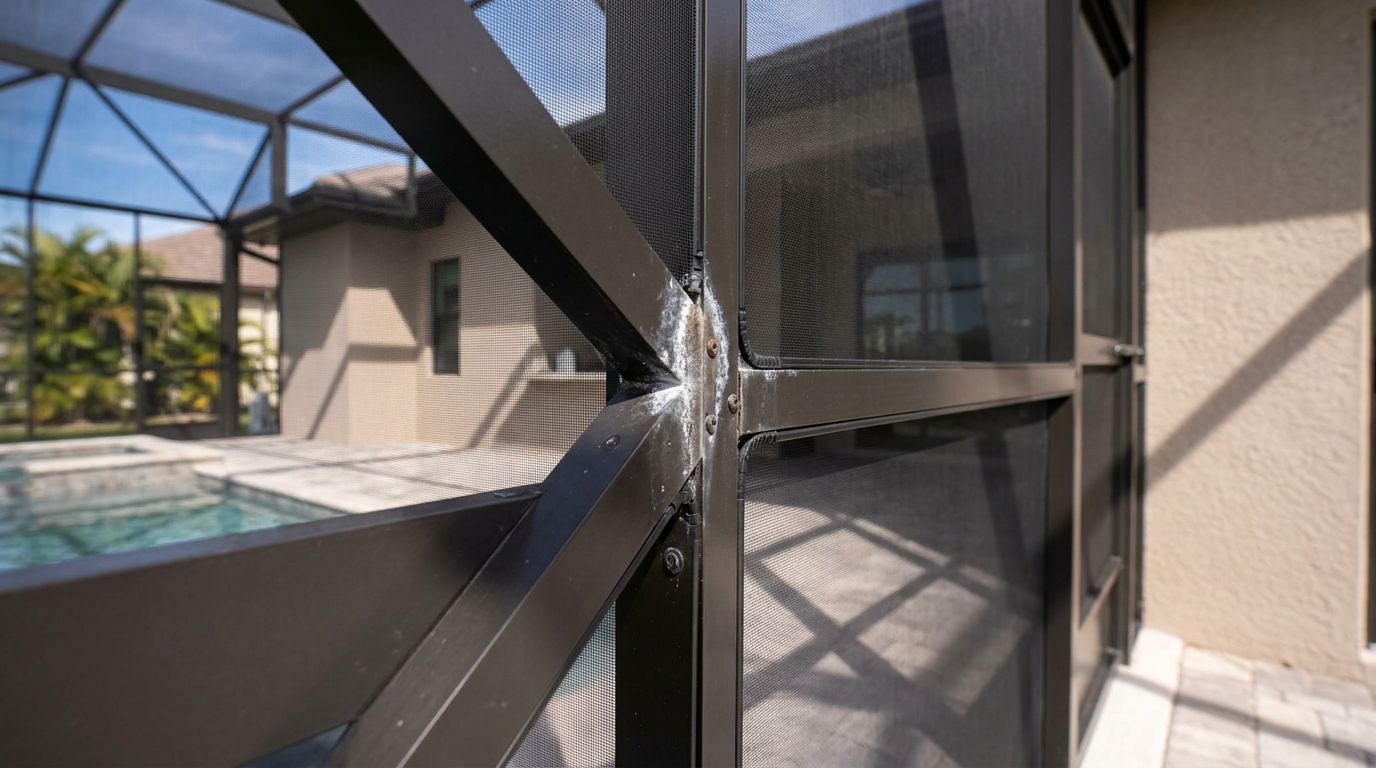
White powder on an aluminum screen enclosure can be a sign of corrosion or a deposit on the surface. The color alone doesn't identify the material or tell you whether the frame has lost strength.
In Bonita Springs, moisture and coastal exposure make frame maintenance especially important. A closer look at the finish, joints, and alignment can help you decide when gentle cleaning is enough and when the enclosure needs professional attention.
What White Powder Can Tell You About a Frame
A white mark is a reason to look more closely at the surrounding frame. It isn't enough on its own to establish what the substance is or how far any damage extends.
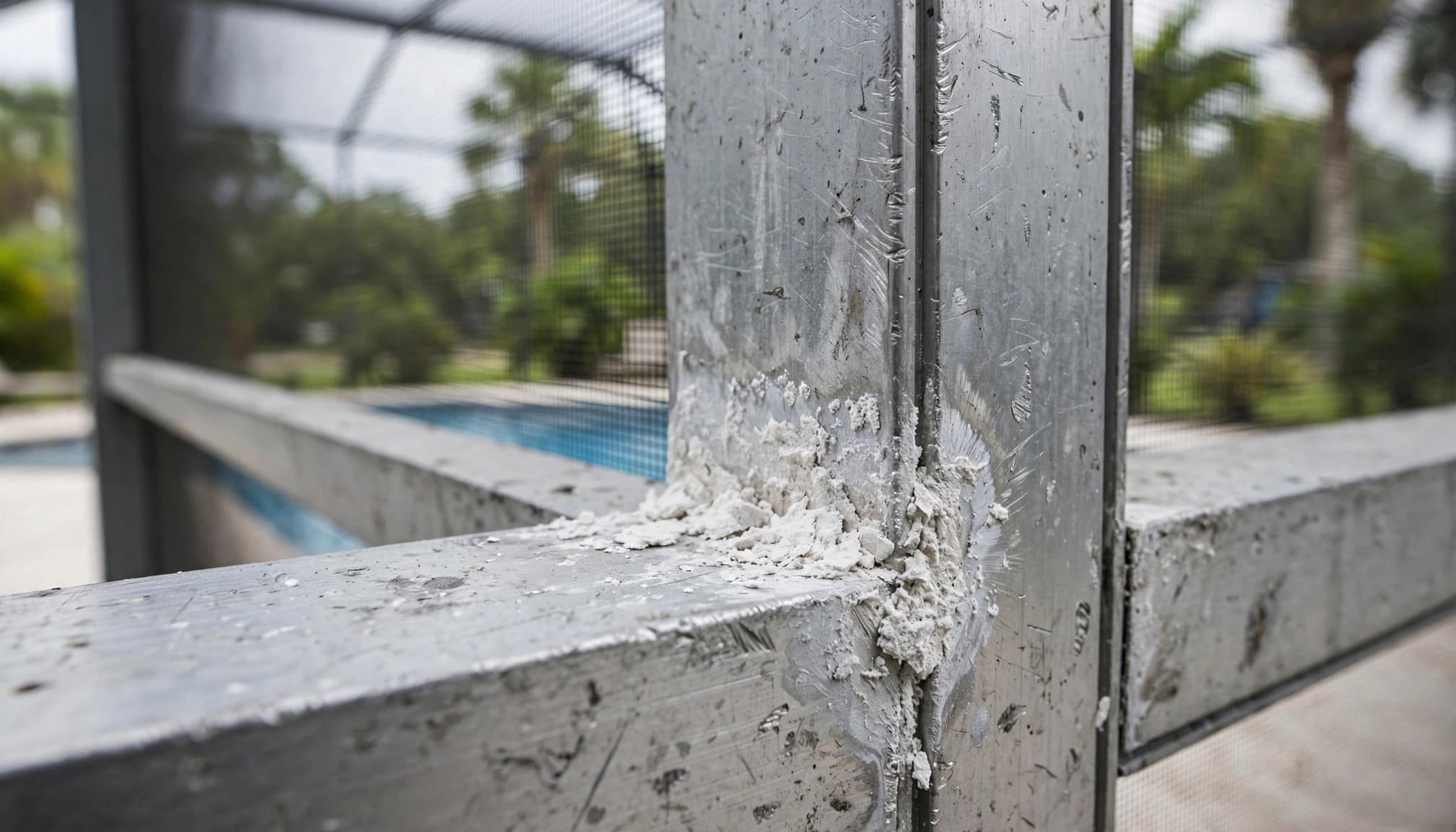
Surface marks and visible damage
Some marks sit on top of an otherwise smooth-looking finish. Others appear alongside roughness, peeling, or small depressions in the metal. Those surrounding details matter more than the color alone.
Look at the area without scraping or probing it. If you can see a crack, a section that appears to be flaking away, or a loss of metal, arrange a professional assessment rather than treating the spot as a cleaning project.
Where the powder appears
Note whether the material appears on a broad, exposed surface or near a screw, corner, or connection. Also look for similar marks elsewhere on the enclosure.
A patch beside a joint may deserve a closer look at the neighboring hardware and frame alignment. A mark on a flat surface calls for attention to the finish around it. In either case, its location is useful information, but it doesn't establish the cause.
Why Coastal Conditions Matter in Bonita Springs
Aluminum has natural corrosion resistance, but an outdoor frame still faces conditions that can affect its surface and connections. Exposure varies by property, so two enclosures in the same area may show different patterns of wear.
Salt-laden air and moisture
Airborne salt can settle on outdoor surfaces, including enclosure frames. Moisture from rain, humidity, or water around a pool can remain on those surfaces for a time. Together, salt and moisture can increase the risk of corrosion.
A home doesn't have to sit directly on the beach to experience coastal conditions. At the same time, proximity to the coast doesn't tell you what a particular white mark contains. Look at the condition of your own frame instead of assuming every enclosure will age the same way.
Protective finishes and exposed areas
A protective finish adds a barrier between the aluminum and its surroundings. Scratches, worn areas, and peeling can expose more of the underlying surface, especially at corners or places that receive frequent contact.
The finish also helps you spot changes. If a frame that once looked uniform now has an area of lifting or flaking around a connection, make a note of it. That observation gives an enclosure professional a more useful starting point than color alone.
Look for Water and Hardware at Frame Joints
Joints deserve attention because they bring several parts of an enclosure together. They may include fasteners, overlapping materials, or narrow gaps that are harder to see than the face of a post.
Places that stay wet
Water can collect around a joint or remain in a spot that doesn't dry as readily as the rest of the frame. Leaves and other debris can also gather along enclosure edges and hold moisture against a surface.
After rain, look from the ground for areas where water or debris remains. Pay attention to the bases of posts and connections near the pool deck. Don't block drainage openings or pack material into a gap without understanding its purpose.
Contact between different metals
Enclosure connections may include hardware made from a different metal than the aluminum frame. When dissimilar metals touch and moisture is present, galvanic corrosion can occur. The risk depends on the materials, the connection, and the surrounding conditions.
A white mark near a screw doesn't prove that galvanic corrosion is occurring. Still, a deteriorating fastener, damaged finish, or separation around that screw is worth noting. A professional can assess the connection as part of the larger frame.
How to Recognize More Serious Corrosion
The distinction between a surface mark and a frame problem is important, but you shouldn't have to determine the frame's strength yourself. Start with changes you can see safely.
Pitting, cracks, and missing material
Pitting appears as small depressions in a metal surface. A rough or pitted-looking area may deserve attention, particularly if it sits beside peeling finish or a connection.
Cracks and visible loss of material are stronger reasons to arrange an assessment. Don't sand the area, poke it with a tool, or press on the frame to see whether it feels solid. Those actions won't establish the condition of the full member or its connections.
Changes in alignment and connections
Stand back and look at the enclosure's outline. A bent beam, a post that appears out of position, or a joint that has separated can indicate a problem beyond a surface finish.
Doors can provide another clue. If a door no longer lines up and a nearby post also looks tilted, mention both changes when you contact an enclosure company. Together, they help describe the affected area without guessing at the cause.
Our guide to screen enclosure frame repair signs covers additional changes to watch for around posts, beams, and connections.
Inspect the Enclosure Safely From the Ground
You can gather useful information without climbing or leaning against the structure. Begin far enough back to see the roofline and posts, then look at accessible connections and the door area.
Compare similar parts of the enclosure. A corner with a visible gap may look different from the corresponding corner on the other side. Likewise, a section of finish that looks rough beside a smooth neighboring section is worth documenting.
Take a ground-level photo of a questionable area, including enough of the surrounding frame to show its location. If you notice a later change, another photo can help you describe it. Avoid shaking a connection or pushing a post to test it.
Pay attention to the screen as well, but keep mesh problems separate from frame observations. A loose panel or tear doesn't automatically mean the aluminum is damaged. If you see a mesh issue alongside a bent rail or a separated joint, mention both when arranging an assessment.
Cleaning White Marks Without Damaging the Frame
Gentle care is the best starting point for routine enclosure cleaning. The goal is to remove loose surface debris without adding pressure to the screen or disturbing an area that may already be damaged.
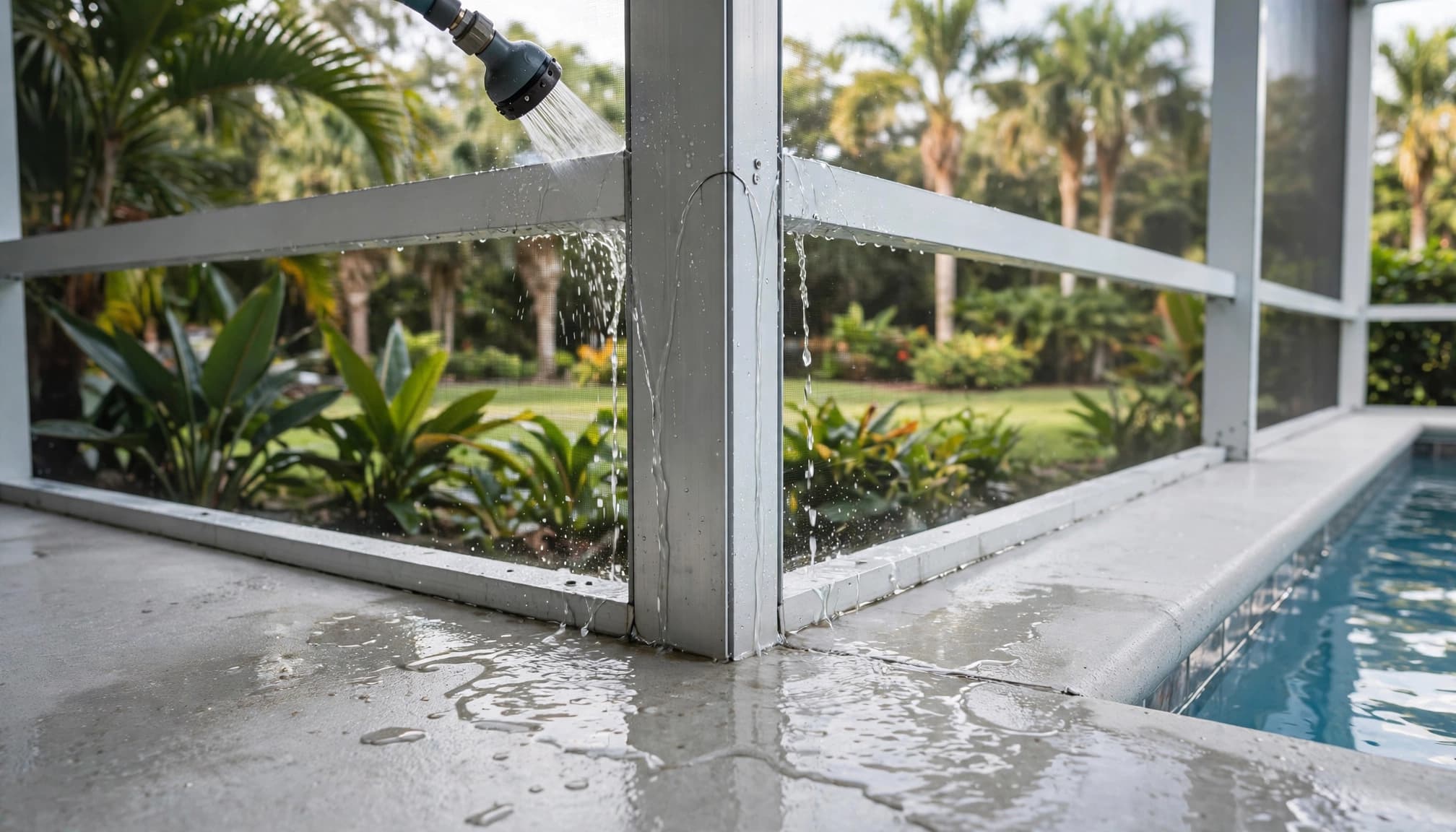
Start with accessible surfaces
Remove loose leaves and dirt from areas you can reach safely. A gentle rinse can help clear ordinary debris, followed by a look at what remains once the surface is dry.
Don't scrub a rough or flaking area to find out how deep it goes. If the mark remains alongside damaged-looking metal or hardware, leave it for a professional assessment. Cleaning may improve the appearance of an enclosure, but it can't establish whether a connection is sound.
Treat the screen and frame as connected parts
Mesh can be damaged by forceful cleaning, even when the frame looks sturdy. Avoid directing a hard spray at screen edges or using pressure that pushes the panel out of shape.
The pool deck, furniture, and enclosure also need different care. A method appropriate for a concrete surface may not be suitable for the screen or frame. Our screen enclosure cleaning and maintenance priorities can help you plan care for the whole structure.
Reduce Conditions That Encourage Frame Corrosion
You can't remove coastal exposure from a Bonita Springs property, but you can pay attention to places where moisture and debris collect. Regular visual care also makes changes easier to notice.
Keep buildup from collecting
Clear accessible leaves and debris from around the enclosure, particularly where they rest against the frame. After heavy rain or a storm, look for material caught along the lower edges and around connections.
If landscaping or stored items sit against a post, moving them away can make the area easier to see and maintain. Keep the space around the frame accessible rather than covering a concern with furniture or decorations.
Notice changes in the finish and hardware
Look for new scratches, peeling, discolored hardware, and gaps around fasteners. Pay attention to the same areas each time, including corners, door hardware, and post bases.
If a spot changes or appears alongside other frame damage, share those details when seeking help. An assessment can consider the finish and hardware together, rather than treating every visible mark as an isolated issue.
When to Discuss Repair or Rescreening
The right project depends on what needs attention. A torn screen may be a mesh problem, while visible changes in a post, beam, or connection call for a broader look at the frame.
Frame damage needs its own assessment
A rescreen replaces screening; it doesn't automatically repair damaged framing. If a rail looks bent, a connection has separated, or the metal appears cracked, have that condition assessed before arranging work limited to the mesh.
Describe where you see the problem and any related changes. For example, a loose screen edge beside a visibly displaced frame member gives a clearer picture than saying only that the screen looks loose.
Match the work to the enclosure
If the frame appears intact and the issue is limited to worn screening, enclosure rescreening may be the relevant service to discuss. If the structure also shows damage, the project scope needs to account for both the frame and screen.
At Back Bay Screens, we provide enclosure and rescreening services in Bonita Springs and Southwest Florida. We can discuss what you've noticed and the work that fits your enclosure.
Give White Powder the Right Attention
A white mark doesn't tell you everything about your enclosure frame. The more useful clues are the condition of the finish, the surrounding metal, and the connections nearby.
Keep up with gentle maintenance , and look for changes you can safely see from the ground. If you notice cracks, missing material, separated joints, or shifting frame members, arrange a professional assessment.