What Should a Pool Cage Estimate Include?
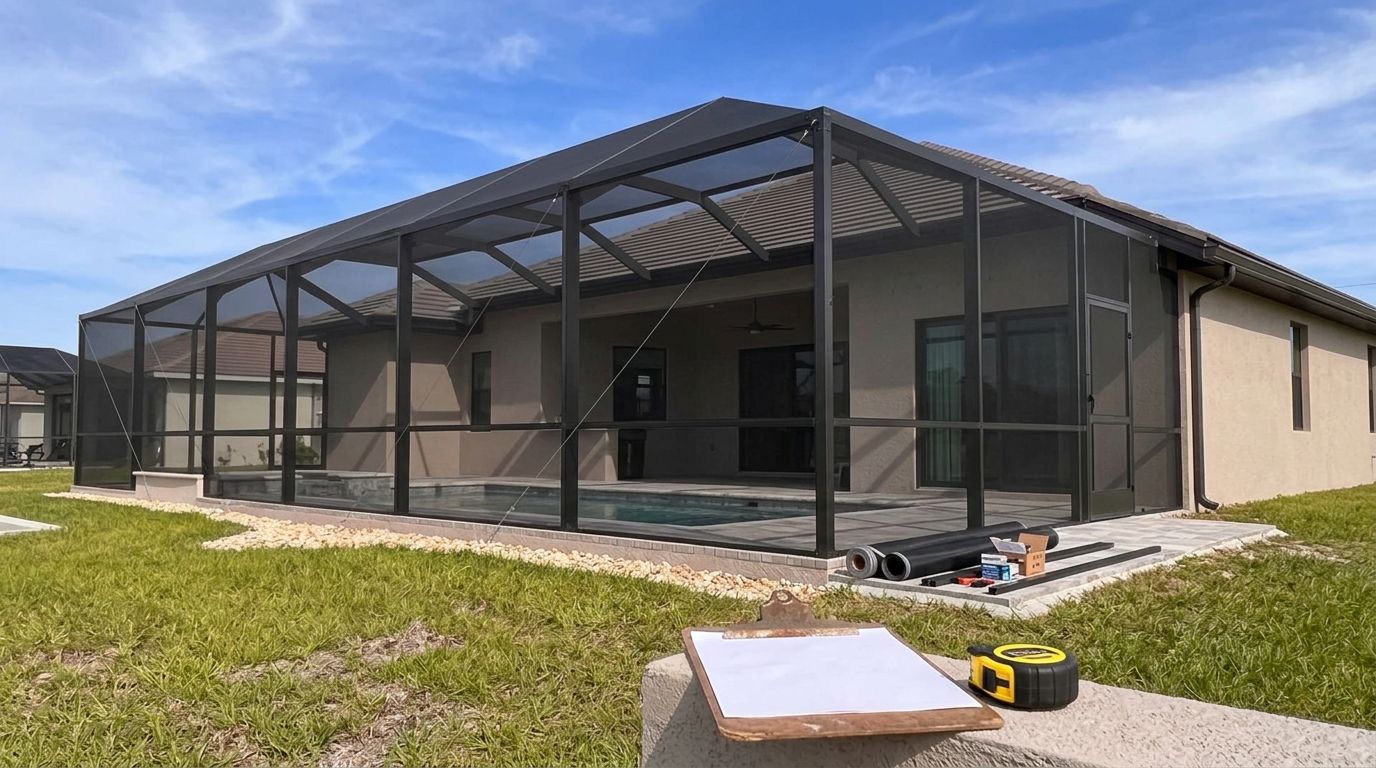
A pool cage estimate should describe the work, materials, labor, and terms behind the quoted price. It should also identify permits, repairs, exclusions, and any costs that could change as the project moves forward.
A clear estimate gives you a shared understanding of what you're buying, whether you need a new enclosure or a few replacement panels. The details below can help you compare proposals and discuss the work with confidence.
Key Takeaways
- Measurements and a defined scope show which parts of the enclosure are included.
- Screen, frame, door, and hardware descriptions make material comparisons more useful.
- Labor, removal, permits, and cleanup should appear in the price or be listed as exclusions.
- Payment terms, warranty coverage, and change-order procedures belong in writing.
Measurements and Project Scope
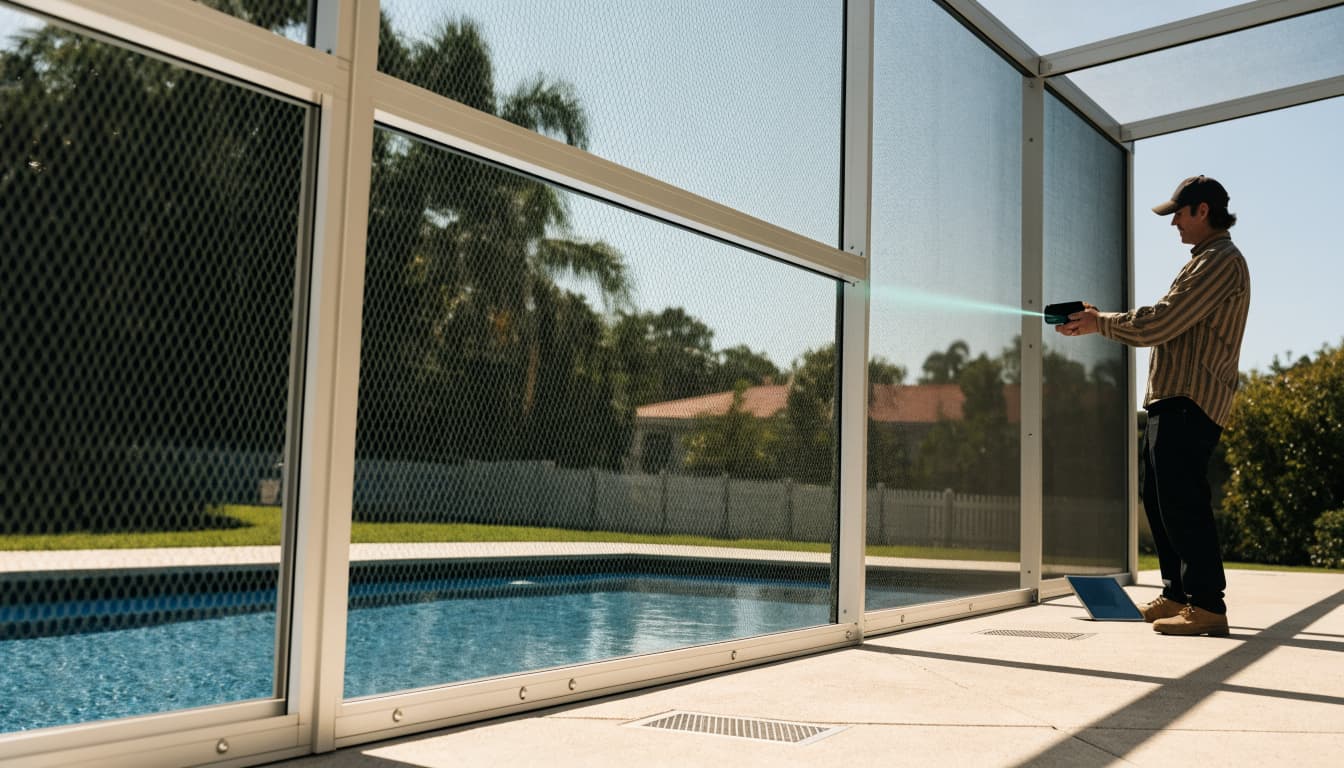
The estimate should identify the property and describe the enclosure being built, repaired, or rescreened. Measurements give the price context and help you see whether competing proposals cover the same area.
New Enclosure Dimensions and Layout
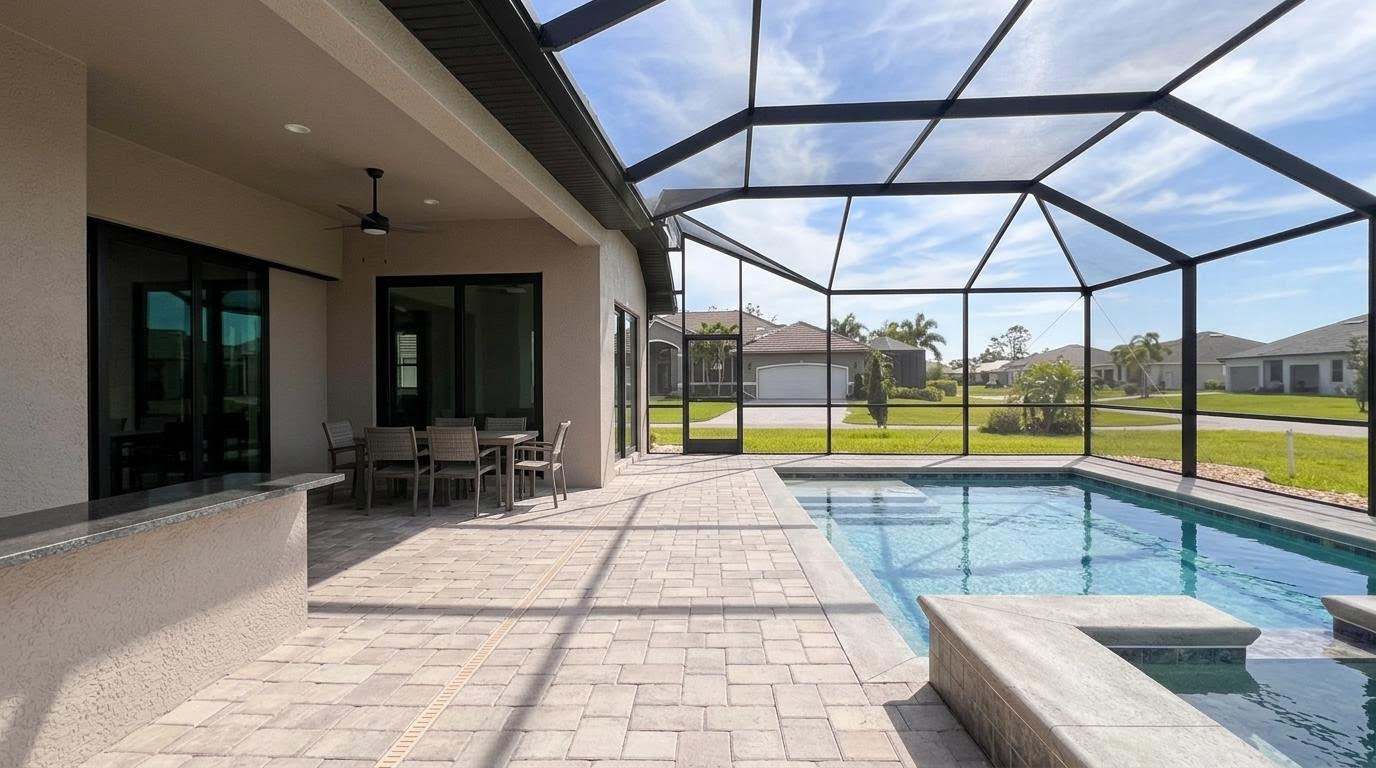
For a new pool cage, look for the approximate footprint, height, roof style, and attachment locations. The proposal should also identify the number and placement of doors, as well as any agreed-upon layout features.
Large openings can preserve a view, but their framing and connections need to fit the structural design. Existing gutters, roof overhangs, columns, and access routes can also influence the layout.
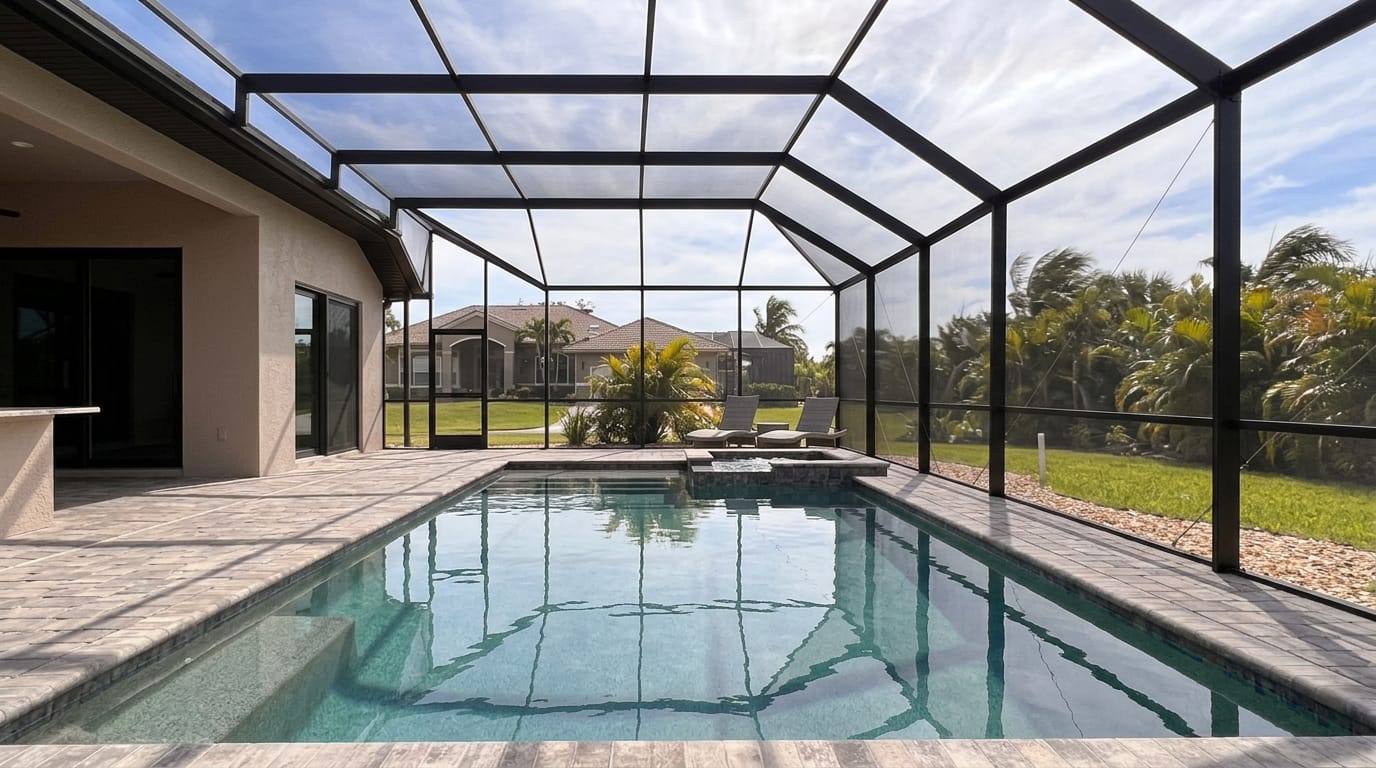
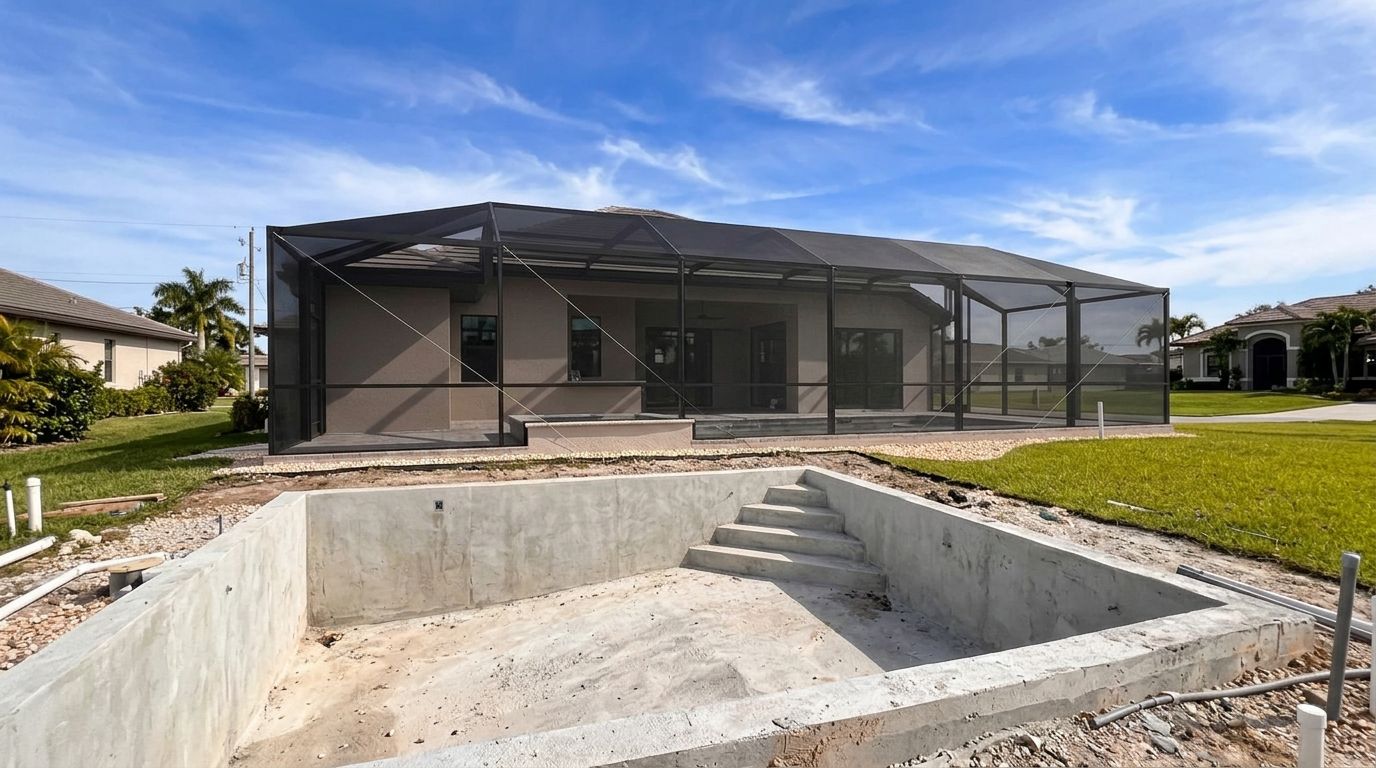
The scope should distinguish a proposed design from any final plans needed for construction. Our pool enclosure planning and construction services include design, materials, framing, screening, and related project coordination.
Rescreening and Partial Repairs
A repair estimate should identify the affected panels or areas. A full rescreen and a replacement of selected lower panels are different jobs, even if both proposals use the word "rescreening."
Door screens and roof panels should be named when they're included. If surrounding mesh will remain in place, the estimate should make that boundary clear. New screening can look different beside older, weathered panels, even when the color and mesh type match.
Screen and Frame Materials
Material descriptions should give you enough detail to understand what will be installed. A line that says only "screen enclosure" leaves important choices unresolved.
Mesh Type and Placement
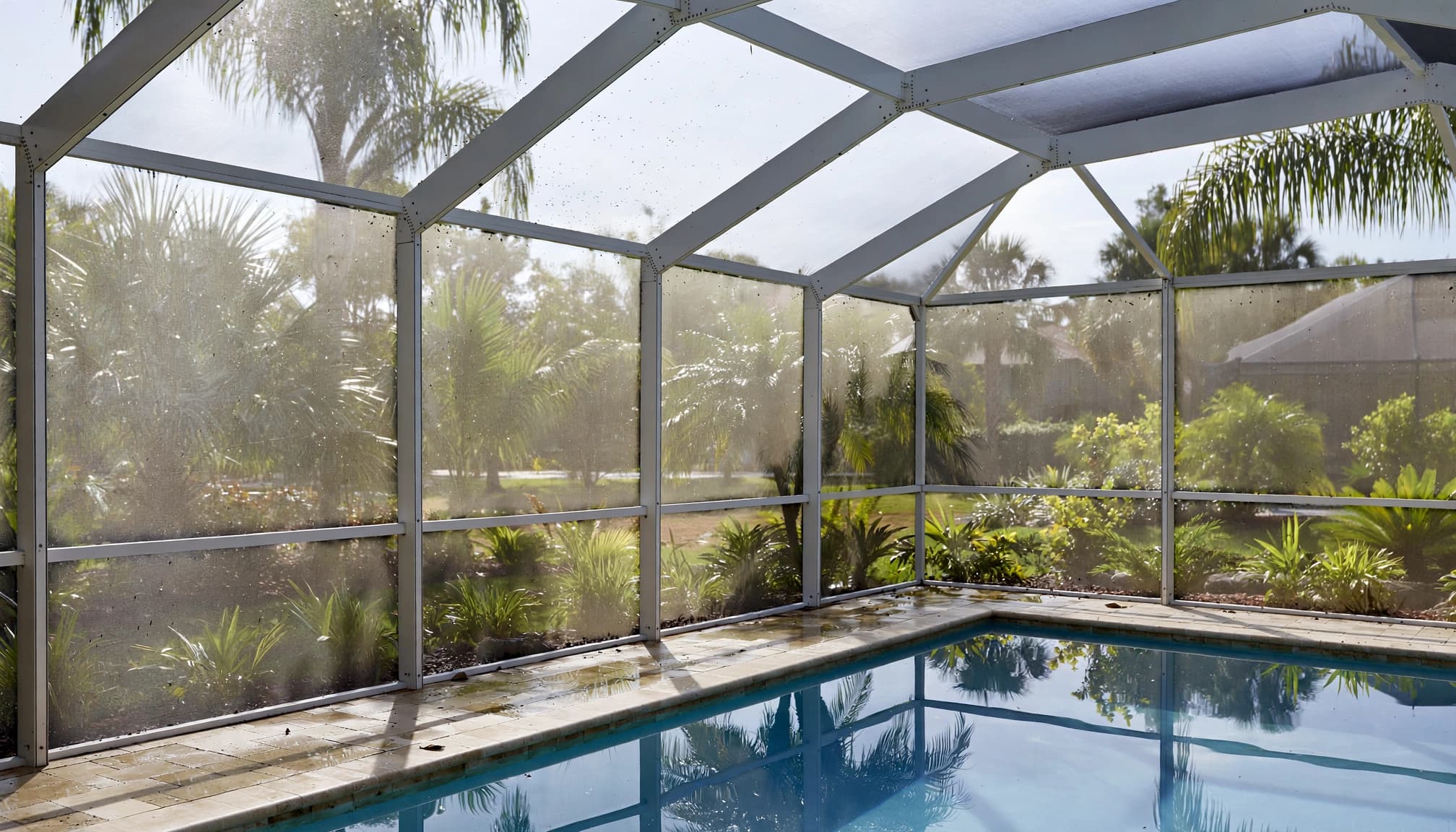
The proposal should name the screen material, color, and areas where it will go. If different mesh is planned for doors or lower panels, those locations should be identified.
Standard insect mesh, finer insect screening, and pet-resistant mesh address different needs. For example, Phifer's No-See-Um Screening uses a 20-by-20 mesh intended to keep out most smaller flying insects. Its PetScreen is designed to resist damage from most dogs and cats, although no screen is claw-proof.
Visibility and airflow matter alongside durability. Our advice on choosing pool cage screen mesh includes comparing samples against the actual views and lighting around your pool.
Frame, Doors, and Hardware
For new construction or frame replacement, the estimate should describe the aluminum framing, finish, and relevant design specifications. Member sizes, bracing, and connections belong to the project design rather than a generic description of the cage.
The door package also deserves a line in the scope. Look for the number of doors and the included hardware, such as hinges, closers, and latches. For a repair, the proposal should distinguish reused hardware from parts scheduled for replacement.
Labor and Installation
Labor should be included as a clear cost or as an identified part of the project total. The scope should describe what that labor covers, such as frame assembly, screen installation, door fitting, and cleanup.
For a rescreen, installation can include removing old mesh, fitting new screen, and replacing spline where included. Spline is the flexible material that holds screen in the panel's perimeter channel.
Access can affect the work. Roof panels, large openings, and areas near landscaping or pool equipment may require different preparation than an easily reached wall panel. A proposal should identify any access-related work included in its price and any conditions that could require an adjustment.
Removal and Existing Repairs
If an old enclosure is coming down, the estimate should say whether demolition, debris removal, and disposal are included. It should also identify any preparation needed before a new frame goes up.
Repairs deserve separate attention. Replacing mesh doesn't automatically fix bent rails, damaged connections, or worn doors. Likewise, a screen-only price shouldn't be assumed to include structural work.
A proposal can identify visible repair work while explaining how concealed damage will be handled if it's found later. Our guide to screen enclosure frame repair signs covers concerns such as bent framing, separated joints, and doors that no longer align.
If a post, beam, or connection appears damaged, a professional assessment is appropriate before treating the job as a screen-only repair.
Permits, Plans, and Inspections
The estimate should state who handles applicable plans, permit applications, fees, and required inspections. It should also identify whether those costs are included in the quoted total.
In Cape Coral, a new residential pool screen enclosure requires a building permit. Repair and rescreen projects have different scopes, and the type of work matters when determining the applicable requirements. Our guide to Cape Coral pool enclosure permits explains the planning process.
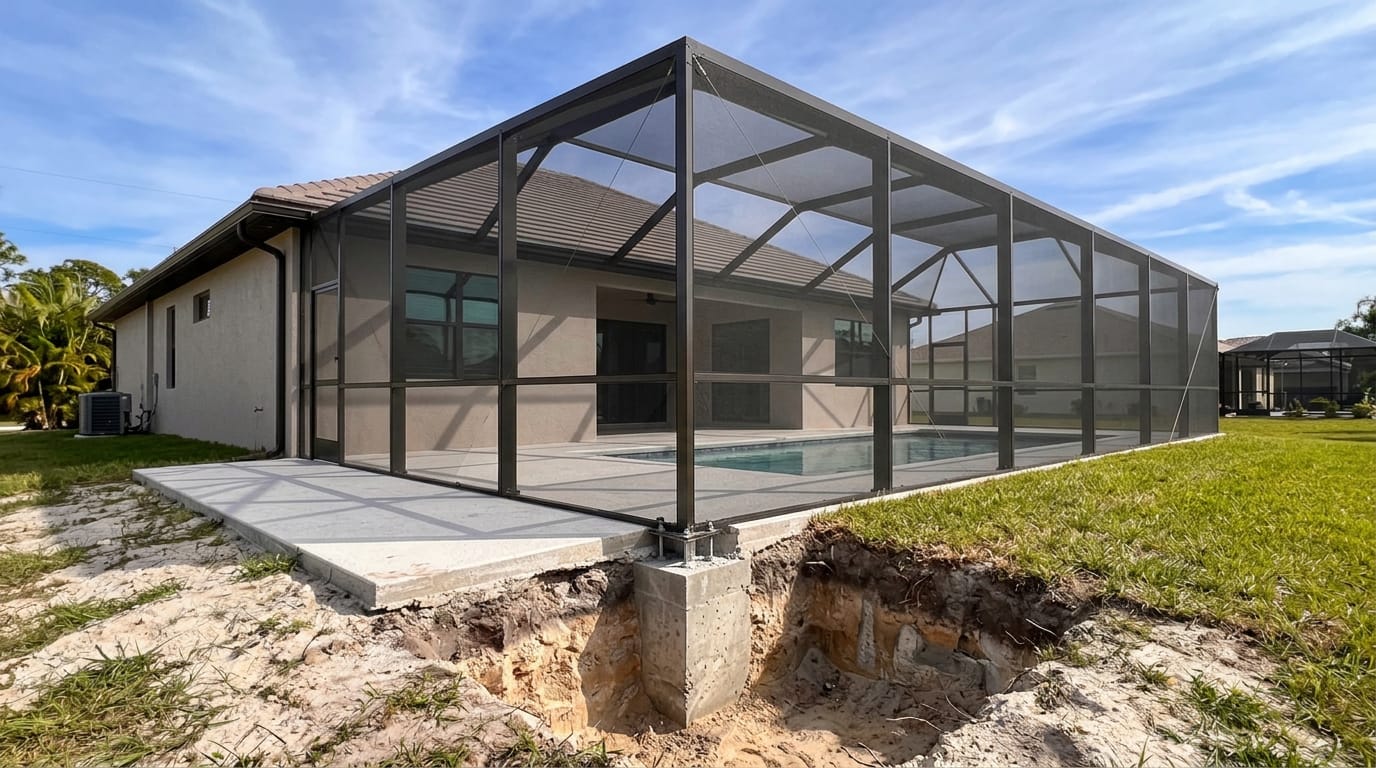
For new construction, the design must account for the enclosure and its connections to the home and supporting foundation. A finished pool deck alone doesn't establish that every proposed attachment is suitable.
If concrete work, engineering, or house attachment work is excluded, that should be visible in the proposal. Otherwise, two estimates may appear comparable while assigning different parts of the project to you.
Schedule and Project Closeout
A useful schedule describes the expected sequence, including planning, approvals where needed, site preparation, installation, and any required inspections. It should explain when the contractor expects work to begin and what could affect that timing.
Weather, material availability, site conditions, and approval responses can affect scheduling. The estimate should also describe the final walkthrough and how unfinished items will be addressed.
Our guide to screen enclosure design and installation explains why a project sequence can be more useful than a start date alone. At closeout, keep relevant project documents and instructions for any design-specific features together.
Warranty Coverage and Exclusions
A written warranty should identify who provides the coverage, what it covers, and how long it lasts. Workmanship coverage and a manufacturer's material warranty may have different terms.
The document should also describe exclusions and how to report a concern. For example, coverage may differ for installation defects, ordinary wear, accidental damage, or storm damage. The actual terms depend on the warranty offered for the project.
Exclusions elsewhere in the estimate matter too. One proposal may omit concrete work, electrical changes, landscaping restoration, or repairs to parts of the existing structure. Another may include some of those items.
An exclusion isn't automatically a problem. It helps you understand which responsibilities sit outside the quoted work and whether another service will be needed.
Price, Payment Terms, and Changes
A pool cage estimate should show the total price and enough detail to explain its major components. Itemization makes it easier to distinguish the enclosure itself from removal, repairs, permitting, and other work.
Payment Terms and Allowances
The written terms should explain when payments are due, what triggers each payment, and which payment methods the contractor accepts. They should also identify how long the estimate remains valid and whether taxes or fees are included.
Look for allowances , which are amounts set aside for an item or work that hasn't been fully defined. An allowance isn't the same as a fixed final cost. The proposal should explain what it covers and how a difference between the allowance and actual cost affects the total.
Written Change Orders
A change order records an agreed change to the original scope. It should describe the added or removed work, the price adjustment, and any effect on the schedule before the work proceeds.
This process matters if concealed damage appears after removal or you decide to change the screen material. A written record gives both parties a clear reference instead of leaving the final price dependent on a verbal conversation.
How to Compare Estimates Fairly
Start by placing the proposals side by side. A lower total may reflect a smaller scope, a different mesh, or an excluded permit fee rather than the same work at a lower price.
These are the details most useful to compare:
| Estimate item | What should match |
|---|---|
| Project area | Enclosure dimensions or the same panels and doors |
| Materials | Mesh type, frame finish, doors, and hardware |
| Site work | Removal, disposal, repairs, and preparation |
| Project support | Plans, permits, fees, and inspections where applicable |
| Terms | Warranty coverage, exclusions, and payment conditions |
A meaningful comparison accounts for differences before you rank the prices. If one proposal leaves an item unspecified, request a written revision so you can compare the same scope.
Questions to Ask Before You Hire
A conversation with the contractor can fill gaps in the written proposal. These questions focus on details that commonly affect the finished project:
- Which panels, doors, and frame components are included?
- What happens if damaged framing appears after old screen or an enclosure is removed?
- Who handles applicable permits and inspections, and are their costs included?
- What does the warranty cover, and how are changes approved and priced?
Bring up your priorities, too. If your pet repeatedly contacts a door panel or your main goal is a clear view from the seating area, those details can shape the material selection and scope.
Frequently Asked Questions
Should a pool cage estimate include permit costs?
It should state whether applicable permit costs are included or excluded and identify who handles the application. A new residential pool enclosure in Cape Coral requires a building permit, while other work needs to be considered according to its scope.
Is a full rescreen necessary for one torn panel?
Often, one panel can be replaced when the damage is isolated and the surrounding frame and spline channel are sound. Wider screen wear or damage to the frame may call for a broader project. New mesh can also look different beside older panels.
Start With a Clear Scope
A useful estimate connects the price to a defined scope, materials, and written terms. That clarity makes it easier to compare proposals and understand what happens if the work changes.
At Back Bay Screens, we offer free estimates for enclosure and rescreening projects in Southwest Florida. Contact us to discuss your pool cage and the work you want included.