Why Does a Pool Cage Roof Drip After Rain?

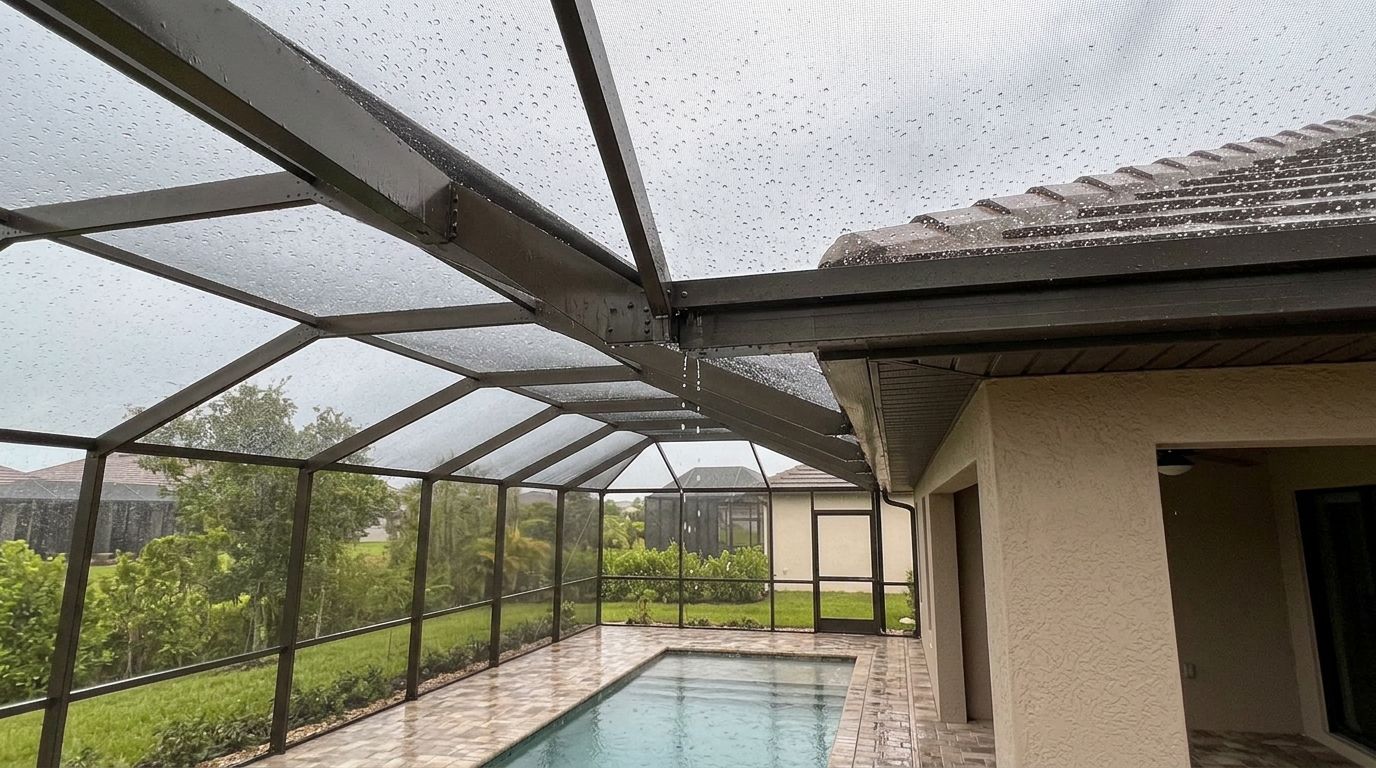
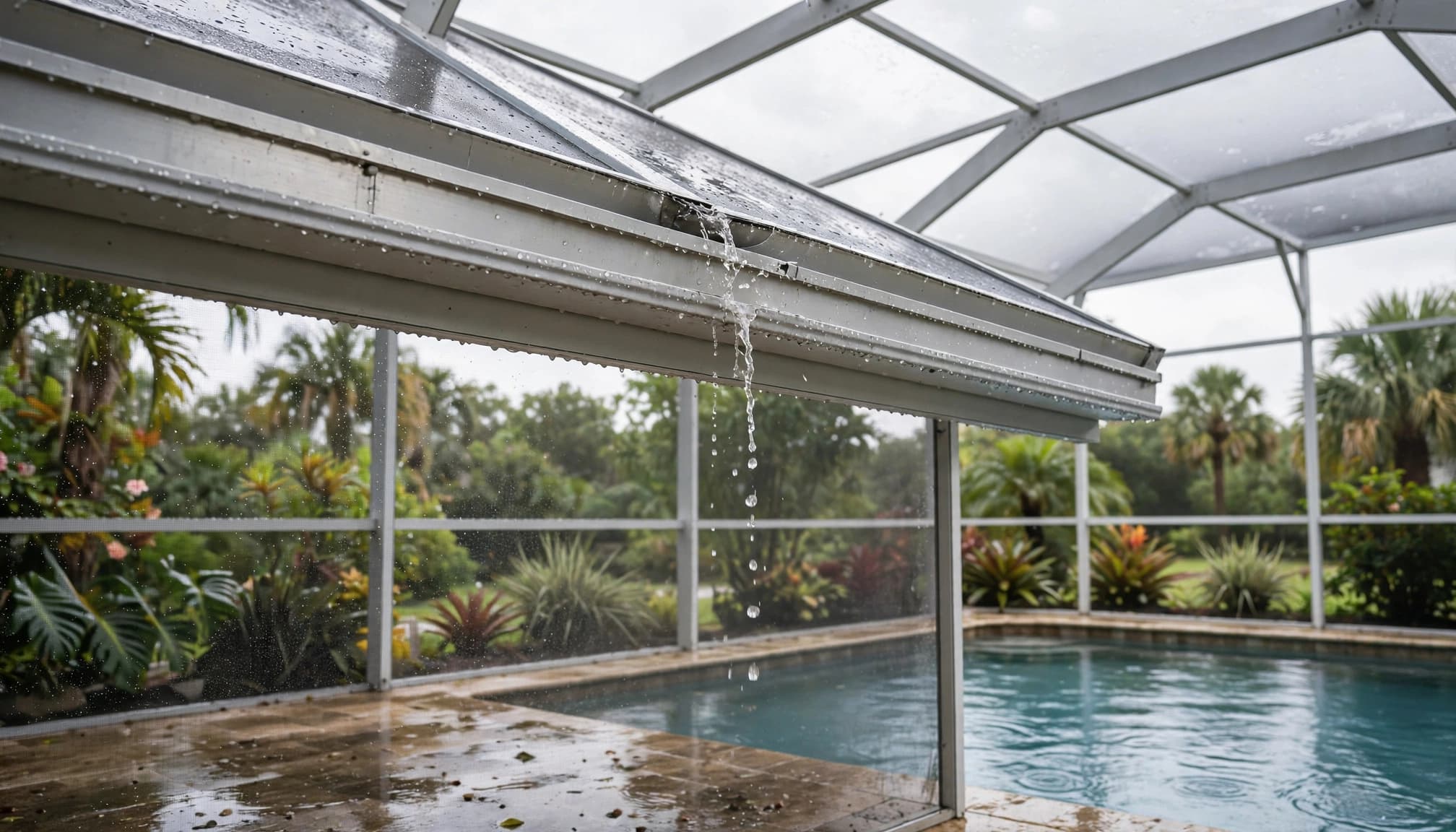
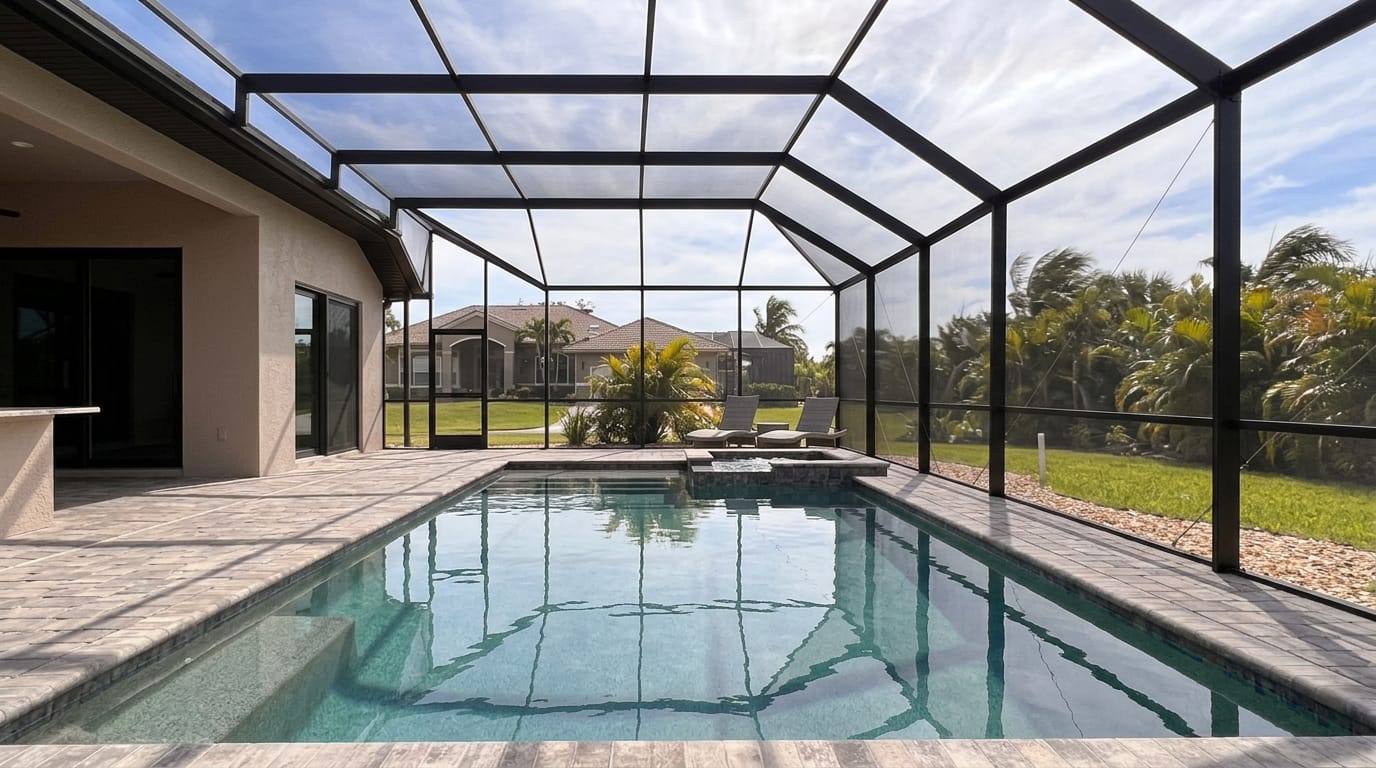
A pool cage roof can drip after rain because water remains on the mesh and aluminum framing before falling. A screened roof lets rain through, so dripping alone doesn't establish a pool cage roof leak.
The important distinction is between normal water shedding and water entering through an area intended to stay dry. Start by identifying whether the water comes through screening, travels along framing, or appears beneath an adjoining solid roof.
Key Takeaways
- Screen mesh provides insect protection, but it doesn't make an enclosure rainproof.
- A repeated drip deserves attention when it affects a solid-covered area or accompanies visible damage.
- Inspect from the ground, and keep screening work separate from structural or roofing concerns.
Normal Dripping Versus a Roof Leak
Screen mesh allows rain through
A screen enclosure has openings throughout its mesh. During rain, water passes through those openings and wets the framing. Afterward, remaining droplets can collect along edges and fall onto the deck.
Water can also travel along an aluminum member before dropping. Therefore, the spot directly beneath a drip may not identify where the water first contacted the enclosure.
A wet deck beneath an open screened roof isn't, by itself, evidence of a defect. Replacing intact mesh won't turn that space into a weatherproof room.
A solid-covered area needs a different assessment
An adjoining covered lanai or house roof has a different purpose than screening. Water appearing beneath that covering deserves attention, especially when it repeatedly reaches the same normally dry area.
Observe whether dripping gradually decreases after rain or continues along a concentrated path. Also note staining or dampness on the adjacent wall or ceiling.
These observations help identify the affected area. However, they don't establish which component needs repair.
A drip's landing point can differ from its source because water travels along framing before falling.
Inspect Safely From the Pool Deck
Record the water's pattern
Wait until the storm has passed and you can walk safely. Stay away from slippery areas, and don't stand beneath visibly damaged framing.
From the ground, note where water appears and whether it falls beneath mesh or solid covering. Photographs can show the relationship between the drip, nearby framing, and the house.
Also record whether water spreads across the deck or collects in one location. Water pooling below the enclosure deserves separate attention; an overhead screening repair won't necessarily address deck drainage.
Look without touching or testing
Walk the accessible perimeter and look upward from stable ground. Phone zoom can help document an overhead concern without moving closer.
Look for torn mesh, detached borders, visibly loose or missing fasteners, and changes in frame alignment. Describe what you see rather than assigning a cause.
Never climb onto the enclosure roof , lean against a post, or pull on mesh to test its strength. Don't use a ladder to reach a damaged section or work above the pool. If the structure appears unstable, keep people away.
Screen Damage and Frame Damage Need Different Attention
A tear across the mesh differs from an edge pulling out of its attachment channel. Neither condition alone proves that the surrounding aluminum needs repair.
Frame concerns include bending, cracks, corrosion, separated connections, and shifting posts. A door that no longer closes normally can also help identify an area needing assessment. Our guide to screen enclosure frame warning signs describes these visible changes.
Loose fasteners also deserve professional attention when they involve structural connections. Dripping beside a connection doesn't establish that the fastener caused it.
When several changes appear together, report them together. For example, describe a misaligned door and the nearby post rather than reporting only the most obvious screen tear.
Match the Repair to the Actual Problem
An isolated mesh tear may qualify for single screen panel replacement when the frame, attachment channel, and neighboring screening remain serviceable. That repair restores the screening; it doesn't waterproof the roof.
When multiple panels are brittle, torn, or loose, complete enclosure rescreening may suit the overall condition better. However, new mesh doesn't repair damaged structural members.
A useful estimate separates screening, framing, hardware, and any adjoining roof concerns. This keeps a screen replacement from being mistaken for a solution to every source of water.
Call an enclosure professional for overhead damage, loose connections, or frame movement. Water entering beneath a solid roof or affecting the house needs an appropriate roofing assessment. Avoid covering joints with sealant before the source is understood.
Frequently Asked Questions
Does dripping mean the entire pool cage needs replacement?
No. Dripping through screening doesn't establish a replacement need. Even visible mesh damage may be limited to one panel.
The decision depends on the condition of the screening and supporting structure. Frame distortion or separated connections need assessment before work proceeds as a screen-only repair.
What should I include when requesting help?
Describe the location, whether the area has mesh or solid covering, and when the dripping happens. Include ground-level photos and any visible changes nearby.
At Back Bay Screens, we offer free, no-obligation estimates for enclosure and rescreening projects in Cape Coral and Southwest Florida. Mention structural concerns when describing the work.
Focus on the Water's Path, Not Just the Drip
Rain passing through mesh and droplets falling afterward are expected in a screened space. Water beneath solid covering or beside visibly damaged connections needs closer attention.
Keep your inspection ground-level and observational . A repair should address the affected component, with a clear distinction between screening, structural work, and adjoining roofing.