Why Does Rain Blow Through a Pool Cage in Fort Myers?

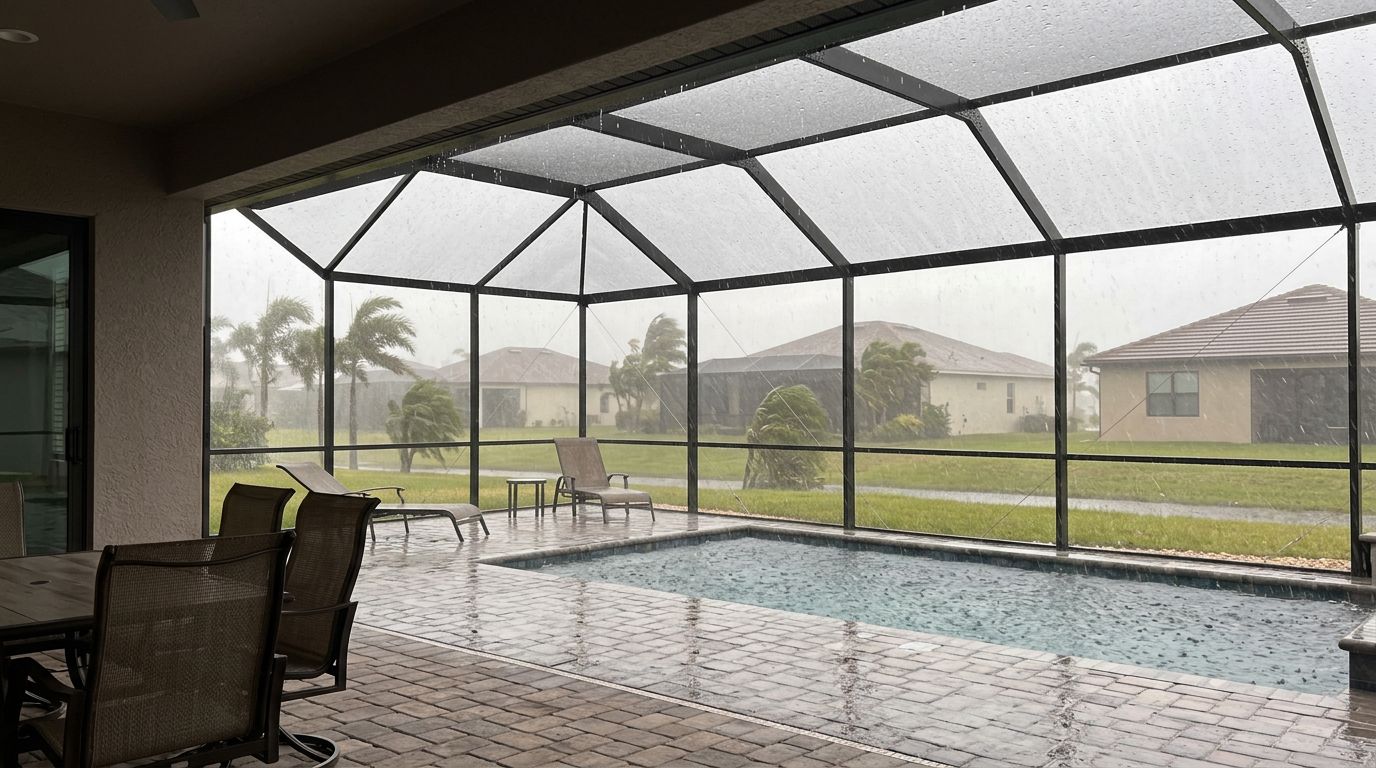
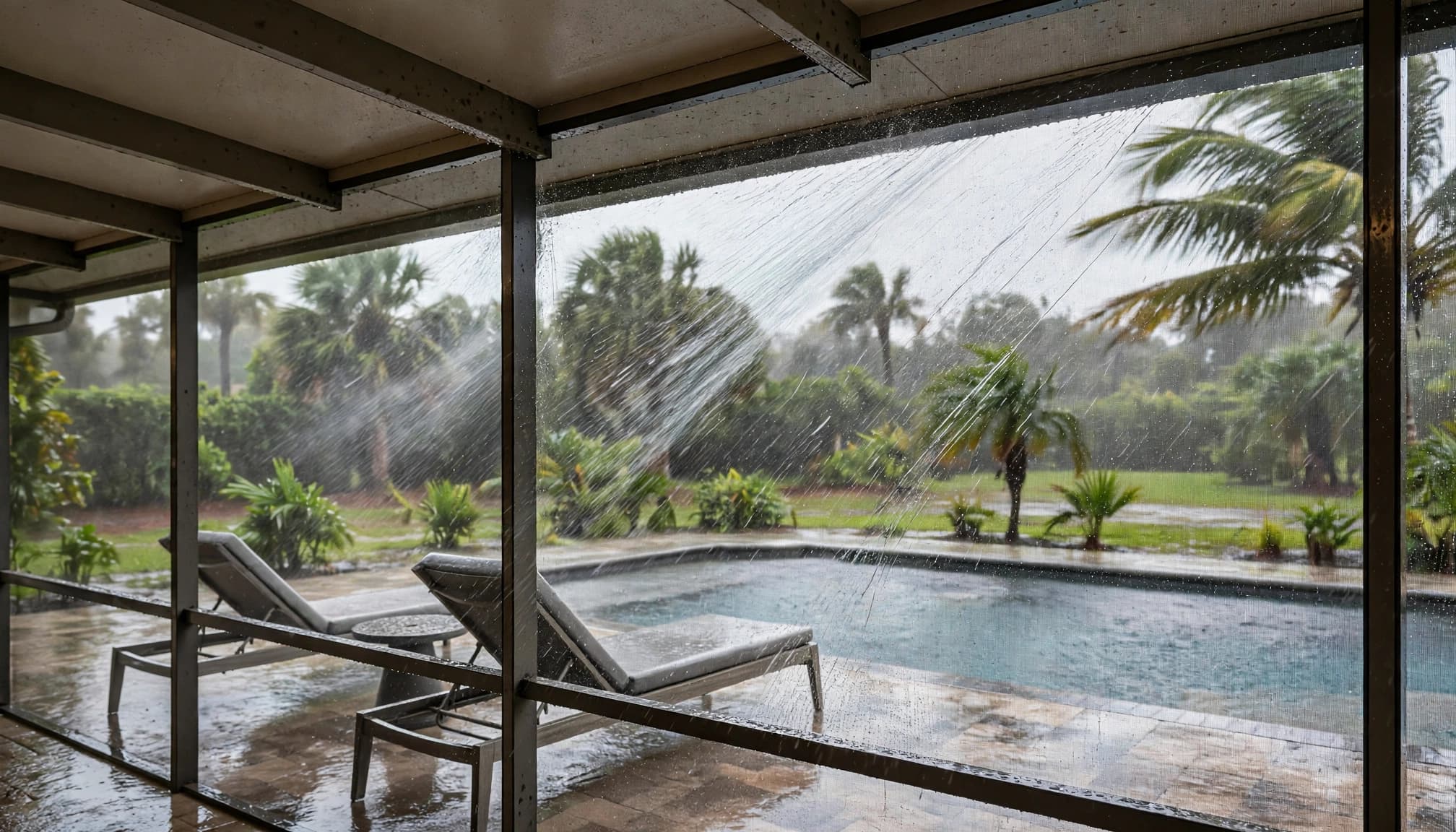
Wind drives rain sideways toward the exposed sides of a Fort Myers pool cage. Water on the deck doesn't, by itself, mean your screens are damaged.
The storm's direction, nearby shelter, and your seating layout all affect where water lands. Before replacing anything, separate weather exposure from visible damage , then focus on the areas you want to keep drier.
Key Takeaways
- Storm direction can leave one side of your pool cage much wetter than another.
- Choose mesh around insect protection, airflow, visibility, and household wear.
- Torn panels, detached edges, or damaged framing deserve attention, but wet furniture alone doesn't identify a repair.
How Wind Direction Affects Rain Around Your Pool Cage
Fort Myers thunderstorms can bring gusty winds. As a result, the wettest part of your enclosure can change between storms or during one passing shower.
The windward side gets more exposure
When rain blows toward an exposed side, nearby chairs and deck surfaces can get wetter than areas tucked behind the house. Wind can also shift during a storm, so one sheltered corner won't stay protected under every condition.
Look at the pattern after the storm passes. Broad wetting along one side suggests a different source than water concentrated below a gutter or roof edge.
Your backyard changes the conditions
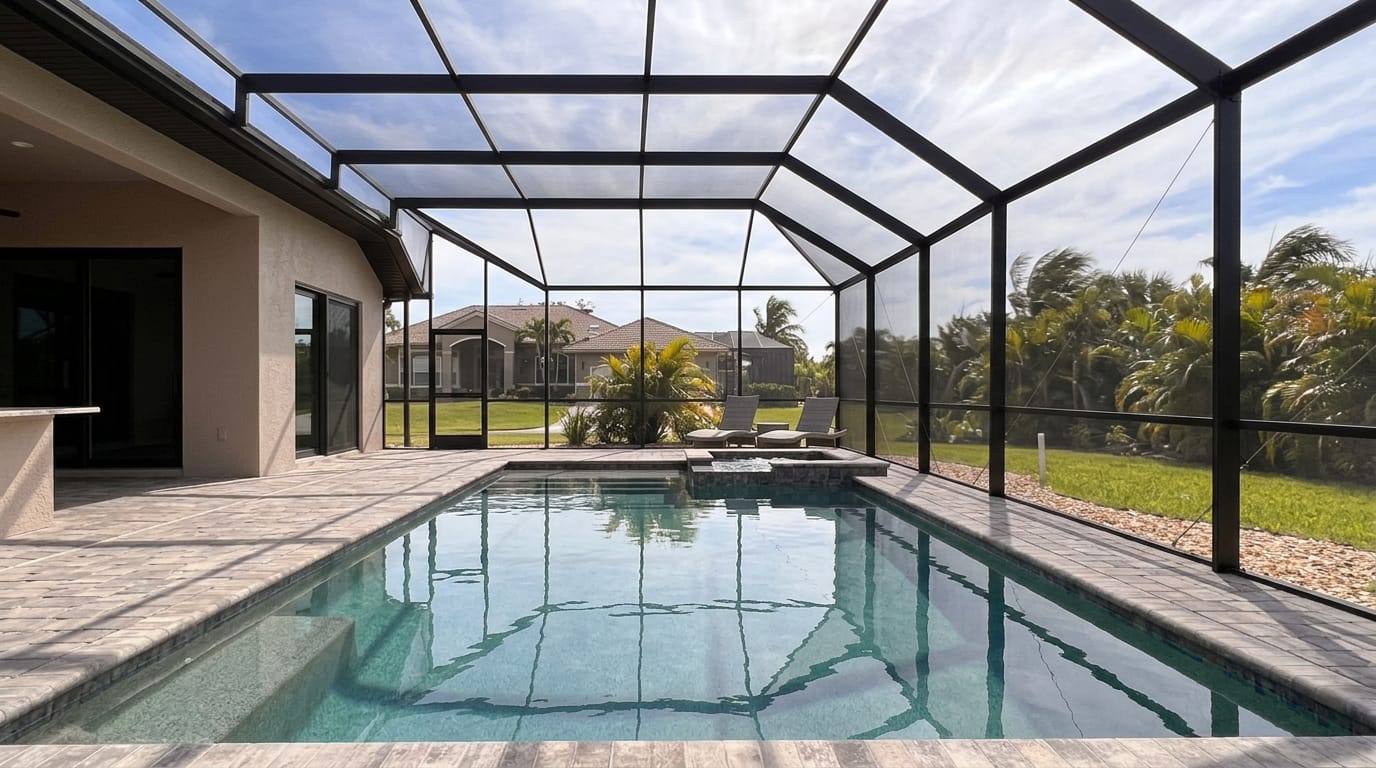
A cage facing an open yard or waterway has different exposure than one partly sheltered by the house. Nearby buildings and landscaping can interrupt wind, although they don't provide dependable storm protection.
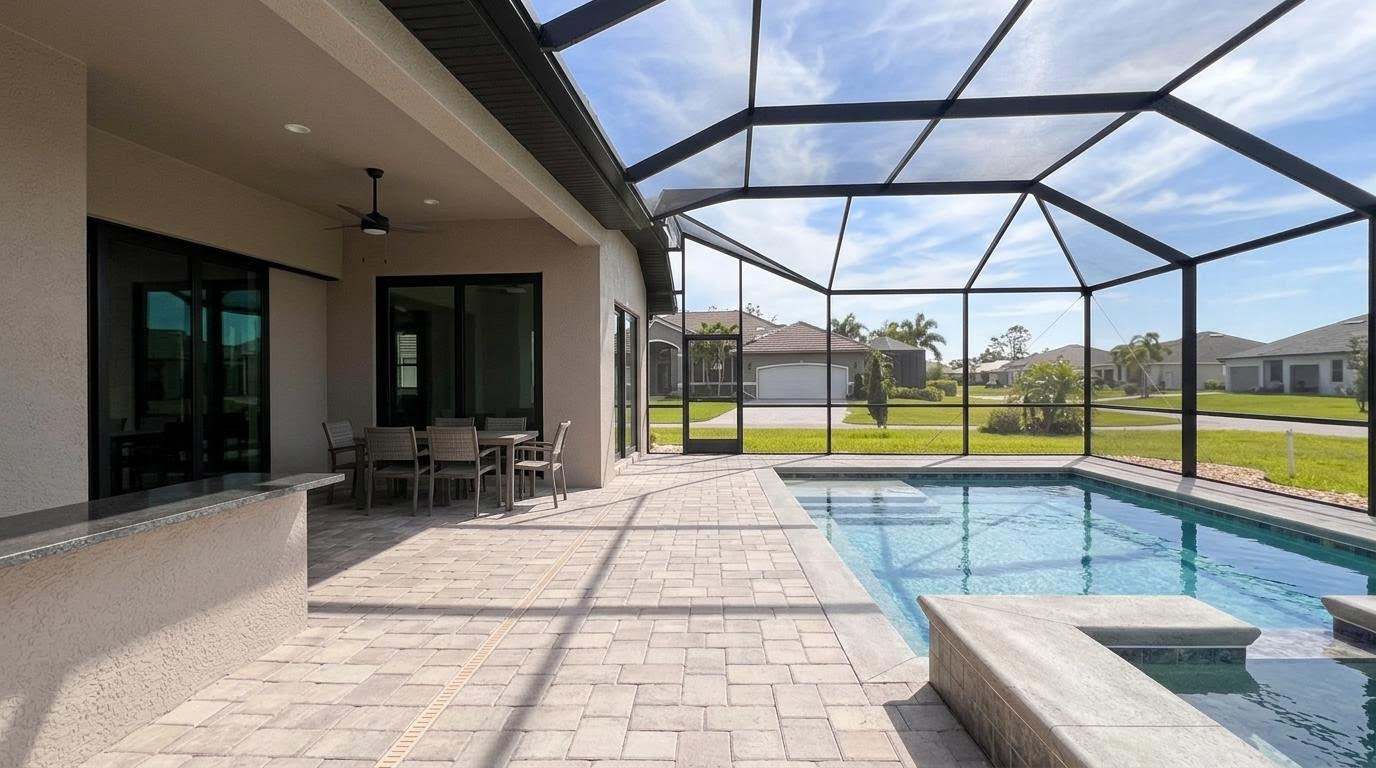
Also, screened overhead space and a solid patio roof create different exposure conditions. Keep that distinction in mind when choosing where to place rain-sensitive items.
What Screen Mesh Changes About Your Outdoor Space
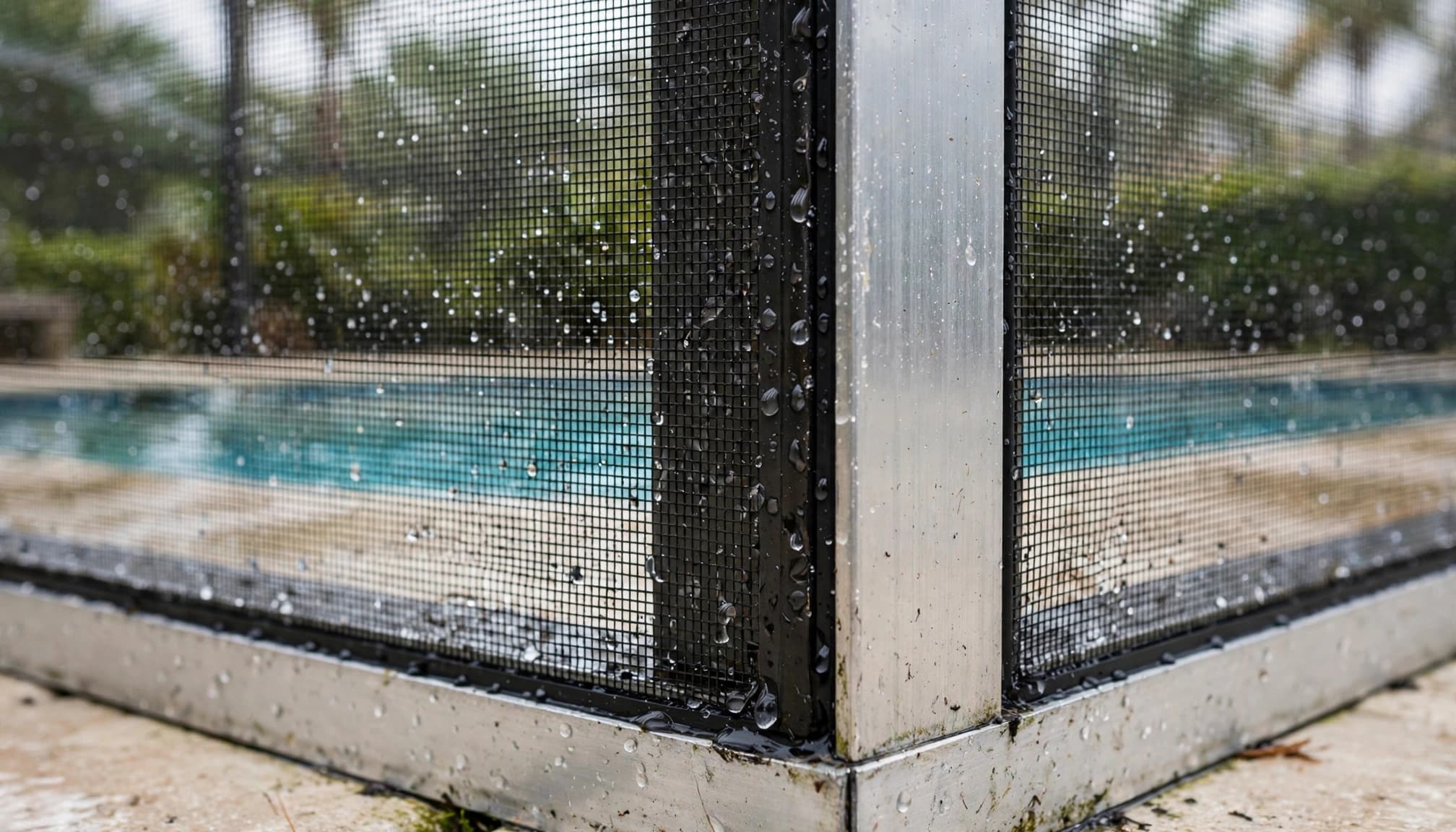
Mesh selection affects everyday comfort, including airflow, visibility, and insect protection. Standard insect screening, finer insect mesh, and heavier pet-resistant materials address different priorities.
However, a material change should suit the enclosure as a whole. Consider the condition of the frame, the surrounding panels, and how the new mesh will look beside existing screening.
Our complete screen enclosure rescreening replaces screening across an enclosure. It can address widespread mesh wear, but it doesn't automatically correct damaged framing or change the cage's exposure.
Choose mesh for its intended purpose , and treat rain management as a separate planning question.
Practical Ways to Reduce Water Around Your Seating Area
Start with the layout. Move cushions, outdoor rugs, and other water-sensitive items farther from the side that receives the most windblown rain. Where possible, position seating beneath an existing solid roof and farther back from its exposed edge.
Store loose cushions before storms arrive. Securely fitted furniture covers can also protect items when the space isn't in use, but loose covers can blow away.
Next, separate windblown water from roof runoff. Overflowing gutters or concentrated discharge can add water near the enclosure. Arrange gutter maintenance when needed, and keep accessible deck drainage paths clear of leaves and debris.
For greater weather protection, consider a professionally designed covered seating area. The structure and its connections need to suit the proposed work.
Don't fasten tarps, plastic sheets, or improvised solid panels to the pool cage. Blocking large screened areas changes how wind loads the enclosure. Any permanent weather barrier needs structural consideration.
When to Inspect Screens and Enclosure Components
Once the weather clears, inspect from the ground. Look for tears, loose borders, and sections that no longer sit evenly. A panel can appear intact across its center while separating along the frame.
Our guide to pool cage screens pulling loose explains the difference between an edge opening and a tear. That distinction helps define whether the issue involves mesh, its attachment, or both.
Also look beyond the screening. Bent rails, separated joints, corrosion, shifting posts, and doors that no longer align can indicate broader concerns. These screen enclosure frame warning signs deserve attention before work proceeds as a screen-only repair.
An isolated damaged panel may need replacement when its frame and spline channel remain sound. Widespread wear may justify a broader rescreen. Neither approach repairs unstable structural components by itself.
Stay off enclosure roofs and avoid working above the pool. If a post, beam, or connection appears unstable, keep people away and arrange a professional assessment.
Frequently Asked Questions
Does rain inside mean a screen needs replacement?
Rain inside alone doesn't establish screen failure. Look for a visible tear, detached edge, or change in panel fit. Also note whether the wet area follows storm direction or stays beneath one roof or gutter location. Those observations help distinguish exposure from a localized issue.
Will replacing one panel fix the whole problem?
One panel may be replaced when damage is isolated and the surrounding materials remain serviceable. However, that repair addresses the damaged section. It won't resolve unrelated gutter runoff, broader screen deterioration, or framing problems elsewhere in the enclosure.
Focus on Exposure Before Choosing a Repair
Rain around your pool cage calls for two separate decisions: how to protect the areas you use, and whether anything is damaged. Start with shelter and furniture placement, then address visible screen or frame concerns.
We offer free, no-obligation estimates for enclosure and rescreening projects in Fort Myers and Southwest Florida. The right scope matches the condition of your enclosure and how you want to use the space.