How to Keep Leaves Out of a Screened Pool in Cape Coral
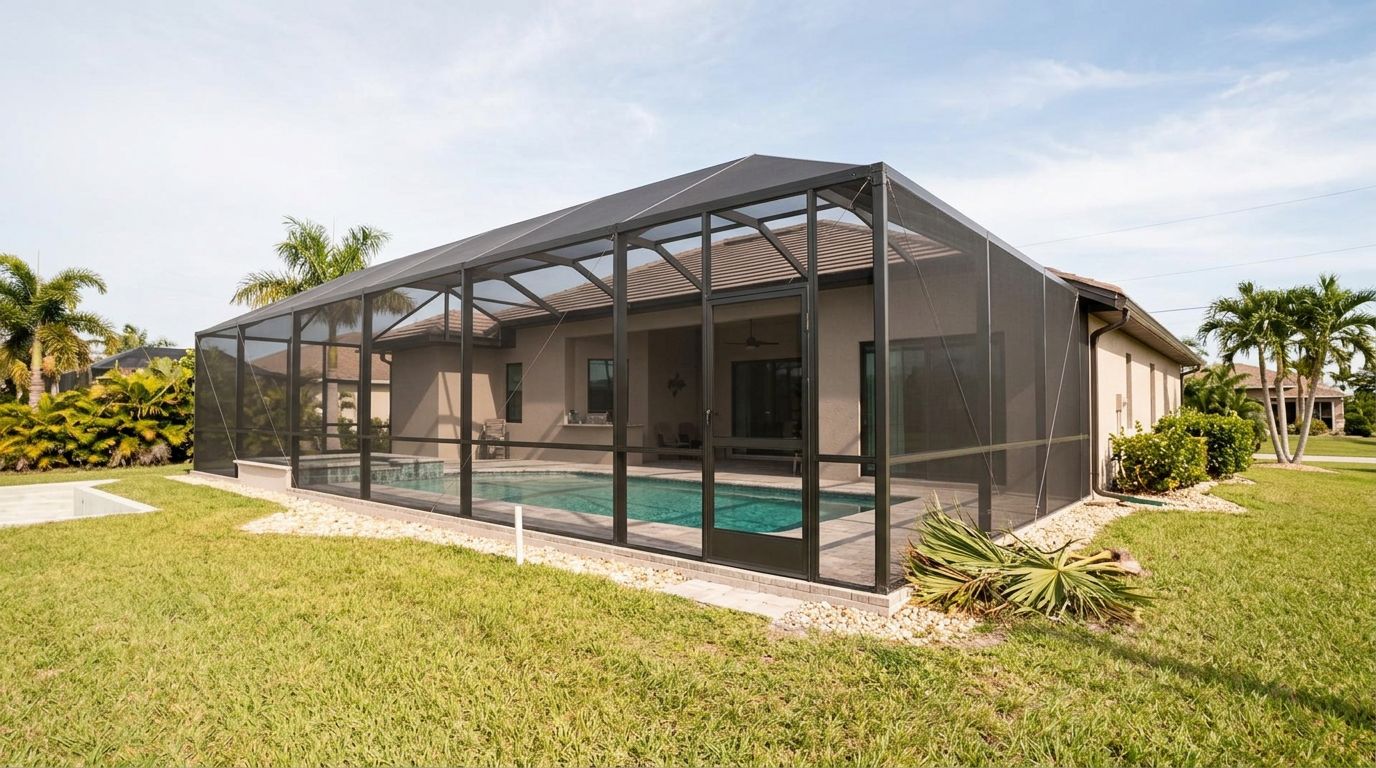
Leaves inside a screened pool call for a closer look at the mesh, panel edges, and doors. Start by identifying where the enclosure needs attention , rather than assuming the entire pool cage needs replacement.
Cape Coral's subtropical weather and surrounding palms and leafy landscaping make outdoor debris a recurring maintenance concern. However, a torn panel, a detached edge, and a damaged frame require different responses.
A ground-level inspection gives you a useful starting point for deciding what needs cleaning, repair, or professional assessment.
Key Takeaways
- Inspect panel borders as well as the middle of the mesh, since an opening can develop along an otherwise intact screen.
- An isolated damaged panel may qualify for individual replacement when the frame, attachment channel, and nearby screening remain sound.
- Treat screening, framing, doors, and pool equipment as separate maintenance responsibilities. A rescreening estimate shouldn't leave you guessing about which components receive attention.
Start With Where You Notice the Leaves
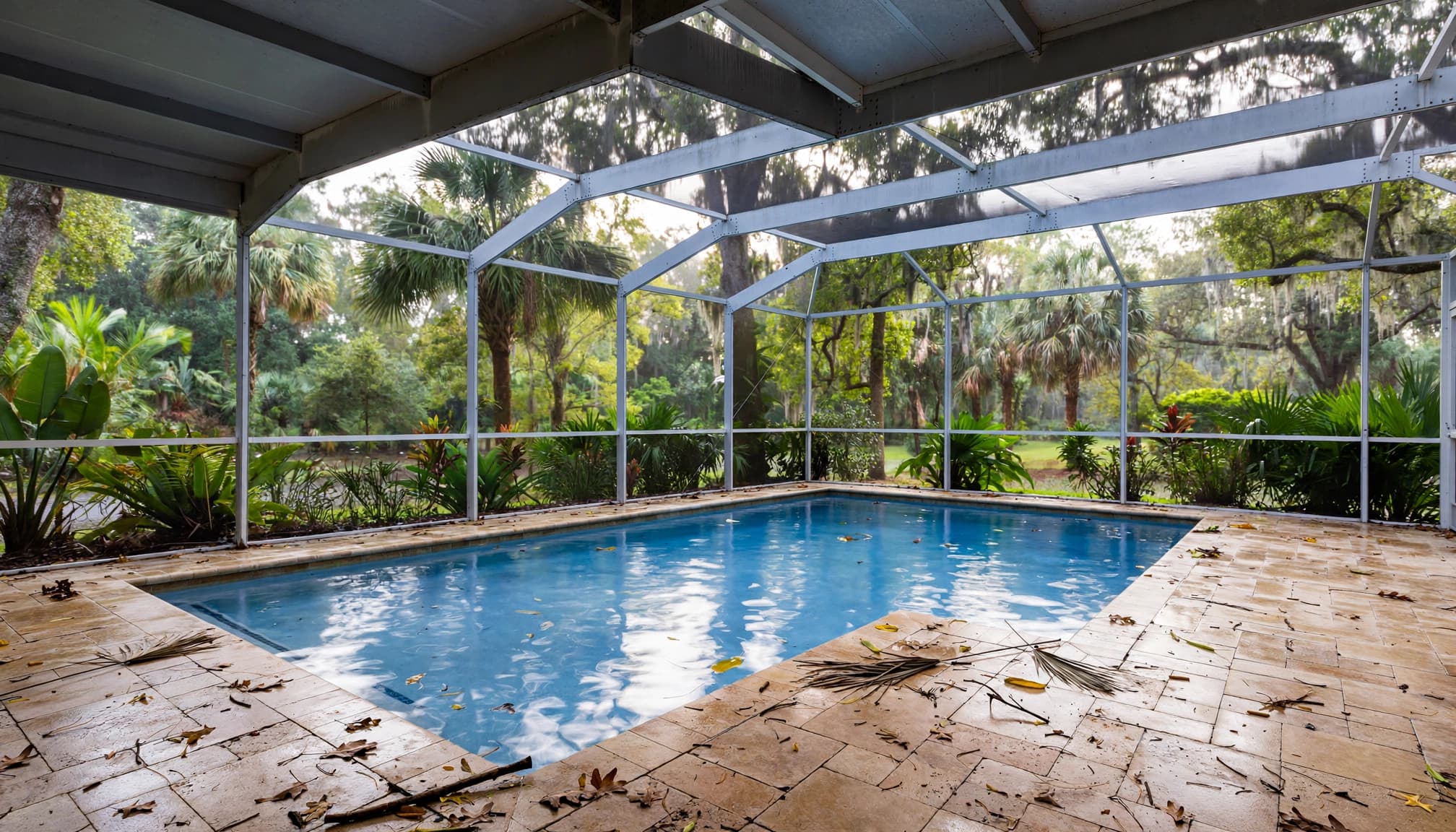
Before inspecting the enclosure, notice where leaves collect. Are they near an exterior doorway, beneath a particular panel, or scattered throughout the pool area?
Location provides context, but it doesn't establish the cause. Wind and activity around the pool can move debris after it arrives. Likewise, leaves in the water don't automatically mean the screen overhead has failed.
Look from inside and outside the enclosure where you can do so safely. Pay attention to nearby panels, door openings, and visible attachment points.
Also distinguish whole leaves from small plant fragments. Describing what you see helps keep a repair conversation focused without guessing at the source.
For Cape Coral homeowners, the goal is a clear description: what appeared, where you noticed it, and which visible enclosure conditions deserve attention.
Inspect the Screen Surface and Panel Borders
Look for tears and worn mesh
Start with accessible panels and examine the screen surface. Look for holes, split areas, frayed sections, or damage near places where pets and people contact the mesh.
Then compare the affected panel with its neighbors. One tear surrounded by sound screening presents a different situation than several panels showing similar deterioration.
Age can also change the appearance of screening. Faded mesh beside a darker replacement panel doesn't necessarily indicate a new problem. Condition matters more than color alone.
Keep the inspection visual. Don't push against the mesh to test its strength, particularly when it already looks damaged.
Examine the edges separately
A screen can remain intact across its center while separating along the frame. That opening deserves its own description because detached borders and torn mesh aren't the same defect.
Look for edges that no longer sit evenly in their attachment channels. Note whether the separation affects one corner, a longer border, or several neighboring panels.
Our guide to spotting loose pool cage screens describes these visible differences.
Photographs taken from the ground can help explain the location. Include a wider view as well as the affected area, without climbing or leaning against the enclosure.
Match the Repair to the Extent of Damage
When one panel needs replacement
An isolated tear doesn't automatically require a complete rescreen. Individual replacement can make sense when the surrounding mesh, frame, and spline channel remain serviceable.
The spline is the flexible material that holds screening in its channel. Its fit and the condition of that channel matter to the repair.
Access matters, too. A large panel or a panel high above the pool may require a different installation approach than an accessible side panel.
Our explanation of replacing one torn screen panel covers the distinction between limited damage and broader wear.
When wear affects several areas
A broader project deserves consideration when multiple panels have become brittle, loose, or damaged. Repeated spot repairs can also leave noticeable differences between newer and older screening.
Complete rescreening replaces the screened surfaces as a coordinated project. It also creates an opportunity to reconsider the material based on visibility, insect protection, privacy, or pet contact.
However, replacing mesh doesn't automatically address every enclosure component. Doors, hardware, and structural concerns need clearly defined attention.
The useful decision is about the condition across the enclosure, rather than the number of leaves you removed that morning.
Give Doors and Framing Their Own Inspection
Observe how the door fits
Open and close the enclosure door normally. Look for uneven gaps, damaged door screening, worn hardware, or a door that no longer aligns with its opening.
Describe the behavior rather than diagnosing the cause. For example, a door that rubs against its frame provides more useful information than saying the entire cage has shifted.
If the door forms part of your pool's safety barrier, don't prop it open or bypass its closing and latching hardware.
Door screening and related hardware can be part of a project, but those items should appear in the agreed scope. Don't assume a mesh replacement includes every doorway adjustment.
Watch for changes in the aluminum structure
Bent rails, separated joints, cracks, loose connections, and changes in post alignment warrant attention beyond the screening.
Visible corrosion also deserves assessment, especially when it appears alongside another change in the same area. A misaligned door near a visibly shifted post gives a professional more context than either observation alone.
Inspect from the ground. Avoid climbing the structure, leaning ladders against it, or using the frame to support your weight.
Our guide to screen enclosure frame warning signs explains what to observe. Structural concerns require professional assessment before work proceeds as a screen-only repair.
Choose Replacement Mesh Around Your Actual Needs
A screen replacement offers choices, but mesh selection should begin with how you use the pool area.
Standard insect screening, finer insect screening, privacy-oriented materials, and pet-resistant options address different priorities. Those differences can also affect the appearance and feel of the enclosure.
For example, a homeowner concerned about pet contact may have different needs than someone focused on the view across the backyard. Neither priority replaces the need for sound framing and properly installed panels.
Compare samples outdoors against the pool, vegetation, and sky. Lighting, viewing distance, and angle can change how noticeable the mesh appears. A small indoor sample won't show the full effect.
Also consider the neighboring panels. A different material on one section may create a visible contrast.
Our complete enclosure rescreening service includes reviewing the existing enclosure, discussing replacement materials, preparing attachment channels, and installing screening with appropriate spline and tension.
Keep Enclosure Care Separate From Pool Cleanup
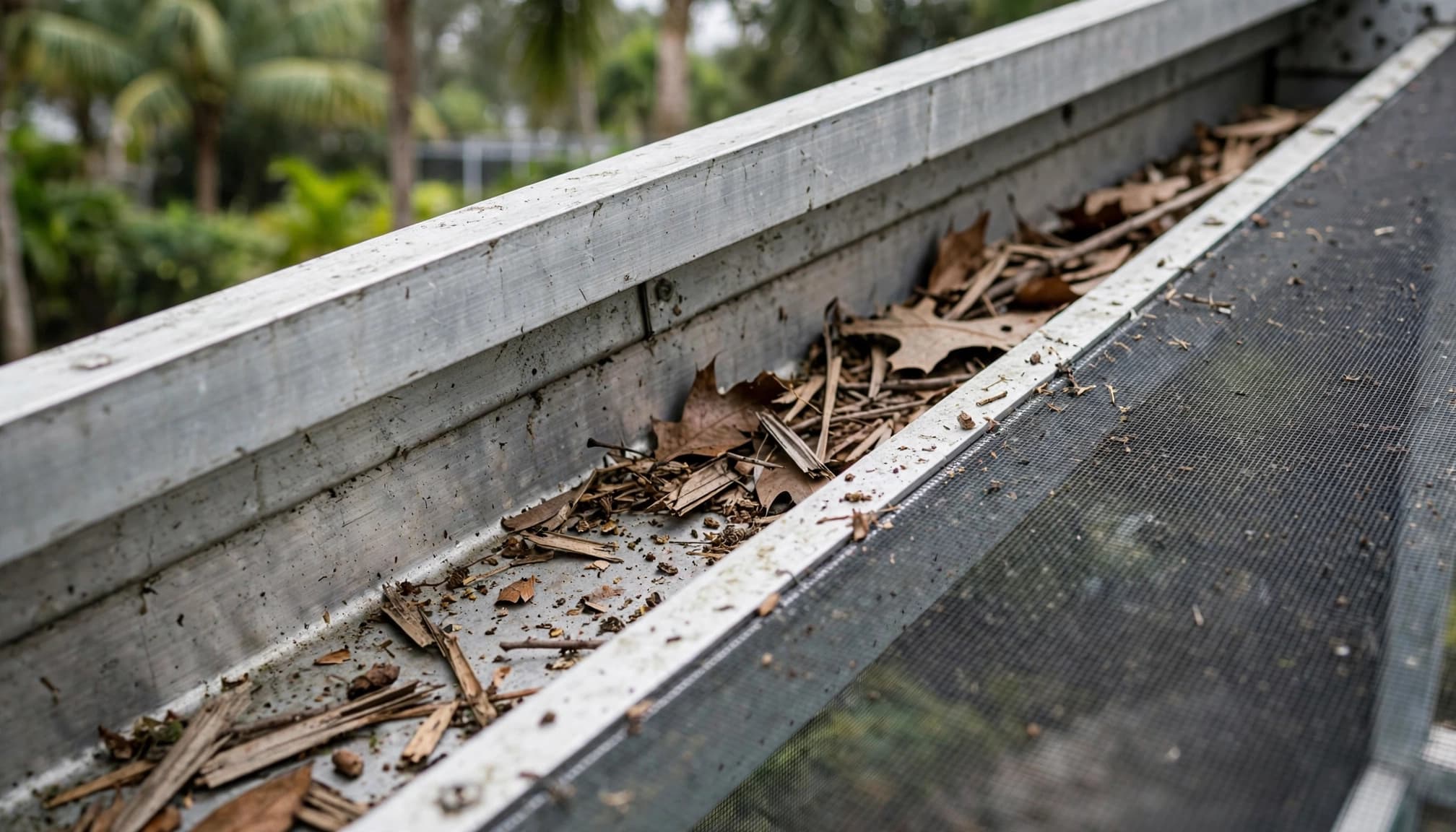
An enclosure, its surrounding surfaces, and the pool water have different maintenance needs. Keeping those jobs separate makes it easier to recognize what remains unresolved.
Use gentle, regular care suited to the installed screening and framing. Avoid pressing cleaning equipment into mesh or putting your weight against panels. High or awkward areas belong with a professional who can access them safely.
Meanwhile, remove leaves already in the water with suitable pool-cleaning equipment. A surface skimmer handles floating debris, while a pool leaf rake can collect material below the surface.
Skimmer baskets, pump baskets, and the filter also need their own maintenance. Follow the equipment's operating and shutdown instructions, especially before opening any pump or filter housing. Never open a pressurized filter.
If you're unfamiliar with the equipment, use a pool service professional.
A pool-cleaning visit and an enclosure inspection address different systems. Keep both responsibilities clear when arranging maintenance.
Ask for an Estimate That Defines the Work
A useful estimate describes the affected areas and separates screening work from doors, hardware, and structural repairs.
For a targeted project, that means identifying the panel or panels receiving attention. For complete rescreening, the description should make clear which screened areas are included.
Material selection also belongs in the discussion. So do access requirements and any conditions that need attention before new mesh goes in.
Bring photographs of visible gaps, detached borders, or alignment changes. Mention whether the same area has needed attention before, without assuming that recurrence proves a particular cause.
We offer free, no-obligation estimates for enclosure and rescreening projects in Cape Coral. The starting point is the condition of your existing space and a clearly described scope, rather than an automatic recommendation to replace everything.
Frequently Asked Questions
Does finding leaves mean my pool cage needs replacement?
Leaves alone don't establish the condition of the enclosure. Inspect for visible mesh damage, detached edges, doorway problems, and changes in the frame. Replacement decisions should reflect those findings, rather than debris alone.
Can a small patch replace a proper panel repair?
A patch can cover a small tear, but it leaves the damaged panel in place. Larger tears or weakened mesh may call for full-panel replacement. The surrounding frame, channel, and screening help determine the suitable scope.
Will rescreening fix a bent frame?
Rescreening replaces mesh. Bent or unstable rails, posts, connections, or attachment channels may need separate work. Address structural concerns before treating the project as screening alone.
Should one new panel match the old screening perfectly?
New material can look darker or more noticeable beside weathered screening. Matching the mesh type and color helps, but it doesn't reverse aging in adjacent panels. Consider the appearance across the full enclosure when choosing the repair.
Keep the Focus on the Actual Enclosure Condition
Leaves in a screened pool are a reason to inspect carefully, rather than jump straight to a large replacement project. Torn mesh, detached borders, doorway issues, and structural damage each deserve a defined response.
Start with a safe ground-level inspection and describe what you find. Then choose a repair scope based on the condition of the enclosure , while keeping pool cleanup and equipment maintenance on their own schedule.