Pool Cage Anchors and Cracked Decks: What to Know
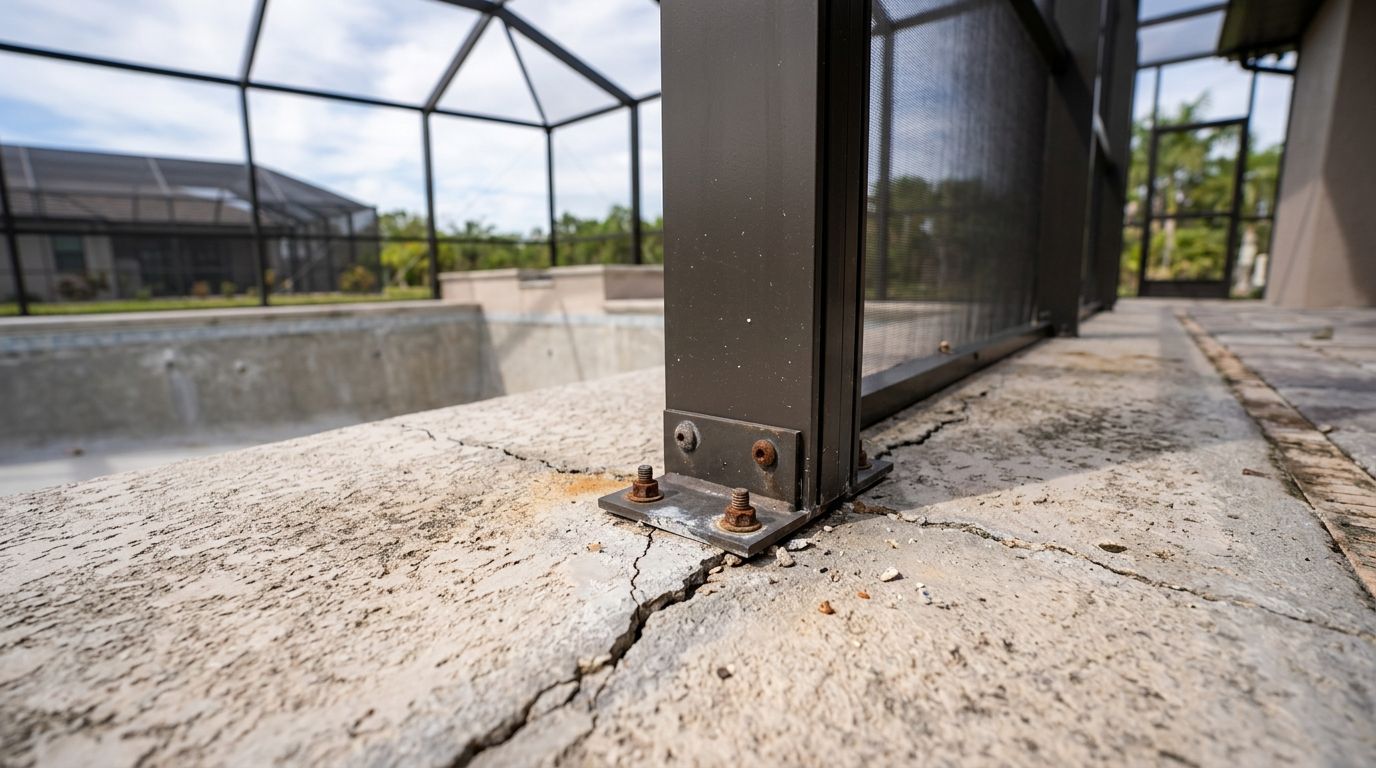
Pool cage anchors connect your enclosure to its supporting structure, so a crack near one deserves a closer look. The crack alone doesn't prove the connection has failed, but it can raise questions about the condition of the concrete around it.
For homeowners, the distinction matters: filling a visible crack won't necessarily resolve a loose or damaged anchor. Start by looking at the connection and surrounding concrete together.
Key takeaways
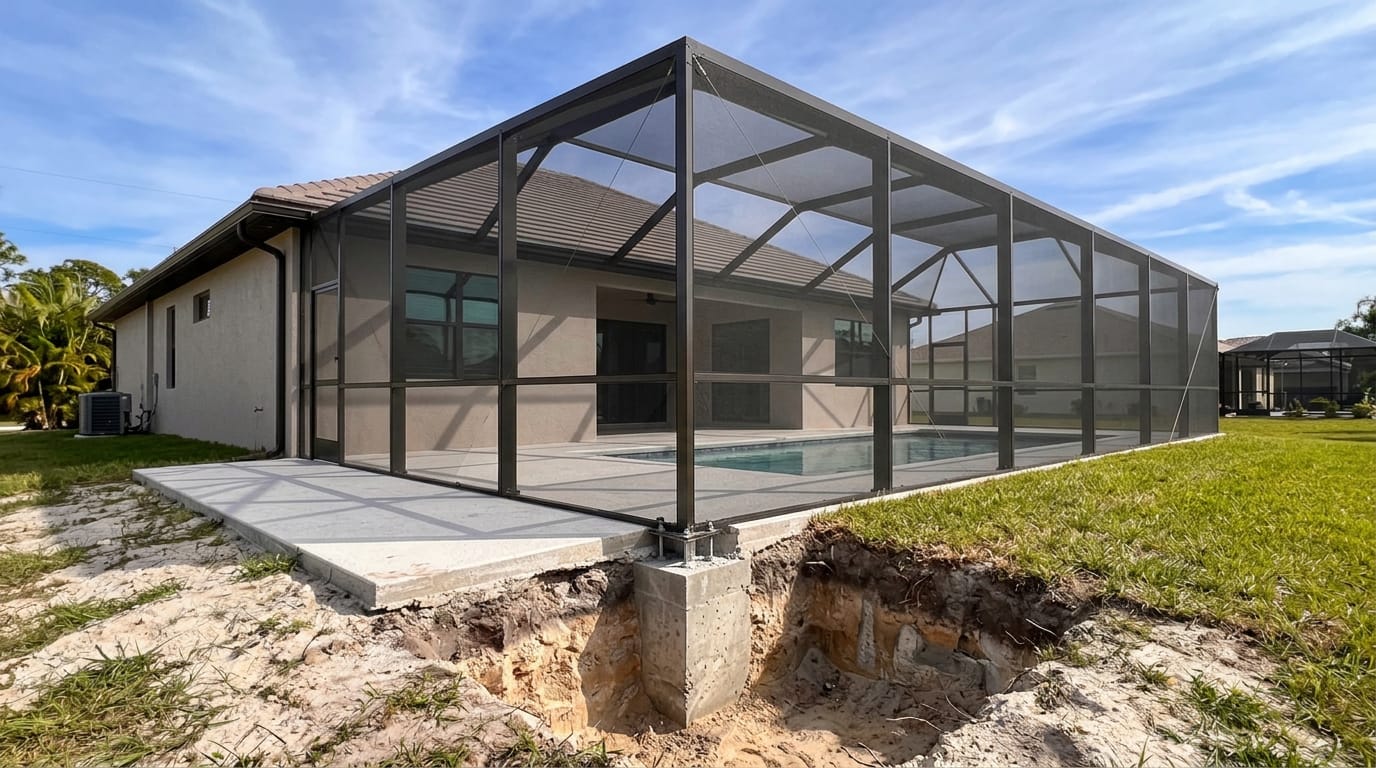
Pool cage anchors are part of the load path that connects the enclosure frame to its support. Their condition matters alongside the condition of the concrete.
A crack near a post is a reason for assessment, not proof of anchor failure. Visible gaps, damaged concrete, corrosion, or changes in alignment provide useful information to share with a professional.
Repair decisions should address the concrete and the connection where needed. A cosmetic crack repair or rescreening project doesn't automatically resolve an anchor problem.
How pool cage anchors secure an enclosure
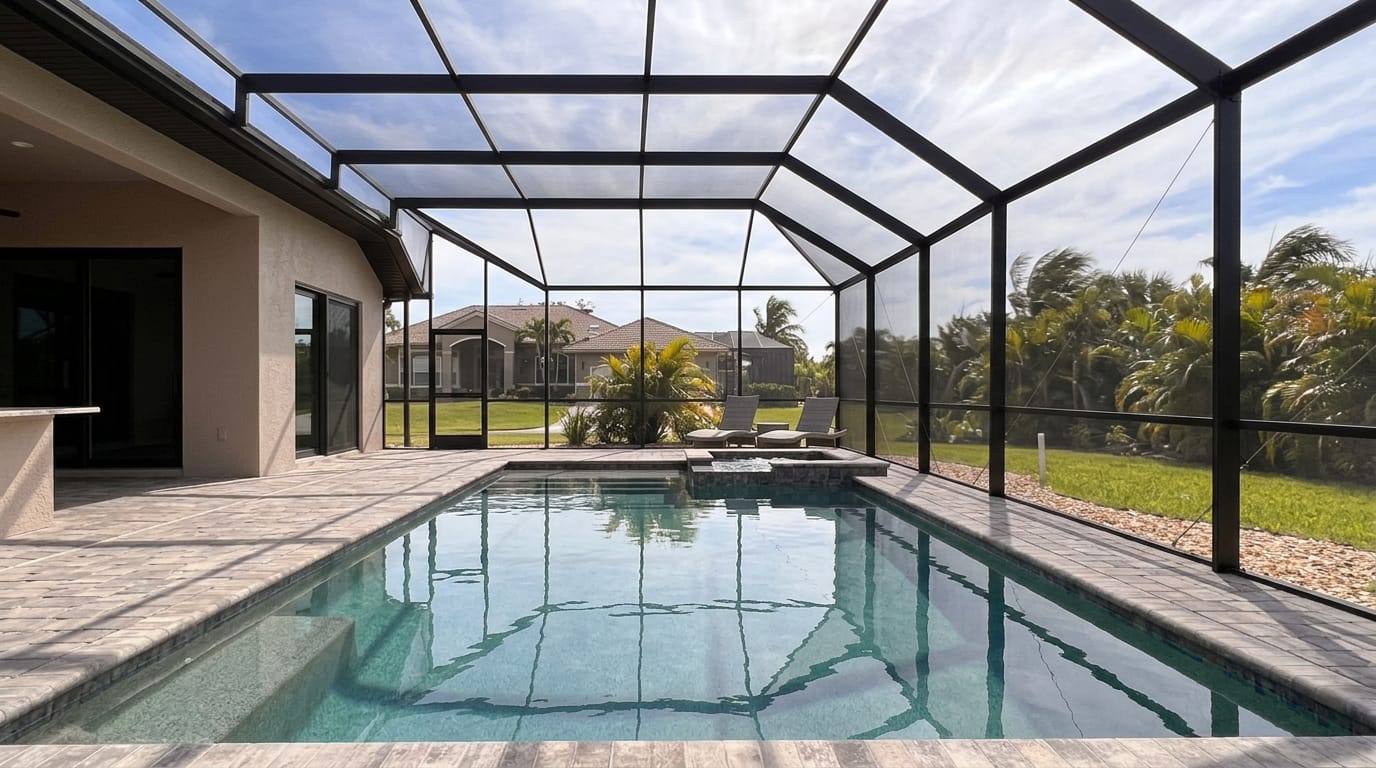
A pool cage is a connected structure. Its posts, roof framing, braces, and attachments work together, while the anchors connect the frame to the supporting construction.
When wind pushes against the enclosure, forces travel through those connected parts. The anchors and the material around them are part of that path. A connection that looks tidy at deck level tells you little on its own about the condition of the material beneath it.
The anchor is only part of the connection
The fastener, the enclosure member it holds, and the supporting concrete all matter. A sound-looking post doesn't establish that the connection below it is sound. Likewise, a crack in the deck doesn't tell you whether the anchor itself is loose.
Enclosure size, height, roof shape, and attachment conditions all influence the structural design. Our guide to screen enclosure structural planning explains why the support deserves attention alongside the frame.
A finished deck isn't proof of adequate support
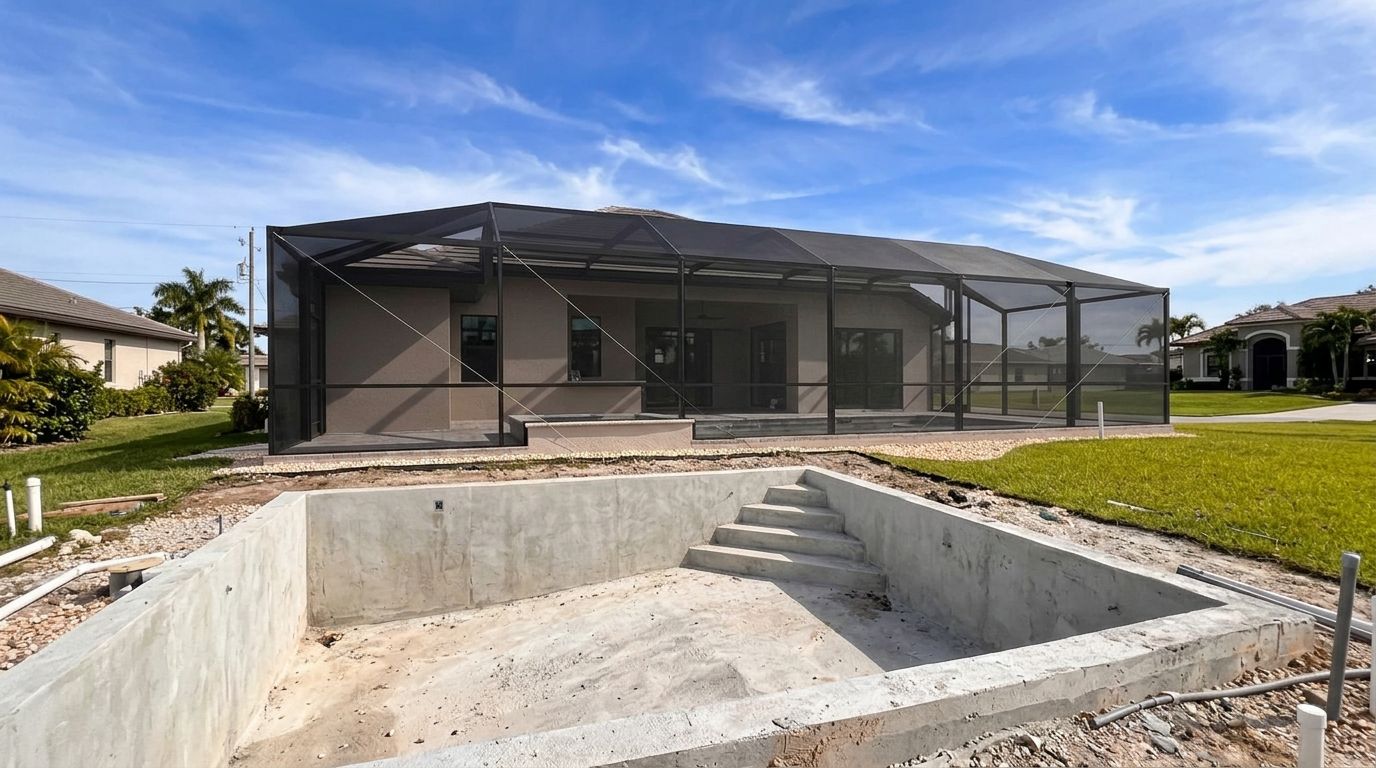
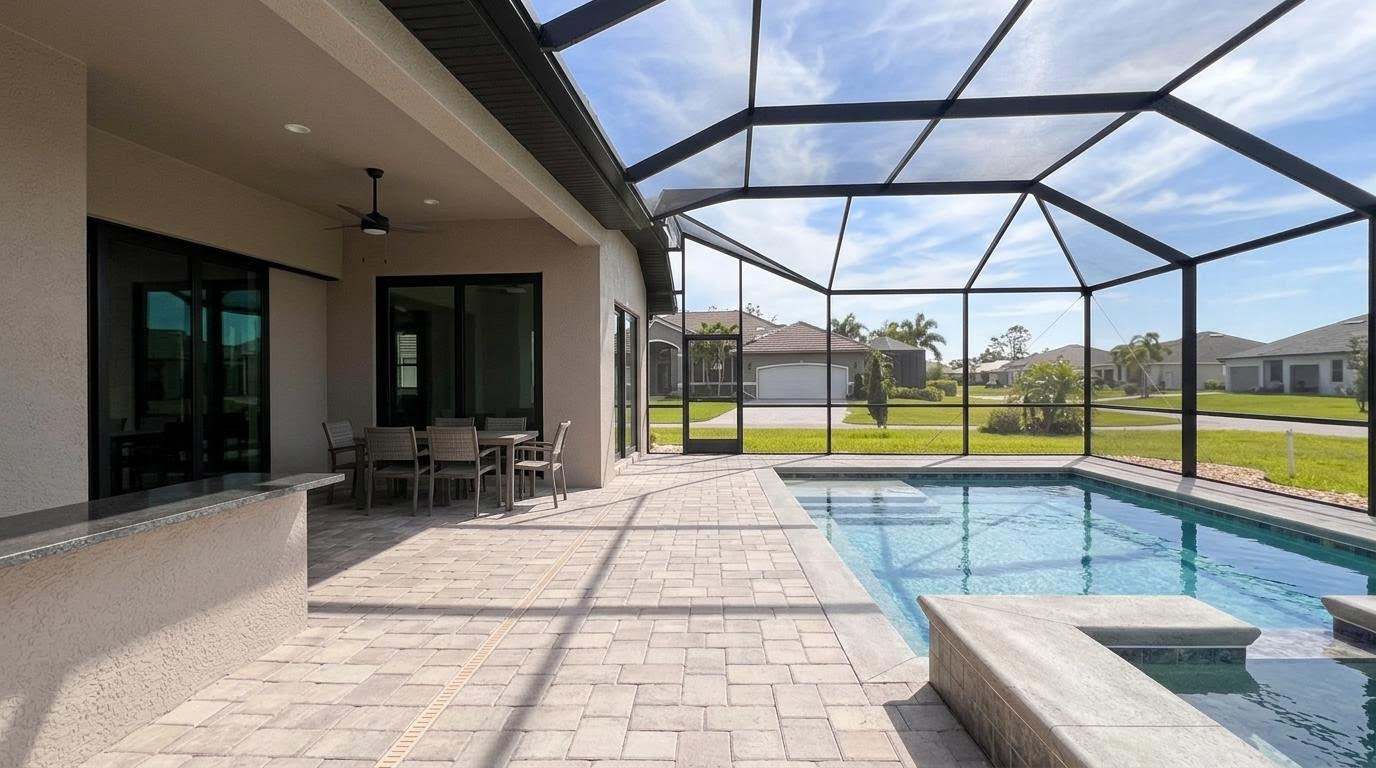
Deck coatings can make concrete look uniform, even when the underlying construction varies. The surface finish doesn't show the condition or configuration of the material beneath every post.
That's important for an existing enclosure as well as a new one. An assessment considers the actual connection and its support rather than relying on the deck's appearance alone.
What a deck crack can tell you
A crack gives you a place to start looking. Its position relative to an enclosure post is useful information, but its appearance alone can't establish whether an anchor is stable.
Location matters
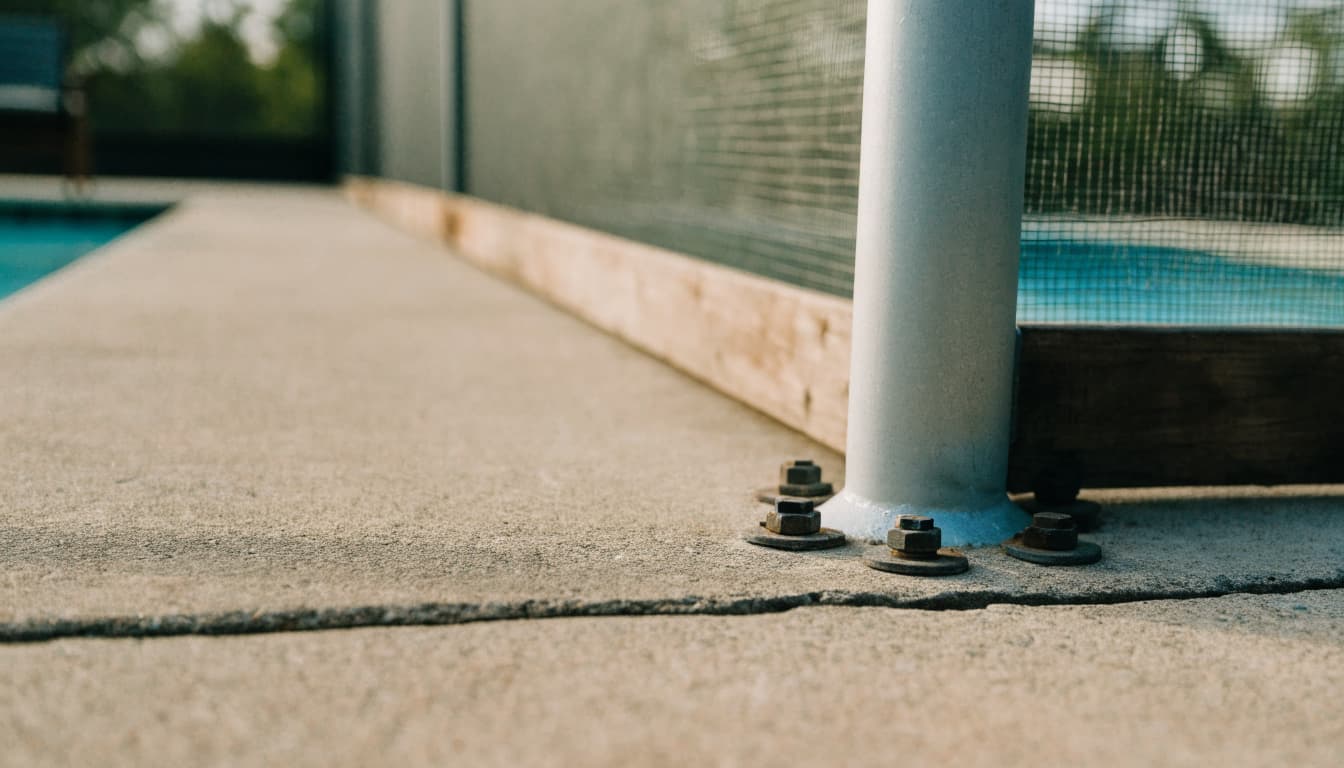
A crack that runs toward a post base, passes beneath a connection, or appears alongside damaged concrete deserves attention. Tell the enclosure professional exactly where you see it and which post is nearest.
A crack farther away can also be relevant if other parts of the deck appear damaged or uneven. However, proximity by itself doesn't reveal how deep a crack extends or whether the surrounding concrete provides suitable support.
Surface appearance has limits
Some marks are confined to a finish or coating. Others may extend into the concrete, but you can't determine that with confidence from a surface photo alone.
Also, a straight line in a deck may be a planned joint rather than an unintended crack. Describe what you see without trying to decide how serious it is. If the line has changed, or the concrete beside it appears damaged, include that detail when you request an assessment.
Signs of anchor or concrete problems
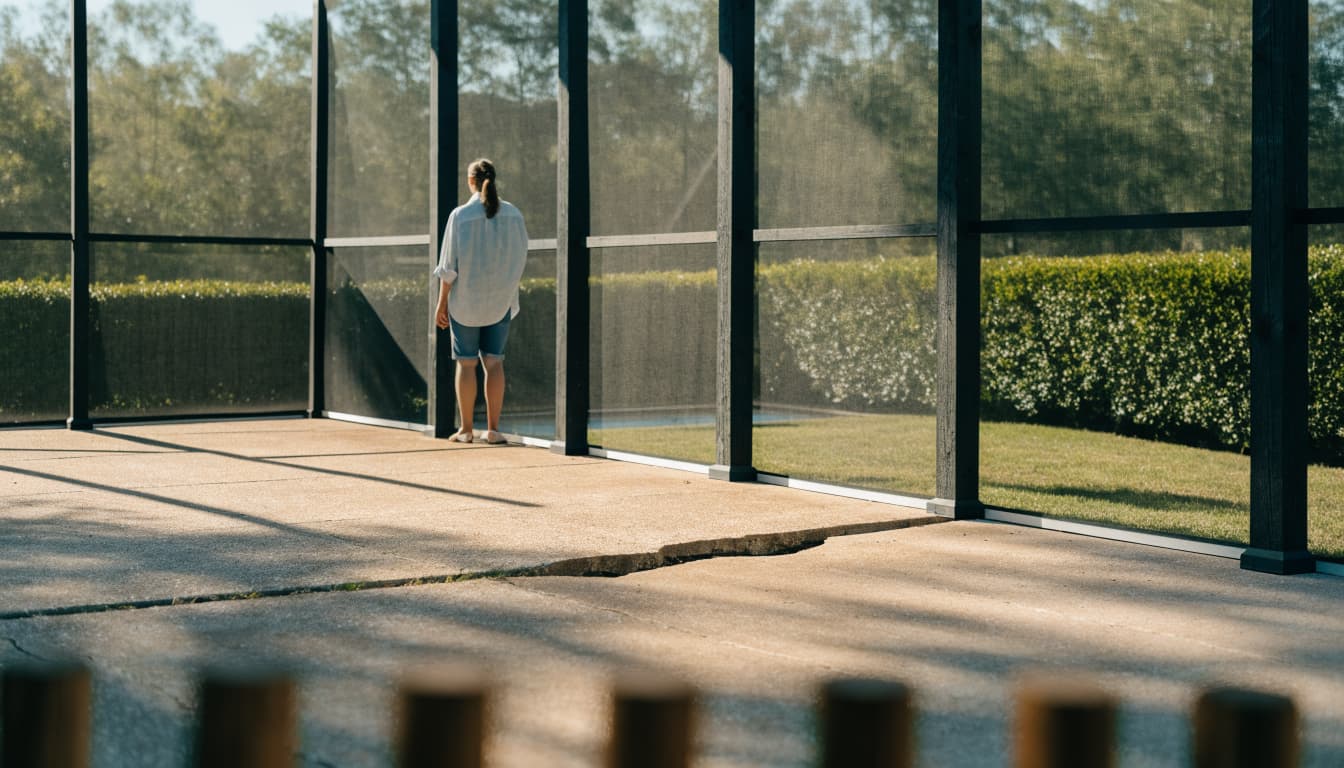
You can make useful observations without touching the frame or testing its strength. Look from a safe position and note anything that has changed since you last used the pool area.
Look at the post base and concrete
Watch for concrete that appears chipped, broken, or uneven around a connection. A visible gap beneath a post base, an apparently missing fastener, or corrosion around hardware is also worth reporting.
These signs don't establish the condition of hidden parts. Still, they help identify where an enclosure professional should focus. Avoid pulling on a post, tightening hardware, or removing anything to get a better look.
Look beyond the nearest crack
Step back and observe the enclosure as a whole. A post that appears out of alignment, a separated joint, or visible damage to a frame member may indicate a concern beyond the deck surface.
A door that no longer fits its opening normally is another change to mention, although it doesn't identify the cause by itself. Our guide to screen enclosure frame repair signs covers other changes worth documenting.
Loose mesh can also draw your attention to an area. However, screen panels pulling loose don't establish that a nearby anchor has a problem. The screen and frame need separate consideration.
How to assess a crack near an anchor
A useful assessment begins with what you can see, then moves to the parts you can't evaluate from the surface. Your observations help describe the concern, while a qualified professional can assess the connection and supporting construction.
Document the location and changes
Take clear photos from a safe position. Include one wider view that shows the affected post and its place in the enclosure, plus a closer view of the crack and surrounding surface.
Note whether the crack reaches the post base, where it continues, and whether nearby concrete looks chipped or uneven. If you have older photos, they may help show whether the visible condition has changed. Don't cover the area before it has been assessed.
Consider the whole connection
The professional reviewing the area may need to consider the frame, visible hardware, concrete, and the enclosure's structural design together. The approved plans, if available, can help establish how the enclosure was intended to connect to its support.
A photo is useful for the first conversation, but it can't confirm the condition beneath the surface. Where the supporting construction or structural design is in question, a qualified structural professional may need to be involved.
A crack's distance from a post is useful to document, but it doesn't establish the condition of the anchor or the concrete beneath it.
Why filling the crack may not be enough
A filled crack can improve the appearance of a deck. Whether it addresses the reason for concern depends on the condition of the surrounding material and the enclosure connection.
The visible line and the anchor are different concerns
If an anchor is loose or damaged, covering a nearby crack won't automatically correct it. The same is true if the supporting concrete needs attention. A surface repair may make the line less visible while leaving the underlying connection unaddressed.
For that reason, discuss the anchor and concrete before choosing a finish for the deck. The assessment should establish which conditions need attention and how the work relates to the enclosure.
Rescreening has a separate scope
New mesh can improve the enclosure's appearance and close openings in the screen. It doesn't automatically repair a damaged frame or address its attachment to the deck.
If you're already planning a rescreen and have noticed a crack near a post, bring up both concerns. That gives the enclosure company a clearer picture of the project before the screening work begins.
What to consider when planning repairs
The right scope depends on what the assessment finds. Some projects may call for attention to the deck surface alone; others may involve the connection, supporting concrete, or additional parts of the enclosure.
Ask for a clear scope of work
A written scope should identify the area being addressed and distinguish deck work from enclosure work. It should also make clear whether the condition of the connection is part of the project.
That distinction helps you compare proposals without assuming every contractor is addressing the same concern. A proposal focused on the visible crack may differ substantially from one that addresses an identified connection problem.
Account for the enclosure's design
Changes to a structural connection need to fit the enclosure and its supporting construction. The approved design and site conditions matter, so a repair plan shouldn't depend on appearance alone.
Project requirements also vary by location and scope. A repair, a rescreen, and a new enclosure are different kinds of work; calling a project a repair doesn't by itself establish whether a permit is required.
When to contact an enclosure professional
Arrange an assessment when a crack reaches or runs close to a post, especially if you also see damaged concrete, a gap at the base, or changes in the frame. Visible movement, a leaning post, or a separated connection deserves prompt attention.
Stay clear of an area that appears unstable. Don't try to brace the structure yourself or test a connection by pushing it. If there's an immediate danger, keep people away and contact local emergency services.
When you call, describe the location and the changes you've observed. Photos and any available enclosure plans can help start the conversation, but the assessment determines what attention the property needs.
Frequently asked questions
Does every deck crack mean a pool cage anchor is unsafe?
No. A crack alone doesn't establish anchor failure. Its location and the condition of the surrounding concrete and connection help determine whether further assessment is needed.
Can I tell whether an anchor is loose by looking at it?
You may notice a visible gap, damaged hardware, or a change at the post base. However, appearance alone can't confirm the condition of the full connection. Don't pull on the frame or adjust the hardware to test it.
Should I repair the deck before addressing the enclosure?
Have the relationship between the crack and the enclosure assessed before choosing the work. The scope may involve the deck, the connection, or both, depending on what a professional finds.
Will new screen fix a structural concern?
No. Rescreening replaces mesh; it doesn't automatically address damaged framing or an attachment concern. Discuss both conditions when planning the project.
Give the connection the attention it needs
A crack near a pool cage anchor is a reason to look beyond the surface. The visible line, the connection, and the supporting concrete each provide different information.
At Back Bay Screens, we build pool enclosures and provide rescreening in Southwest Florida. Contact us for a free estimate and let us know about any deck or frame concerns you've noticed.